The content of the waste is the main factor that determines whether medical waste should be incinerated or autoclaved. While incineration uses high-temperature combustion to totally eliminate pathological, pharmaceutical, and cytotoxic waste, autoclaves use high-pressure steam to sterilise infectious waste and sharps at a reasonable cost.
Quick Overview: Autoclave vs. Incineration for Medical Waste
- Autoclaves use high-pressure steam at 121°C–134°C to sterilise most infectious medical waste on-site, making them a practical, cost-effective choice for the majority of healthcare facilities.
- Incineration remains the only approved method for certain waste categories, including pathological waste, cytotoxic drugs, and chemotherapy materials — autoclaves simply cannot replace it entirely.
- From a long-term cost and environmental standpoint, autoclaves have a clear edge — zero harmful emissions and no off-site transportation fees.
- The right choice between the two methods comes down to your waste type, facility size, and local regulatory requirements — and in many cases, facilities need both.
- There's a specific scenario involving sharps waste where the choice between methods becomes more nuanced — and the answer might surprise you.
Most healthcare facilities don't need to choose between autoclaves and incineration — they need to understand which one handles what.
Medical waste is not a single type of waste. It is a range of biological, chemical, and physical hazards, each of which requires a specific disposal method. If this is not done correctly, it can not only cause regulatory issues but also pose real risks to public health.
Celitron, a company that specialises in on-site medical waste treatment solutions, provides a helpful guide to understanding where each method fits within a compliant waste management system.
Autoclaves Are the Best Choice for Most Infectious Waste — But Not All
Autoclaves are the leading on-site solution for infectious medical waste in today's healthcare settings — and for good reason. They're self-contained, scalable, and eliminate the need to transport biohazardous materials off-site. But the word “most” in that sentence is important. A small but crucial category of medical waste can only be safely disposed of through incineration, which makes it imperative to understand the boundary between the two methods.

“Autoclave – Wikipedia” from en.wikipedia.org and used with no modifications.
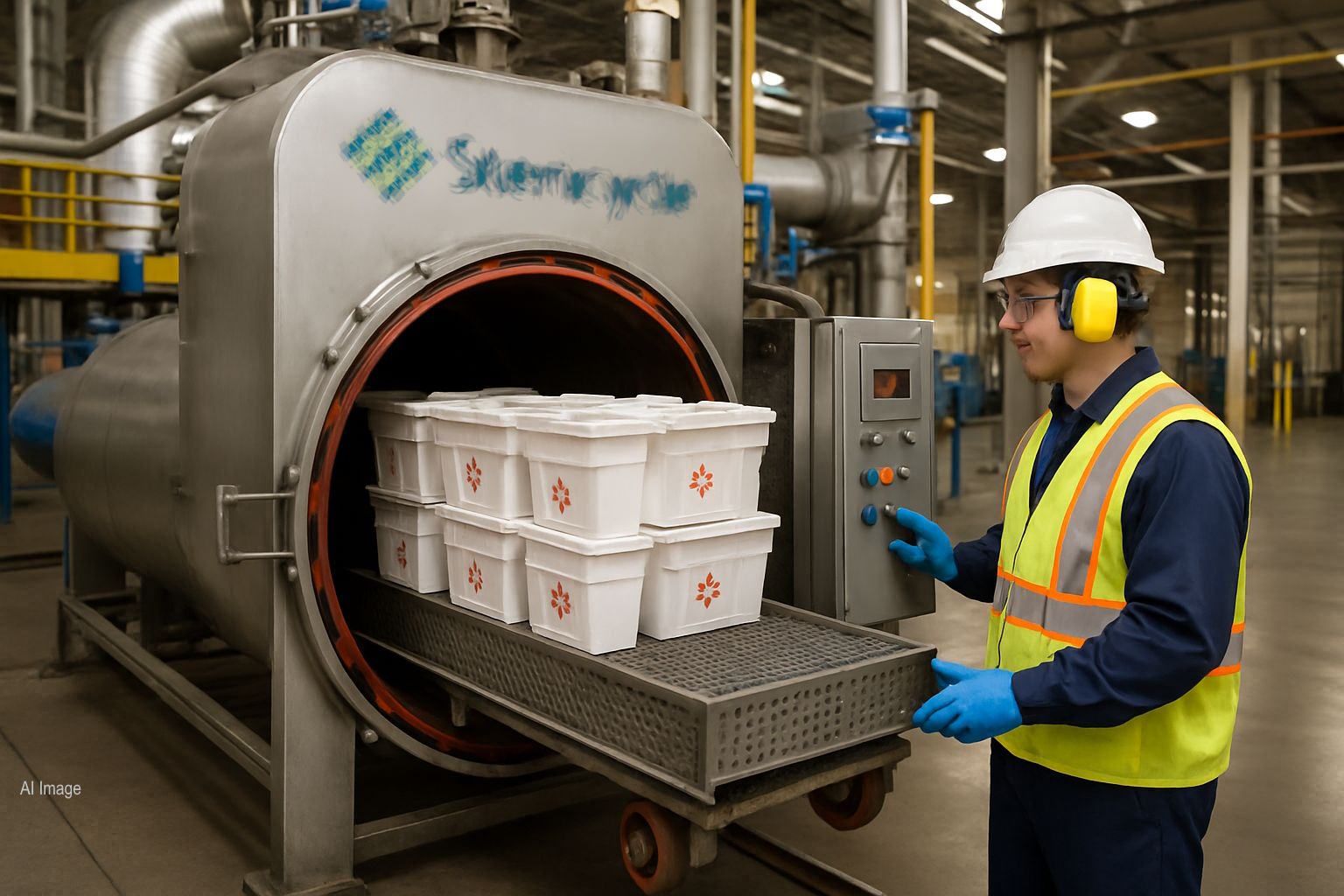
How Autoclaves Get Rid of Infectious Medical Waste
Autoclaves operate on a surprisingly straightforward principle: they employ steam, pressure, and heat in unison to eradicate every pathogen in a waste load. This results in sterilized waste that no longer has the potential to be infectious — all without physically damaging the materials.
There's a crucial difference to note here. Incineration eradicates waste by burning it, while autoclaving results in solid waste that can be treated. This provides a dual-purpose benefit that incinerators are unable to provide: the sterilization process used to treat biohazardous waste can also be utilized to reprocess reusable surgical instruments and medical tools.
How Steam Sterilization Works
Steam sterilization is a process that involves using pressurized saturated steam to make direct contact with all surfaces of the waste material.
This combination of moisture and heat denatures the proteins found in bacteria, viruses, and spores, effectively breaking down their biological structure at a molecular level. It's not just the heat that's doing the work; it's the penetrating power of steam under pressure that makes this process effective against even heat-resistant microorganisms.
Heat and Pressure Standards (121°C vs. 134°C)
Medical waste autoclave cycles usually function at one of two temperature levels. The normal cycle operates at 121°C, necessitating a minimum hold period of approximately 15–30 minutes to achieve complete sterilisation.
The quicker, more intense cycle operates at 134°C, which can considerably reduce the necessary hold time — a crucial consideration when dealing with large quantities of waste. For more information on the best methods for the disposal of medical waste, you can read this article on autoclave vs. incineration.
The chamber is sealed and pressurised, which allows steam to reach temperatures that are beyond the boiling point of water. These temperatures are impossible to reach at atmospheric pressure. This is the primary difference between autoclave sterilisation and simple boiling or chemical disinfection.
The Importance of Vacuum Pumps in Class B Autoclaves
Autoclaves are not all created equal. Class B autoclaves have a vacuum pump that removes air from the chamber before steam is introduced. This pre-vacuum stage is essential for treating medical waste because air pockets inside waste bags or wrapped materials can prevent steam penetration — leaving some areas unsterilized.
Class N autoclaves use gravity displacement to remove air. This method is effective for simple unwrapped loads, but it is not adequate for the porous, irregular loads that are typical of infectious medical waste. For healthcare facilities that treat biohazardous waste on-site, Class B is the appropriate standard.
After sterilisation, the vacuum cycle is also run to dry the load, preventing moisture from creating secondary contamination risks during post-treatment handling and disposal.
What Happens to Waste After Autoclave Treatment
After an autoclave cycle is finished and the waste is confirmed to be sterilised, it is typically handled as non-infectious solid waste.
Depending on local rules, autoclaved medical waste can be disposed of through regular municipal waste streams, which is a significant operational simplification compared to the licensed removal chain required for untreated biohazardous waste. For more information on waste management practices, you can explore this comprehensive guide on waste management.
It's important to mention that autoclaved waste doesn't change chemically or reduce in size unless a shredder is part of the system. Combo units that have shredding can reduce waste size significantly, which directly affects storage and future disposal costs. For more information on waste management, check out this list of US recycling systems companies.
The Incineration Process for Infectious Medical Waste
Incineration is a process that doesn't just sterilise waste, it completely obliterates it. The medical waste is burned in a controlled furnace system at extremely high temperatures, which reduces the organic material to ash and gases.
The infectious potential of the original waste is eliminated not through sterilisation, but through the physical removal of the material itself.
Incineration: A Two-Step Combustion Process
Today's medical waste incinerators employ a two-chamber system. The primary chamber burns the waste at temperatures that usually range from 800°C to 1,000°C.
The secondary chamber, also known as an afterburner, burns the gases and particles produced in the first chamber at even higher temperatures, reducing harmful emissions before they exit through the flue.
This two-chamber design is what separates regulated medical waste incineration from simple open burning, which is prohibited in most jurisdictions. Learn more about energy from waste and incineration and its benefits.
The Reason Incineration Typically Happens Off-Site
Running a medical waste incinerator that meets all regulations requires a lot of infrastructure: systems to control emissions, licensed operators, monitoring of air quality, and protocols for disposing of ash.
The cost and regulatory requirements of keeping an incinerator on-site make it unrealistic for most hospitals and clinics. Instead, the usual process is to gather untreated infectious waste in approved containers, have it transported by a licensed company that removes medical waste, and have it incinerated at a facility that's dedicated to this and located off-site.
What Each Method Can and Cannot Dispose Of
This is where the decision becomes practical. The method you choose — or are required to use — depends entirely on what you're disposing of. For more information, you can refer to this guide on autoclave vs. incineration.
Autoclaves are highly effective for the majority of infectious medical waste generated in clinical settings: microbiological cultures, soiled dressings, blood-contaminated materials, and most soft infectious waste.
However, incineration is required for waste streams that cannot be safely sterilised by steam or that contain materials that must be physically destroyed to eliminate the hazard.
What Can Autoclaves Handle?
Autoclaves are suitable for most infectious waste types produced in everyday clinical activities. This encompasses microbiological and laboratory waste like cultures and stocks of infectious agents, dirty surgical materials, blood-stained dressings and bandages, isolation waste from infectious patients, and the majority of soft infectious waste produced in general patient care.
These materials all have one thing in common: steam can fully permeate them, and heat can annihilate the pathogens they harbour.
What Incineration Can Handle That Autoclaving Can't
There are some types of waste that are either too dangerous or too chemically complicated for steam sterilisation. Pathological waste — human tissues, organs, and body parts — is required to be incinerated in most places because steam sterilisation doesn't meet the ethical and regulatory need for total physical destruction.
Cytotoxic and chemotherapy waste, including expired or unused antineoplastic drugs, can't be autoclaved because the chemical compounds stay active and toxic after steam treatment. The same is true for pharmaceutical waste that contains controlled substances, certain chemical waste streams, and any waste that is reactive, volatile, or flammable. These types of waste need combustion — not sterilisation.
Why Autoclaves with Shredders are the Best Option for Sharps Waste
Sharps waste, such as needles, scalpels, lancets, and broken glass, is a bit of a conundrum. Autoclaving can sterilise the surfaces of sharps, but it doesn't remove the physical puncture risk. A needle that has been autoclaved is safe from a microbiological standpoint, but it still poses a mechanical danger to anyone who handles it further down the waste chain.
Combination autoclave-shredder systems completely alter the game. When autoclaving is combined with medical waste shredding, sharps are sterilised and then physically destroyed in the same processing cycle.
The resulting material is unrecognisable, non-hazardous solid waste — with no puncture risk and no infectious potential. For facilities generating significant volumes of sharps waste, this combined approach is significantly safer and more cost-effective than routing sharps to off-site incineration.
The Environment: Emissions, Ash, and Regulatory Pressure
Environmental compliance isn't an afterthought in medical waste management — it's a top regulatory requirement. The disposal method you select has immediate environmental impacts, and regulators in most countries are tightening the standards that control both incineration emissions and waste treatment residues.
The Dangers of Incineration Emissions and Ash Residue
Despite the advancements in incinerator design, including two-chamber models and emission control systems, incineration still generates byproducts that need to be managed with care. The gases produced by combustion can contain harmful substances such as dioxins, furans, heavy metals, and particulate matter.
This is especially true when the waste being incinerated includes plastics, which are commonly found in medical environments. Afterburners in secondary chambers can reduce these emissions, but they cannot completely eliminate them. Furthermore, the ash residue left behind by incineration is often classified as hazardous waste under many regulatory systems. This means it needs to be disposed of in a specific way, often requiring a licensed disposal pathway.
There has been a global increase in regulatory pressure on medical waste incinerators. In many areas, older single-chamber incinerators have already been phased out under updated emission standards. The cost of retrofitting or replacing incineration infrastructure to meet current air quality requirements is substantial. For smaller healthcare facilities, this regulatory trajectory makes incineration an increasingly difficult long-term operational model.
The Autoclave Advantage: No Harmful Emissions
Autoclaves do not produce combustion byproducts. The steam used in the sterilisation process is either vented through a filtered exhaust system or condensed back into water. This leaves no harmful emissions and no hazardous ash residue.
This is a significant advantage for facilities operating in areas with strict air quality regulations or for those pursuing sustainability benchmarks. The waste left after treatment with an autoclave is solid, non-infectious, and can be managed through standard waste disposal channels.
Which Is More Cost-Effective: In-House Autoclaving or Outsourced Incineration?
At first glance, it can be difficult to determine which of these two methods is more cost-effective — autoclaves require a significant initial investment, while the costs of incineration are spread out over the duration of a service contract. However, when considering a realistic operational timeline, it becomes clear that in-house autoclaving is usually the more cost-effective option for most facilities.
Running Costs of Autoclaves Over Time
When an autoclave is up and running, the main costs to keep it going are utilities, which are water and electricity, as well as regular maintenance. There are also consumables to consider, like biological indicators that are used for cycle verification, and the machine also needs to be calibrated from time to time.
The latest automated models of autoclaves can help to cut down on labor costs quite a bit, because cycles can be programmed, monitored, and logged with very little manual work needed. For more on waste management solutions, you can explore various waste management strategies that complement the use of autoclaves.
Whether or not a facility will get a good return on investment depends on how much waste it generates. Large facilities like big hospitals, research institutions, or clinical networks with multiple sites usually reach a point where they are spending the same amount on autoclaving as they would on incineration within a few years of installing an autoclave. Smaller facilities can use compact autoclaves that are designed for lower daily throughput to make the cost of autoclaving affordable without needing industrial-scale infrastructure.
Incineration Costs: More Than Just Burning
When you send your medical waste off-site for incineration, you're not just paying for the actual burning. You're paying for a package deal that includes biohazardous waste containers, scheduled pickups from a licensed medical waste transporter, the necessary paperwork to stay in compliance with regulations, and the incineration itself.
Each of these items scales with the volume of waste, and the price can change based on fuel costs, regulatory requirements, and whether the service is available in your area.
Off-site disposal also carries a risk premium: any delay in collection, paperwork mistake, or transportation mishap involving untreated biohazardous waste can result in regulatory fines that far exceed the cost of the disposal service itself. On-site autoclaving completely removes this risk by keeping the entire treatment process under the facility's operational control.
Real-World Factors for Medical Centres
Picking the appropriate waste disposal technique isn't just about technology or cost — it's about practicality. The best option for your centre is the one that fits in your physical area, aligns with your daily waste production, and can handle your local regulations without causing operational issues.
Often, the first practical consideration is space. Autoclaves come in many sizes, from small benchtop models for small clinics to large industrial models for large hospitals. The key measurement isn't just the size of the unit itself, but the space needed for door operation, ventilation, and safe loading and unloading of waste bags or containers.
The second factor to consider before choosing a piece of equipment is the daily volume of waste. If the autoclave is too small, it will create a backlog of processing, which will force the untreated biohazardous waste to be stored temporarily. This is a risk for compliance and safety. If the unit is too large, it will waste energy by running partial loads. The most important specification to get right is to match the capacity of the chamber to the actual daily output of your facility. This is measured in liters or kilograms of infectious waste.
There are varying regulatory requirements depending on the country, state, and even city. Some areas require specific treatment technologies for certain types of waste, require a third party to verify the effectiveness of the autoclave cycle, or have documentation requirements that impact which autoclave models are eligible for use. Before deciding on any system, check the compliance requirements with your local health authority or environmental regulator.
- Performing a waste type audit: Before selecting a treatment method, make a list of all waste streams your facility produces. This will help you determine whether autoclaving alone is sufficient or if you also need to contract incineration services.
- Measuring daily volume: Determine the average daily output of infectious waste in litres. This will help you match the size of the autoclave chamber to your actual throughput needs.
- Assessing space: Take into account the footprint of the unit, the clearance needed for ventilation, access for loading, and proximity to points where waste is generated.
- Verifying regulations: Before assuming that autoclaving covers all streams, check which waste categories require incineration under the regulations in your jurisdiction.
- Sharps volume: If you have a significant amount of sharps waste, consider autoclave-shredder systems as a safer and more cost-effective alternative to sharps incineration.
- Utility infrastructure: Make sure the electrical supply and water connection points at your facility are compatible with the autoclave models you're considering.
Space and Installation Requirements
Autoclaves have a significant space advantage over on-site incineration systems. Even large-capacity, floor-standing autoclave units designed to handle the volume of waste produced by a hospital require only a fraction of the infrastructure footprint that a compliant on-site incinerator does.
A standard clinical autoclave requires a dedicated electrical connection, a cold water supply line, a drain connection, and adequate ventilation. These can usually be accommodated within an existing utility room or waste holding area with only minor modifications.
When planning your space, it's important to take into account the door swing radius, the front access space needed to load waste containers, and the rear or side ventilation clearance as specified by the manufacturer.
Most Class B autoclave models that are designed for medical waste treatment are engineered to fit through standard commercial doorways, which is a key consideration when retrofitting an existing facility rather than building a new one. Benchtop models can be installed in smaller clinical environments with minimal infrastructure changes.
What You Need to Install a Medical Waste Autoclave:
? A dedicated power supply that matches the manufacturer's specifications for voltage and amperage
? A cold water supply with a sufficient flow rate
? A drain that can handle the condensate discharge
? Adequate ventilation clearance at the back or sides, as specified by the unit
? A floor with a load capacity that can support the weight of the unit when it's fully loaded
? Enough clearance at the front for the door to swing open and for safe loading of waste bags
? A location close to the main waste generation areas to reduce the distance waste has to be transported
? Easy access for routine maintenance and annual calibration servicing
By comparison, on-site incineration requires a combustion chamber, an emission control stack, systems for containing the ash, and usually a separate utility connection for the fuel supply. Just getting a permit for a new on-site incinerator can take months and most jurisdictions require an environmental impact assessment. For the vast majority of healthcare facilities, this makes on-site incineration impractical — and off-site incineration the only viable option when combustion is necessary.
Size of the Facility and Volume of Daily Waste
The most crucial practical decision when choosing an autoclave is to make sure it matches your actual waste volume. A small outpatient clinic that generates 10–20 liters of infectious waste per day will need different equipment than a 500-bed acute care hospital that processes several hundred liters daily.
Autoclave manufacturers usually rate chamber capacity in liters and specify maximum load weights. Use these figures against your measured daily waste output, not estimates, to select the right unit. You should also include a capacity buffer of at least 20–30% above your current daily average. This will account for volume spikes and future growth without creating processing backlogs.
Regulations for Each Method
Regulations for medical waste treatment can vary greatly depending on the location, but they all have a common structure: specific types of waste are assigned to approved treatment methods, and facilities must prove that their treatment process meets certain standards.
For autoclaves, this usually means keeping logs of time, temperature, and pressure for every cycle and doing regular biological indicator tests using Geobacillus stearothermophilus spore strips — the industry-standard organism for checking steam sterilization effectiveness.
For incineration, the documentation needed for compliance focuses on the waste manifest chain of custody, the credentials of the licensed transporter, and the operating permits of the receiving facility. Before you finalize any waste treatment system, make sure to check the specific documentation requirements with your local health authority to make sure your chosen method and recordkeeping process will pass an inspection.
Choosing the Right Method for Your Facility
For the majority of healthcare facilities, autoclaving is the preferred primary treatment method, supplemented by an incineration contract for specific waste categories that legally require combustion. If your facility produces pathological waste, cytotoxic materials, or pharmaceutical waste from chemotherapy protocols, you will need an incineration service even if you also operate an autoclave.
For all other types of waste – the bulk of your daily infectious waste – a suitably sized Class B autoclave provides better cost-effectiveness, a smaller environmental footprint, and more control over operations than sending waste off-site for incineration. Facilities that have the most difficulty complying with medical waste regulations are those that see this as a binary choice. It's not. Create a system that leverages each method for its strengths, document every treatment cycle, and review your waste streams annually to ensure that your disposal routes still align with what you're actually producing.
Common Questions
When it comes to medical waste disposal, there are often more questions than answers. This is especially true when the rules and regulations don't match the reality of the situation. The following responses aim to clear up some of the confusion for healthcare professionals who are considering autoclave and incineration options.
Is it possible for an autoclave to completely replace incineration in a hospital environment?
No — and this is one of the most crucial limitations to be aware of. Autoclaves can process most of the infectious waste produced in a hospital, but there are certain types of waste for which incineration is either legally required or technically essential. Trying to process these materials in an autoclave doesn't just result in a compliance breach — it could also leave genuinely dangerous materials inadequately processed.
Waste categories that cannot be autoclaved include:
- Pathological Waste: In most jurisdictions, human tissues, organs, body parts, and anatomical waste must be incinerated for complete physical destruction.
- Cytotoxic and Chemotherapy Waste: Antineoplastic drugs and contaminated materials remain chemically toxic after steam sterilisation. Combustion is the only method that neutralises these compounds.
- Pharmaceutical Waste: Drug disposal regulations require the incineration of controlled substances and certain pharmaceutical categories.
- Volatile or Reactive Chemical Waste: These materials could explode or release toxic gas inside a pressurised autoclave chamber.
- Radioactive Waste: Neither autoclaving nor standard incineration is suitable. Radioactive medical waste must be handled by a specialist under nuclear regulatory frameworks.
Autoclaves can effectively replace incineration for routine infectious waste outside of these categories. This type of waste represents the majority of daily waste volume in most hospital settings.
Can autoclaved medical waste be safely disposed of as regular trash?
Disposal Status After Treatment by Method
Treatment Method Classification After Treatment Typical Disposal Method Regulatory Verification Required Autoclave (steam sterilization) Non-infectious solid waste Regular trash (depends on jurisdiction) Yes — cycle logs and biological indicator records Autoclave + Shredder Non-infectious, unrecognizable solid waste Regular trash (most jurisdictions) Yes — cycle validation plus shredder operation records Incineration Ash residue (may be classified as hazardous) Licensed hazardous waste disposal (ash) Yes — manifest documentation and facility permits
In many areas, infectious waste that has been properly autoclaved can be disposed of through standard trash disposal — but this is not always the case. The key term is properly autoclaved, which requires documented proof that the cycle achieved the required time, temperature, and pressure parameters and that biological indicator testing confirms sterilisation efficacy. For more information on the differences between autoclaving and incineration, you can read this comparison of autoclave vs. incineration.
In some places, it is a legal requirement that autoclaved medical waste be made unrecognisable before being disposed of in a municipal landfill. This means that shredding is not just an optional extra, but a requirement. In other places, it is allowed to dispose of autoclaved waste bags in municipal waste without further treatment. It is important to check with your local environmental or health authority to confirm the specific requirements for disposing of autoclaved waste before assuming that it can be disposed of as normal waste.
There is one common rule in almost all jurisdictions: sharps waste must be made non-hazardous both microbiologically and physically before it can be put into a municipal waste stream. Autoclaving alone, without shredding, does not meet this standard for sharps in most regulatory frameworks.
What are the reasons for the continued use of incineration despite the more eco-friendly nature of autoclaves?
Two reasons account for the continued use of incineration: regulatory requirements and physical necessity. For waste types like pathological and cytotoxic waste, there are no technically equivalent alternatives that can achieve the same level of hazard elimination. Steam sterilisation is unable to destroy the chemical structure of antineoplastic drugs, and most jurisdictions require physical destruction of anatomical waste for both public health law and ethical obligation. Beyond the mandatory categories, incineration is also still in use because the existing service infrastructure — licensed transporters, permitted facilities, established compliance workflows — is already in place in most regions, and switching requires upfront investment in autoclave equipment and staff retraining. The environmental argument for autoclaving is compelling, but it doesn't supersede the legal requirement to incinerate certain waste streams.
What sets a Class B autoclave apart from other autoclave types when it comes to medical waste?
Class B autoclaves are equipped with a pre-vacuum cycle, powered by an inbuilt vacuum pump, that actively expels air from the chamber before steam is introduced. This ensures that steam can fully penetrate porous loads, wrapped instruments, and the uneven surfaces typically found on infectious medical waste bags. Class N autoclaves, on the other hand, use gravity displacement to remove air, which is sufficient for simple, unwrapped solid loads but not enough for the complex loads encountered in medical waste treatment. Class S autoclaves fall into a middle category, designed for specific load types as specified by the manufacturer. For the treatment of infectious medical waste, Class B is the standard to go for because it ensures steam penetration across all types of waste materials that a clinical facility is likely to process, including irregular, porous, and densely packed loads.
Is it possible to treat sharps waste in an autoclave without a shredder?
Using an autoclave without a shredder will sterilise the surfaces of sharps waste, removing the risk of infection. However, it does not remove the physical risk of puncture. A sterilised needle is safe from a microbiological perspective but can still cause mechanical injury to anyone who handles the waste bag downstream – during transportation, compaction, or disposal.
Most regulations treat the physical danger of sharps as a separate requirement from the microbiological one. Meeting only the sterilisation standard — without making sharps physically non-hazardous — usually does not meet the full compliance requirement for sharps disposal. This is why combined autoclave-shredder systems are the suggested solution for facilities with significant sharps volumes: the integrated shredding cycle destroys the physical structure of needles and blades in the same processing run as sterilisation, producing a material that meets both the microbiological and physical safety standards at the same time.
When a shredder-integrated autoclave is not an option, sharps must be disposed of through a different method — usually licensed collection in certified sharps containers and then off-site incineration or another approved alternative treatment method. It's a compliance violation in almost every jurisdiction and a real safety risk for waste handling personnel to route sharps through a standard autoclave and then into a municipal waste stream.
Healthcare facilities that want to streamline their infectious waste management and remain fully compliant with regulations can turn to Celitron. They provide a variety of on-site medical waste treatment systems, such as Class B autoclaves and integrated autoclave-shredder units. These systems are designed to efficiently and safely manage all types of treatable infectious waste.
In the modern world, managing waste effectively is crucial for maintaining a sustainable environment. One of the key components of waste management is recycling, which plays a vital role in reducing landfill waste and conserving natural resources. Understanding what recycling entails can help individuals and communities make informed decisions about their waste disposal practices. By recycling materials such as plastics, paper, and metals, we can significantly reduce the environmental impact of waste and promote a healthier planet for future generations.