


Here's how to dispose of an old mattress properly – without falling foul of UK fly-tipping law or sending something recyclable to landfill.
The obvious answer is to arrange for your old mattress to be taken away when a new one is delivered.
Most large mattress retailers will remove your old bed for free or for a small fee when they drop off the replacement, and this is usually the most convenient route of all: the removal van is already at your door, and the retailer typically has an established recycling or reuse partner waiting at the other end.
There will, however, always be occasions when that isn't possible – you might be moving house, clearing a relative's property, or simply upgrading a mattress you bought separately from your bed frame. Read on for every legitimate option available to UK households in 2026, what each one costs, and where the legal lines are.
Key Takeaways on How to Dispose of an Old Mattress
- Leaving a mattress on the street or in a layby without a booked collection is fly-tipping under Section 33 of the Environmental Protection Act 1990, and councils can now issue Fixed Penalty Notices of up to £1,000.
- Council bulky waste collection is usually the cheapest door-to-door option, typically £20–£50 per mattress depending on the borough, though a handful of councils still offer a free annual collection.
- Most Household Waste Recycling Centres (tips) will take a mattress for free if you can transport it yourself, and mattresses now go into a dedicated container so they can be recycled rather than landfilled.
- Up to around 90% of a mattress by weight can be recycled – steel springs, foam, wood and textile fibres are all recovered and reused in new products.
- Charities can only accept a mattress for reuse if it's clean, undamaged and still carries its sewn-in BS 7177 fire safety label; without that label it legally cannot be resold or rehomed.
- Pocket-sprung mattresses are the hardest type to recycle because each spring sits in its own fabric pocket, though UK-developed automated separation machinery is starting to make this process faster and cheaper.
Is It Illegal to Just Dump a Mattress?
Yes. Leaving a mattress on the pavement, in a layby, down an alley or on any land without permission is fly-tipping, an offence under Section 33 of the Environmental Protection Act 1990. Councils across the UK have been actively pursuing this: recent cases have seen residents issued
Fixed Penalty Notices ranging from £200 to £400 for dumping a single mattress, escalating to court fines running into hundreds of pounds once prosecution costs and a victim surcharge are added, where the FPN goes unpaid. Since 2023, councils have had the power to set fixed penalties as high as £1,000, and a conviction at Magistrates' Court can carry an unlimited fine.
There's a second, less well-known offence too. Under Section 34 of the same Act – the household “duty of care” – you can also be fined for handing your mattress to someone who isn't a registered waste carrier, even if you never see where it ends up.
If you pay someone with a van to take your mattress away, always ask for their waste carrier licence number and check it on the Environment Agency's Public Register (or SEPA in Scotland, Natural Resources Wales in Wales). Keep the receipt or waste transfer note as proof you met your duty of care.
Beyond the legal risk, a mattress is genuinely one of the worst items to landfill. It won't compact, it can trap air pockets that create a fire hazard within the waste mass, and the springs frequently snag and damage compaction and shredding equipment at waste transfer stations – a cost that eventually gets passed back to council tax payers and gate fees.
Council Bulky Waste Collection
For most households, booking a council bulky waste collection is the simplest legal route. You go to your council's website, select “bulky waste” or “large item collection”, choose “mattress” from the item list, pay online if there's a charge, and leave the mattress at the agreed kerbside spot on collection morning.
Costs vary considerably by council. As a rough guide for 2026:
- Many councils charge in the £20–£40 range for a single mattress, often with a fixed administration fee added regardless of how many items you book.
- Some London boroughs and larger cities charge £40–£60, reflecting higher onward disposal costs.
- A number of councils still offer one or two free bulky collections a year, and residents on Council Tax Support or certain benefits can often get a reduced rate – it's always worth checking, since this isn't advertised prominently.
Wait times typically run from a few days up to two or three weeks depending on demand and the time of year, so if you're on a tight deadline – a house move, for instance – book as early as you can.
Take It to a Household Waste Recycling Centre Yourself
If you have access to a car, van or trailer, driving your mattress to your local Household Waste Recycling Centre (HWRC, commonly called “the tip”) is usually free for residents and avoids the wait for a council collection slot. Most sites have introduced a dedicated mattress container, separate from general bulky waste and separate from upholstered furniture, specifically so mattresses can be routed to a specialist recycler rather than compacted with everything else.
A few practical points before you go:
- Some sites cap how many mattresses they'll take per visit, and a small number of councils now charge a modest drop-off fee (roughly £5–£15) to fund the segregated recycling route – check your council's page first.
- You may need to pre-book a van permit slot if you're using anything larger than a car.
- Site staff can refuse a mattress that's visibly soaked, mouldy or infested, since these can't be safely handled in the open recycling container.
Donating a Mattress in Good Condition
If your mattress is clean, undamaged and free of sagging, stains or odours, donation is the best outcome environmentally – it extends the product's life before any recycling is needed at all. But there's a hard legal requirement in the UK that catches people out: a mattress can only be resold or rehomed by a charity if it still carries its original, permanently sewn-in fire safety label referencing BS 7177, the British standard for resistance to ignition. No label means no legal resale, however good the mattress looks, so check for it before you plan on donating.
Where to try:
- Larger charities such as the British Heart Foundation accept mattresses with a valid fire label at many of their donation points and some Household Waste Recycling Centres now host a charity reuse cabin on site.
- Local reuse charities and social enterprises increasingly run dedicated mattress reuse schemes – some, like the north London mattress recycling trial and similar local partnerships in Scotland, clean and resell donated mattresses at low cost, supporting local training or employment programmes.
- Freecycle, Freegle and Olio let you offer a mattress directly to a neighbour for free, which sidesteps the fire-label restriction that applies to commercial resale by a charity shop, since it's simply being passed between private individuals with the family use case understood.
- Marketplace sites such as Facebook Marketplace, Gumtree or Vinted work well for a barely-used mattress you're happy to sell rather than donate.
Retailer Take-Back When You Buy a New Mattress
Most of the major UK mattress and bed retailers will collect your old mattress when they deliver the new one, either free of charge or for a modest fee, and this remains the most fuel-efficient option overall: their delivery van is already going back to a depot, and once enough old mattresses have accumulated there, a full truckload can be sent for specialist recycling in one go rather than as individual short trips.
Always ask the retailer directly what happens to the mattress they take away – reputable ones can tell you which recycler they use and roughly what proportion gets recycled versus landfilled.
What Actually Happens to a Recycled Mattress
A mattress isn't one material, it's four: steel springs, foam, wood (in a divan base) and textile fibres, and specialist recyclers can typically recover around 90% of a mattress by weight once it's stripped down.
- Steel springs are separated out and sent to metal recyclers to be melted down for new steel products.
- Foam is shredded and can be reused as carpet underlay or filling for pet beds.
- Wood from divan bases is chipped and typically used as biomass fuel or in mulch.
- Fabric and fibres are processed into industrial wiping cloths or reprocessed into new textile products.
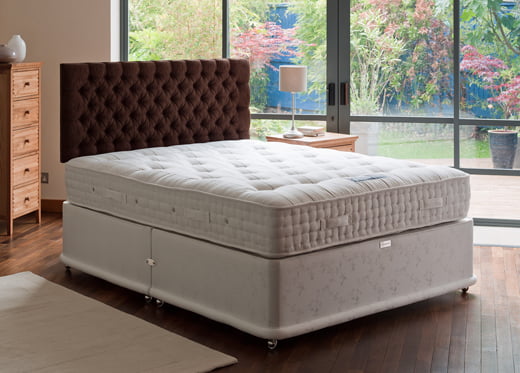
The genuinely difficult mattresses to recycle are modern pocket-sprung designs, where each individual spring sits inside its own small fabric pocket – a single mattress can contain well over a thousand of them. Historically this had to be cut open by hand with a knife, which made pocket-sprung recycling slow and expensive.
UK-developed machinery has since been built to open these pockets and separate the steel from the fabric automatically, and as that technology becomes more widely licensed to recycling operators, the cost and speed of recycling pocket-sprung mattresses should continue to improve.
Private Mattress Removal Services
If you can't wait for a council slot, don't have transport for the tip, or need a mattress removed from an upstairs room, a private waste removal company is the fastest option. Expect to pay more than a council collection – commonly £40–£80 for a single mattress, though this often includes labour to carry it out of the property.
Before booking, ask two things: are they a registered waste carrier (you can check the Environment Agency's Public Register), and do they guarantee the mattress goes for recycling rather than landfill. A legitimate operator should be able to answer both immediately.
Comparing Your Options
| Option | Typical Cost | Best For |
|---|---|---|
| Retailer take-back | Free – £40 | Anyone buying a replacement mattress |
| Council bulky collection | £20 – £60 | No transport, not in a rush |
| HWRC / tip drop-off | Free – £15 | You have a car or van |
| Charity or reuse donation | Free | Mattress is clean with a valid fire label |
| Private removal service | £40 – £80+ | Urgent, upstairs, or multiple items |

Frequently Asked Questions on the Subject of How to Dispose of an Old Mattress
Can I put a mattress in my normal bin or kerbside recycling?
No. Mattresses are too large for standard household bins and their mixed materials mean they can't go in kerbside recycling collections. They need to go through a bulky waste, recycling centre, donation or retailer take-back route instead.
How much does it cost to dispose of a mattress in the UK?
It depends on the route. Council bulky waste collection is typically £20–£60, most Household Waste Recycling Centres are free if you can transport the mattress yourself, and private removal companies tend to charge £40–£80 or more.
Is it actually illegal to leave a mattress by the bins?
Yes, unless it's part of a collection you've specifically booked and paid for. Leaving it out otherwise is fly-tipping under the Environmental Protection Act 1990, and councils can issue Fixed Penalty Notices of up to £1,000, with unlimited fines possible if the case goes to court.
Why won't charities take my mattress?
UK safety law requires any mattress resold or rehomed by a charity to carry its original, permanently sewn-in fire safety label referencing BS 7177. If that label is missing, torn off, or the mattress is stained, damp or damaged, a charity legally cannot accept it for resale – recycling or a council collection becomes the only route.
What percentage of a mattress can actually be recycled?
Specialist recyclers can typically recover around 90% of a mattress by weight, separating out the steel springs, foam, wood and textile fibres so each material can be reused elsewhere rather than landfilled.
Can I recycle a mattress myself at home?
Not meaningfully – separating the steel springs, foam and fabric by hand is difficult, time-consuming and can be unsafe without the right tools. It's best left to a specialist recycler, either via your council's collection service or a Household Waste Recycling Centre.
[Published June 2019. Rewritten August 2026.]




Thanks for your tips on mattress disposal.
I was thinking these are kinda large items to just chuck out on the tip.
Tanks