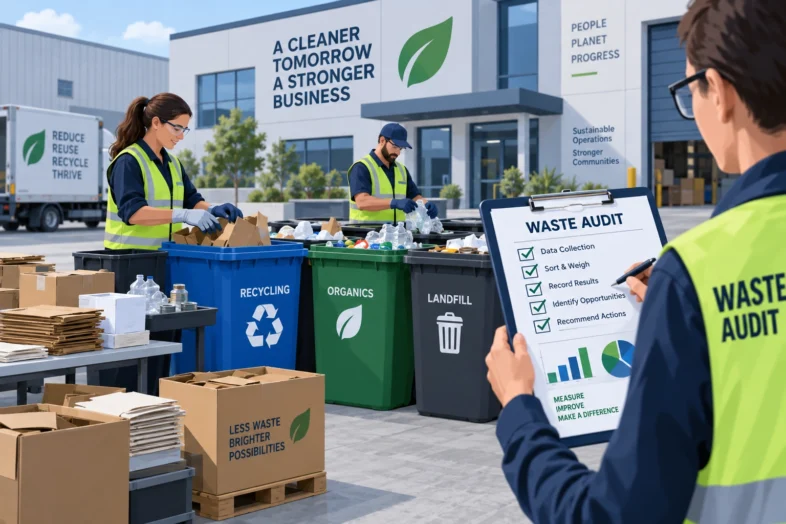
The idea of waste audits may make you yawn, but without one, a business can throw away less and still pay the same disposal bill. If the container size, pickup schedule, and service charges don't change, better recycling may save nothing. And collecting more recycling only helps if the processor can accept the quality of what's in the bin.
A waste audit closes those gaps. It looks at what gets thrown out, how it's collected, and what the business pays, all at once. The goal is simple: find out what needs to change, who will change it, and how you'll measure the result.
Key Takeaways
- Waste audits connect disposal costs to actionable changes
- Billing structure determines savings — changes only save money if they affect charges you currently pay
- Sampling conditions matter — measure under normal operating conditions, not peak or slow weeks
- Recyclables in trash and contamination in recycling are two separate problems requiring different solutions
- Prevention is more effective than recycling — unused supplies and damaged inventory often reveal fixable buying or handling issues
- Assign ownership and measure results — clear responsibility and consistent tracking drive success
Start With the Questions the Audit Needs to Answer
Every good audit starts with a specific problem. If collection costs keep climbing, go through the invoices and check how containers are used. If recycling results are poor, look at what employees toss and whether your instructions match what the processor takes.
Records, walk-throughs, and hands-on sorting each tell you something different. Invoices show what you pay. A walk through the facility shows how people handle materials. Sorting and weighing samples shows what really lands in each bin.
Decide up front which buildings, departments, shifts, and materials are in scope. Keep routine waste apart from one-time events like a renovation or an inventory cleanout. One big purge can make normal needs look bigger than they are.
Measure Waste Under Normal Operating Conditions
When you sample matters. A slow production week can understate how much waste you make. A sample pulled right after a large delivery may be packed with packaging.
Build your sampling plan around what drives waste at your site. That might be different shifts, heavy shipping days, meal services, or seasonal rushes. Write down the conditions each time, so the numbers have context later.
Track where materials come from whenever you can.
Learning that cardboard makes up a big share of your trash is useful. Learning that most of it comes from the receiving dock gives you a problem you can fix.
Weight and fullness answer different questions, too.
Weight tells you how much you throw away. Fullness tells you whether the container is big enough. Bulky packaging can fill a dumpster long before it gets heavy.
Connect Audit Findings with Disposal Charges
Before you estimate savings, figure out how you're billed. Charges might depend on pickup frequency, container size, disposal weight, rental fees, or some mix of those. A change only cuts your bill if it touches a charge you pay.
Picture a warehouse that starts pulling cardboard out of its general trash. The trash container now has lots of empty space at pickup. That's a reason to review service levels, but you still must confirm whether fewer pickups or a smaller container would change the bill.
Waste Tech points to collection adjustments and recovered recyclables as two possible sources of savings. The dollar value still depends on your service contract and how your facility runs.
Count the full cost of any alternative. Separate recycling can mean extra bins, storage space, staff time, or equipment. Weigh that against lower disposal fees and any payment you get for recovered material.
Plan for peak weeks as well. A schedule that works in an average week can lead to overflow or extra pickups when business surges.
Find Recyclables That Are Still Entering the Trash
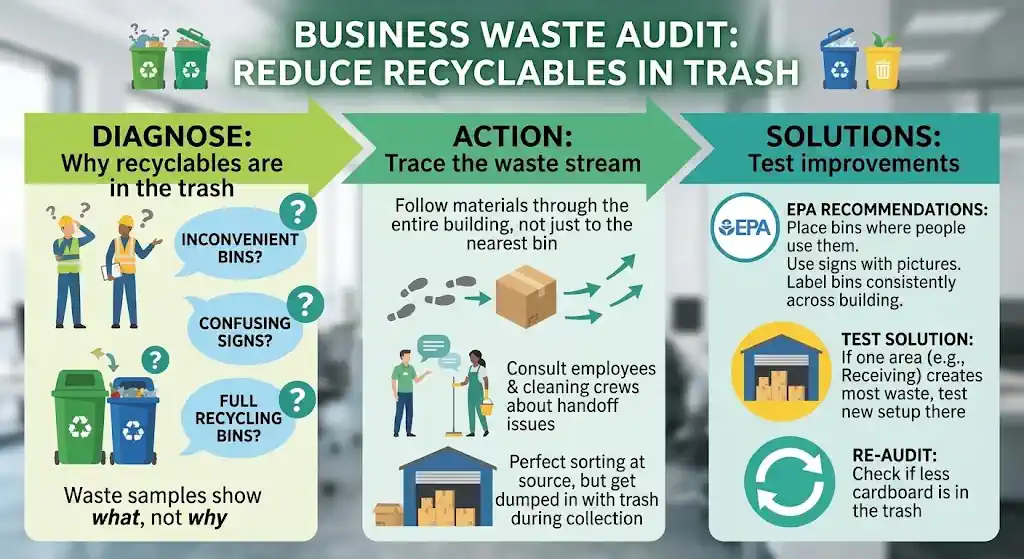
An audit will often show recyclable material sitting in the trash. Then comes the harder part: finding out why. Maybe bins are inconvenient. Maybe the signs are confusing. Maybe the recycling bin fills up before anyone empties it.
Follow materials through the building instead of stopping at the nearest bin. A department might sort its cardboard perfectly, only for it to get dumped in with the trash during collection. Employees and cleaning crews usually know about these handoff problems, and a waste sample rarely reveals them.
The EPA recommends placing bins where people will use them, using signs with pictures, and labeling bins the same way throughout a building. It also advises checking which recycling services are available in your area.
Apply those ideas to what you found. If one work area produces most of the misplaced cardboard, test a new collection setup there first. Then check whether less cardboard shows up in the trash.
Improve the Quality of Collected Recycling
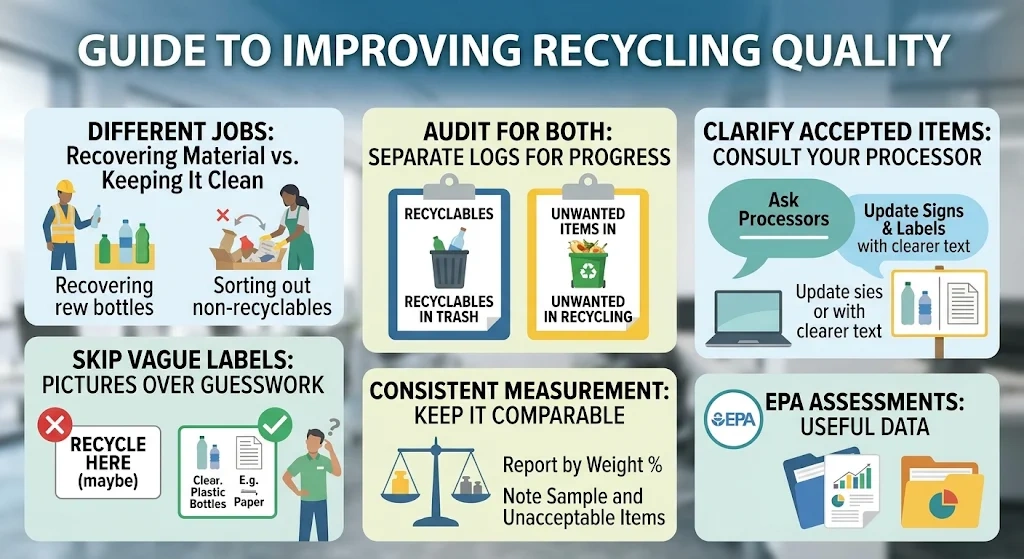
Recovering more material and keeping recycling clean are two different jobs. A business can collect more recycling and more food waste, bad packaging, and other junk at the same time.
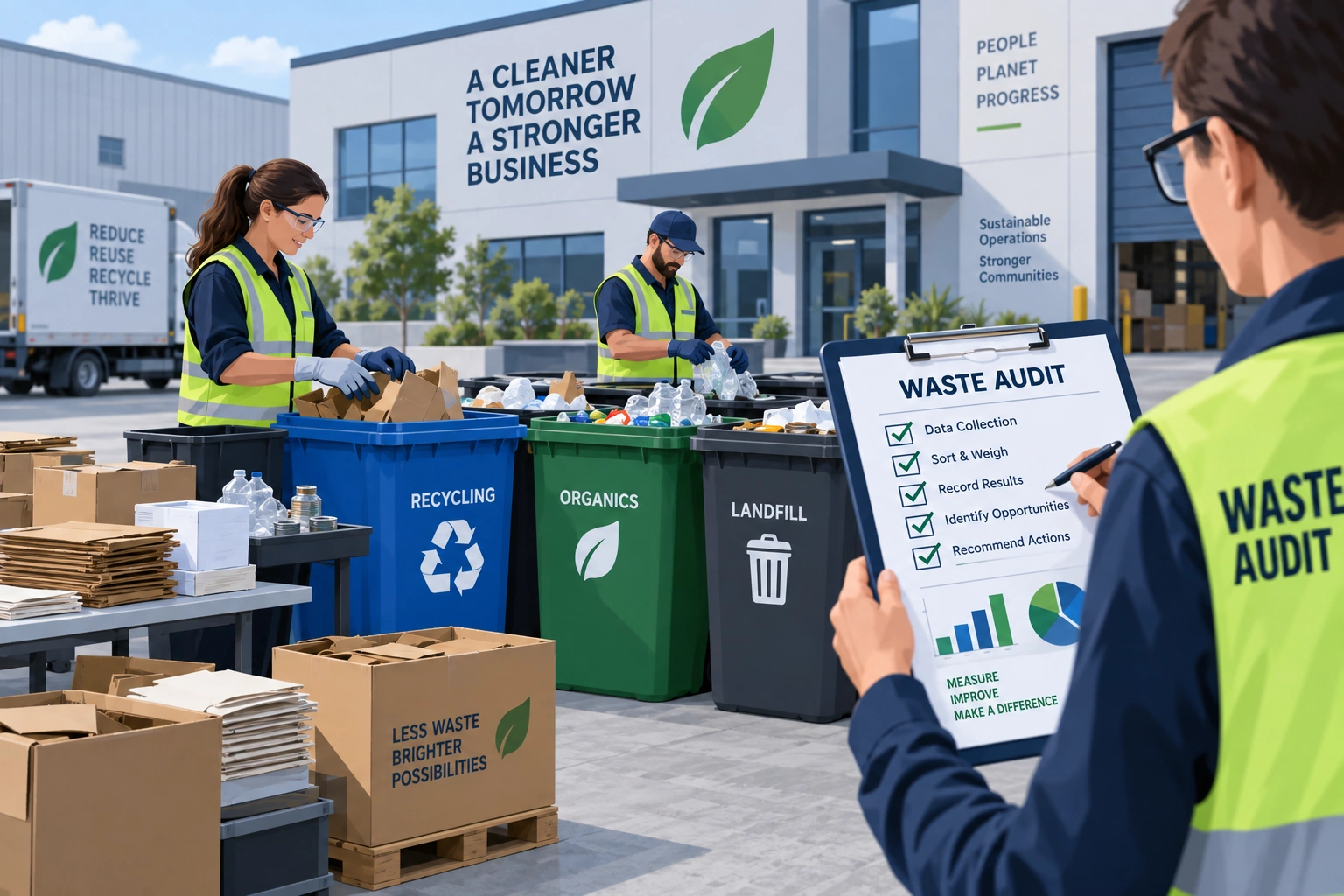
Audit for both. Log the accepted recyclables you find in the trash and log the unwanted items you find in the recycling. Keeping those two lists separate makes it easier to pick the right fix and to see progress. The EPA treats both as useful results of a waste assessment.
Ask the company that receives your recycling what it accepts. Then compare that list with your signs, bins, and instructions. Skip vague labels. If employees have to guess about common items, they'll guess wrong.
Measure the same way every time. If you report contamination as a percentage by weight, keep doing that in follow-up checks. Note what you sampled and which items you counted as unacceptable.
Look for Waste That Could Have Been Prevented
Some of the best findings involve material that never had to become waste. Unused supplies, damaged inventory, and constant packaging waste often point to a buying or handling problem.
The EPA puts waste prevention first, with recycling and composting handling whatever remains. That's a good reason to bring purchasing, storage, and production staff into the review.
Ask direct questions about repeat losses. Do you order more than you use? Is something in storage or handling damaging products? Will suppliers cut back packaging or take it back? Would reusable containers work in your operation?
Run changes past the people who own product quality and daily work. Lighter packaging still has to protect the product. Track avoided purchasing, handling, and disposal costs separately so your projected savings stay clear.
Give Each Recommendation an Owner
An audit report should read like a work plan. For each recommendation, list the finding, the proposed change, who is responsible, the expected cost, and a review date. Say what evidence will show whether it worked.
Start with the actions your data clearly supports. Bigger proposals may need more sampling, service quotes, or an equipment review. When facility changes raise technical questions, environmental engineering firms can check options against your space and operating needs.
Try uncertain changes on a small scale. One department can test new collection points before you buy bins for the whole site. Watch how well people sort, how staff handle the change, and what collection needs look like.
Check Whether the Changes Deliver Results
Follow-up should look at costs and waste performance as separate questions. Check invoices to confirm the savings. Repeat your observations or sampling to see if less recyclable material is reaching the trash and fewer unwanted items are reaching recycling.
Account for shifts in business activity. Less waste during a slow month doesn't prove a new practice worked. Compare waste to units produced, meals served, or occupied workdays for a fairer read.
A waste audit gives a business the evidence to make smarter buying, recycling, and collection decisions. Its value comes from tying findings to practical changes and then checking the outcome. Give people clear responsibilities and measure the same way each time, and you'll cut avoidable costs, recover more useful material, and build a waste program that keeps up with your operation.
Frequently Asked Waste Audit Questions
How long does a waste audit typically take?
A basic waste audit usually takes 2–4 weeks to plan, sample, and analyze. More comprehensive audits that include multiple locations or departments can take 6–8 weeks. The timeline depends on your facility size, complexity, and the depth of data you need.
Can we conduct a waste audit ourselves, or do we need an outside consultant?
You can conduct a waste audit in-house if you have staff to dedicate to sampling, data collection, and analysis. External consultants are useful if you want expert guidance, have limited staff resources, or need technical analysis. Many businesses combine both: conduct the sampling internally and hire a consultant to review findings and recommend solutions.
How much does a waste audit cost?
In-house audits cost mainly in staff time (typically hundreds to low thousands of dollars). Professional audits range from $1,500 to $5,000+ depending on facility size and scope. Most businesses recover the cost within the first year through reduced disposal fees and recovered materials.
What should we do with unusable or non-recyclable materials?
First, check whether your local recycling processor or waste hauler has additional programs like composting, wood recovery, or donation services. If not, focus on prevention: buy in smaller quantities, improve storage, or work with suppliers to reduce packaging. True waste that can't be recycled or prevented should be disposed of safely and legally according to local regulations.
How often should we repeat a waste audit?
Conduct follow-up audits annually or every 18 months to verify that recommendations are working and to catch new waste sources. After major operational changes—like new equipment, staff turnover, or supplier changes—run a quick audit sooner to adjust your program.
What's the difference between a waste audit and a waste assessment?
These terms are often used interchangeably. A waste audit typically focuses on measuring waste streams and identifying costs. A waste assessment is broader and may include environmental impact, regulatory compliance, and operational efficiency. For most businesses, the practices and steps are the same.
Can a waste audit help with regulatory compliance?
Yes. Audits reveal whether you're properly managing hazardous waste, documenting disposal, and meeting local or federal requirements. They can identify compliance gaps and help you document proof of effort for environmental regulations.