
The old message was simple: reduce, reuse and recycle. That was back in 2007. It was a good message then, and it remains a good message now. But today, the UK waste debate has moved on. We now tend to talk about the waste hierarchy, the circular economy, resource efficiency, extended producer responsibility, food waste collections and the need to cut residual waste before it ever reaches landfill or incineration.
That is progress. The UK has improved in many ways since this article was first published. Recycling is now normal in most homes and workplaces. Councils collect a much wider range of materials than they once did. Businesses are under more pressure to separate waste properly. Landfill is no longer the automatic destination for most everyday rubbish.
But it would be a mistake to think the job is finished. The UK still produces a vast quantity of waste. According to the latest official UK waste statistics, the UK generated 191.2 million tonnes of total waste in 2020, and waste from households alone reached 25.9 million tonnes in 2023. The UK household recycling rate was 44.6% in 2023, which is better than the old landfill-heavy era, but still leaves a great deal of material being lost to residual waste treatment and disposal. UK statistics on waste from GOV.UK
So the correct conclusion is an optimistic but realistic one: we have improved, but we still need to try harder. Recycling matters, but preventing waste in the first place matters even more.
Key Takeaways
- The waste hierarchy still starts with prevention. The best waste is the waste that is never created.
- Reduce, reuse and recycle remain useful words, but they are only part of the wider waste hierarchy.
- The UK has made real progress in moving away from landfill and improving household recycling behaviour.
- Progress has slowed in some areas. The UK household recycling rate was 44.6% in 2023, leaving plenty of room for improvement.
- Businesses and public bodies have a duty to think about the waste hierarchy when producing, handling or treating waste.
- Waste prevention and reuse deserve more attention because recycling alone cannot solve the problem of rising consumption and material use.
- The next step for the UK is not just better recycling. It is better product design, longer product life, repair, reuse, food waste prevention and more efficient use of materials.
What Is the Waste Hierarchy?
The waste hierarchy is a ranked system for deciding what should happen to materials and products when they might otherwise become waste.
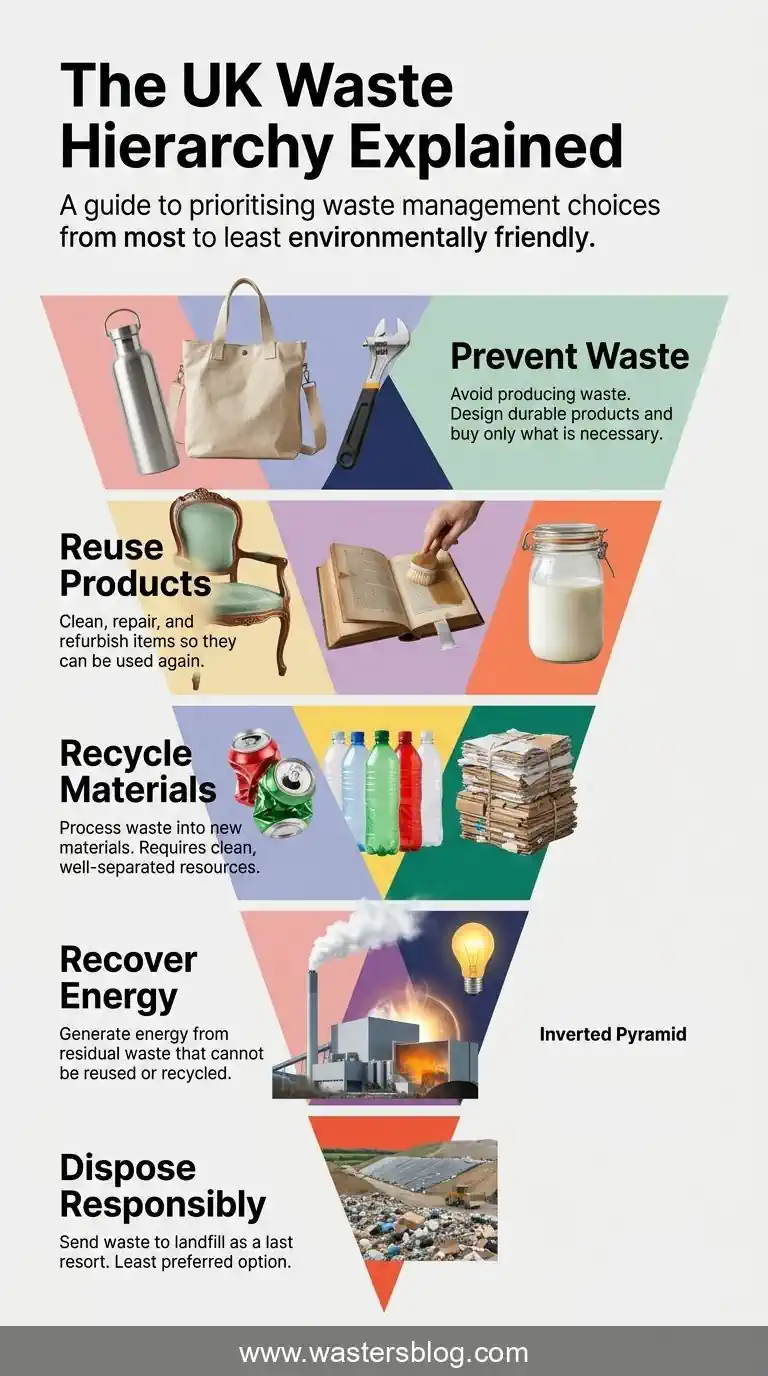
In simple terms, it says that we should deal with waste in this order:
- Prevention – avoid creating waste in the first place.
- Preparing for reuse – clean, repair or refurbish items so they can be used again.
- Recycling – turn waste materials into new products, substances or materials.
- Other recovery – recover value, commonly energy, from waste that cannot reasonably be reused or recycled.
- Disposal – landfill or other final disposal as the last resort.
DEFRA’s guidance on applying the waste hierarchy explains that the hierarchy gives top priority to waste prevention, followed by preparing for reuse, recycling, recovery and, last of all, disposal. DEFRA guidance on applying the waste hierarchy
Why “Reduce, Reuse, Recycle” Is Still a Good Message
The phrase reduce, reuse, recycle became popular because it is short, memorable and practical. It helped millions of people understand that waste management is not just about putting rubbish in the right bin.
It also correctly places reduction before reuse, and reuse before recycling. That order matters.
For example, it is usually better to avoid buying an unnecessary product than to recycle its packaging. It is usually better to repair a piece of furniture than to break it down into materials. It is usually better to prevent food waste than to collect it later for composting or anaerobic digestion.
Recycling is important, but recycling is not magic. It still involves collection, transport, sorting, processing, energy use and, in some cases, material losses. That is why modern waste policy increasingly focuses on resource efficiency, not simply end-of-pipe recycling.
How the UK Has Improved Since the Early Waste Campaigns
There is no doubt that the UK waste sector has changed substantially over the last two decades.
Landfill used to dominate municipal waste management. Today, far more material is separated, recycled, composted, digested or otherwise recovered. Household recycling has become routine. Food waste collections are expanding. Businesses are increasingly expected to understand their waste streams, separate materials and reduce avoidable waste.
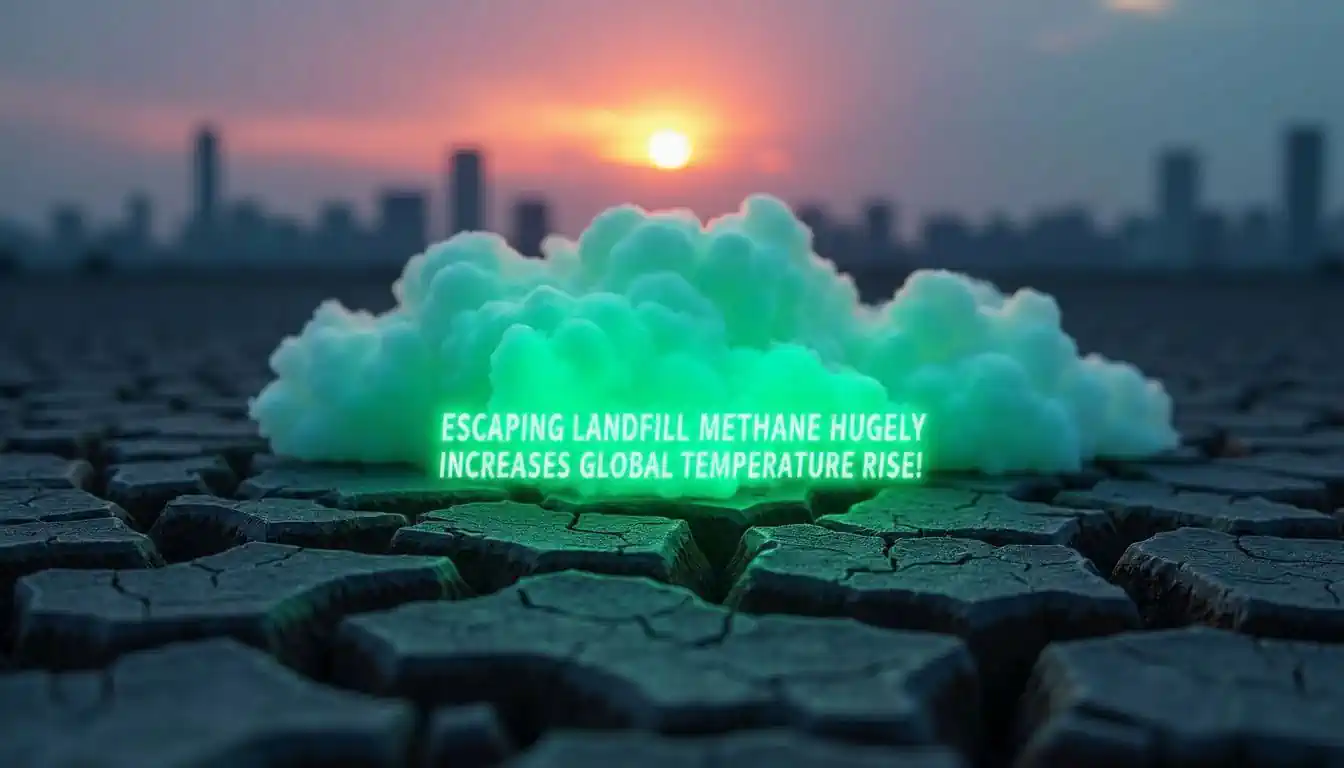
The latest UK waste statistics show that biodegradable municipal waste sent to landfill fell to 5.3 million tonnes in 2023, down from 6.3 million tonnes in 2022. That is a significant and welcome improvement because biodegradable waste in landfill is a source of methane, a powerful greenhouse gas. GOV.UK waste statistics
There are also important reforms under way in England, including Simpler Recycling, Extended Producer Responsibility for packaging, the planned Deposit Return Scheme and changes affecting energy-from-waste through the UK Emissions Trading Scheme. The Local Government Association has described these reforms as measures intended to reduce residual waste, boost recycling and encourage more sustainable business behaviour. Local Government Association guide to waste and recycling reforms
That is the optimistic part of the story. The UK has improved. The public is more aware. The waste industry is more technically advanced. Waste data is better than it once was. Landfill is no longer treated as the default answer. Food waste is being depackaged and sent to biogas plants.
Why We Still Need to Try Harder
The less comfortable truth is that the UK still generates an enormous amount of waste.
Household waste alone was 25.9 million tonnes in 2023. Commercial and industrial waste remains a very large stream, with UK commercial and industrial waste estimated at 40.4 million tonnes in 2020, while England’s commercial and industrial waste was estimated at around 32.6 million tonnes in 2023. Official UK waste data
There are also real difficulties in comparing waste totals over a 20-year period. Definitions, measurement systems and reporting methods have changed. Some categories have improved, some have fluctuated, and some sectors remain stubbornly large. But the overall practical point is clear enough: modern life still produces too much waste.
Online retail, short product lifetimes, food waste, disposable packaging, low-cost imports, fast fashion, construction activity and commercial consumption all add pressure. Even when recycling improves, the total amount of material moving through the economy can remain very high.
That is why the future cannot be based only on collecting more bins. The UK needs to move further up the waste hierarchy. That means more emphasis on prevention, repair, reuse, better design, refill systems, durable products, resource-efficient construction and stronger producer responsibility.

The Five Stages of the Waste Hierarchy Explained
1. Prevention
Prevention is the highest and most important stage of the waste hierarchy.
This means designing, buying and using products in ways that avoid waste being created in the first place. Examples include:
- Using less material in packaging and product design.
- Designing products that last longer.
- Avoiding unnecessary single-use items.
- Reducing food waste at home, in shops and in catering.
- Buying only what is needed.
- Using refillable, repairable and durable products.
This is the stage that receives too little attention. It is easier to talk about recycling than to talk about consuming less, but prevention is where the greatest environmental gains are often found.
2. Preparing for Reuse
Preparing for reuse means checking, cleaning, repairing or refurbishing products or components so that they can be used again.
This can include furniture reuse, electrical repair, pallet reuse, second-hand building materials, clothing resale, refillable containers and the recovery of spare parts.
Reuse is often better than recycling because it preserves more of the value already invested in a product. A reused chair, phone, pump, motor or door has not had to be broken down and remanufactured into something else.
The Office for Environmental Protection has highlighted the importance of prioritising reuse over recycling and developing better pathways for cutting resource use and residual waste. Office for Environmental Protection assessment of resources and waste policy in England
3. Recycling
Recycling turns waste materials into new materials, products or substances. It includes familiar materials such as paper, card, glass, metals and plastics. It can also include composting where the output is used beneficially.
Recycling is essential, but it needs clean, well-separated materials. Contamination reduces quality and can make recycling more expensive or even impossible. This is why clearer collection systems and better public communication matter.
The UK household recycling rate was 44.6% in 2023. Wales performed particularly strongly at 57.0%, while England’s provisional rate was 44.0%. These figures show both progress and the remaining challenge. UK household recycling statistics
4. Other Recovery
Recovery means extracting value from waste that cannot reasonably be prevented, reused or recycled. In practice, this often means energy recovery from residual waste, although recovery can take other forms.
Energy recovery is usually preferable to landfill for suitable residual waste, especially where it reduces methane emissions from landfill. However, it should not become an excuse for poor recycling or avoidable waste generation.
The hierarchy is clear: recovery sits below recycling, reuse and prevention.
5. Disposal
Disposal is the bottom of the hierarchy. Landfill is the classic example.
Some wastes still need final disposal, particularly where they are contaminated, hazardous or unsuitable for recovery. But disposal should be the last resort, not the first choice.
The move away from landfill has been one of the UK’s major waste management achievements. Even so, landfills have not disappeared, and historic landfill sites continue to require long-term management, including control of landfill gas and leachate.
What This Means for Households
For households, the waste hierarchy can be translated into simple daily habits:
- Buy less of what you do not need.
- Choose products with less packaging where practical.
- Use food before it spoils.
- Repair items before replacing them.
- Donate, sell or give away usable goods.
- Use local reuse shops, charity shops and repair cafes.
- Separate recycling carefully and keep it clean and dry.
- Use food waste and garden waste collections where available.
Small actions matter because household waste is produced by millions of people every day. But households should not carry the whole burden. Producers, retailers, councils and waste companies all have a role to play.
What This Means for Businesses
For businesses, waste is not just an environmental issue. It is also a cost, a compliance risk and sometimes a sign of inefficient purchasing or production.
Many businesses pay for materials, pay again to handle them, and then pay a third time to dispose of them. Applying the waste hierarchy can reduce those costs.
Practical business steps include:
- Audit the main waste streams produced on site.
- Identify avoidable waste at the purchasing stage.
- Ask suppliers to reduce packaging or use returnable packaging.
- Separate high-value materials such as metals, card, plastics and timber.
- Train staff so that recycling bins are used correctly.
- Look for reuse routes before recycling or disposal.
- Record waste movements and use reputable licensed contractors.
- Review waste contracts regularly to ensure they support prevention and recycling.
DEFRA’s waste hierarchy guidance is specifically aimed at businesses and public bodies that generate, handle or treat waste. Waste hierarchy guidance for businesses and public bodies
Why Recycling Alone Is Not Enough
Recycling is sometimes treated as the environmental answer to waste. It is not. It is one part of the answer.
If consumption rises faster than recycling improves, the total waste burden can still remain high. If products are designed badly, they may be technically recyclable but practically difficult to recycle. If materials are mixed or contaminated, they may be downgraded or rejected. If reuse systems are weak, valuable products may be destroyed too early.
This is why the waste hierarchy puts prevention and reuse above recycling.
A circular economy is not achieved simply by collecting more waste after it has been created. It is achieved by keeping products, components and materials in useful circulation for longer.
A More Optimistic View of UK Waste Management
It is easy to be gloomy about waste. There is still too much litter, fly-tipping, plastic pollution and avoidable residual waste. But it is also important to recognise the progress that has been made.
The UK waste sector is far more sophisticated than it was a generation ago. Modern materials recovery facilities, composting sites, anaerobic digestion plants, transfer stations, reuse networks and specialist recycling businesses all play a part in reducing the need for landfill.
Public awareness has improved. Most people now understand that waste has environmental consequences. Many businesses now see waste reduction as part of good management, not just a regulatory nuisance.
That progress should be acknowledged. But it should not make us complacent.
The next stage is harder. It requires better product design, stronger reuse systems, more reliable recycling markets, clearer consumer information, and a serious effort to reduce the total quantity of waste produced.
Conclusion: We Have Improved, But the Waste Hierarchy Still Demands More
The original message from the Environment Agency and others was right: more effort was needed to reduce, reuse and recycle. Years later, that message still applies.
The difference is that we now have a clearer framework. The waste hierarchy shows that the best environmental option is not simply recycling more. It is preventing waste first, then reusing products, then recycling materials, then recovering value, and only disposing of what is left as a last resort.
The UK has made real progress, especially in reducing reliance on landfill and making recycling part of everyday life. But the scale of household, municipal, commercial, industrial and construction waste remains very large.
So the answer is not despair. It is renewed effort.
Reduce what we use. Reuse what still has value. Recycle what can be made into something useful. Recover value only when better options are not practical. Dispose of as little as possible.
That remains the common-sense route to better waste management in the UK.
FAQs About the Waste Hierarchy
What is the waste hierarchy?
The waste hierarchy is a ranking system for waste management. It places waste prevention first, followed by preparing for reuse, recycling, recovery and disposal last.
Is reduce, reuse, recycle still relevant?
Yes. Reduce, reuse and recycle remain very relevant, but they are now best understood as part of the wider waste hierarchy. Reduction and reuse are usually better than recycling because they preserve more value and avoid waste being created in the first place.
Why is prevention better than recycling?
Prevention avoids the need to collect, transport, sort and reprocess waste. It also avoids the energy, materials and emissions involved in making unnecessary products or packaging.
Has the UK improved its waste management?
Yes. The UK has moved a long way from the old landfill-dominated approach. Household recycling is now normal, biodegradable municipal waste to landfill has fallen, and new reforms are intended to improve recycling and reduce residual waste. However, total waste generation remains very large.
What was the UK household recycling rate in 2023?
The provisional UK recycling rate for waste from households was 44.6% in 2023, according to official UK waste statistics.
What is residual waste?
Residual waste is the waste left after materials have been separated for reuse, recycling, composting or other treatment. It is the material that usually goes to energy recovery or disposal.
What can businesses do to apply the waste hierarchy?
Businesses can audit waste streams, reduce unnecessary purchasing, ask suppliers to cut packaging, reuse materials, separate recyclables properly, train staff and work with reputable waste contractors.
Is energy from waste better than landfill?
For many residual wastes, energy recovery can be preferable to landfill. However, it still sits below prevention, reuse and recycling in the waste hierarchy.
Why does the UK still need to try harder?
The UK still generates huge quantities of waste. Even with improved recycling, too many products and materials become residual waste. The biggest gains now are likely to come from waste prevention, reuse, repair, better design and more efficient use of resources.
References
- UK statistics on waste – GOV.UK
- Guidance on applying the waste hierarchy – GOV.UK
- Councillors’ guide to waste and recycling reforms – Local Government Association
- Assessment of resources and waste policy in England – Office for Environmental Protection
[Article Published 2007. Updated 9 April 2018 and rewritten May 2026.]


Great article. We l-u-u-u-ved it. lol! But, don’t forget to trade in your old major appliances for new ones with the Energy Star rating. The Energy Star rating guarantees that the appliance you are using has been built to use much less energy than its non-rated predecessor. For refrigerators and freezers, the rating promises 20% less energy used, for dishwashers 40% less energy used and for washing machines at least 50% less energy used!
Used it with my secondary school class. Simple but powerful. And hilarious lol?
Yes. There has to be something we can do with the trash recycle it somehow?.
Thanks. I have and idea that can solve this problem.
Good you have great ideas?
This page its a nice way to make a rallying call. Also for kids to learn about wastes..? Reduce, Reuse and recycle etc
Hi ,this is a brilliant and informative site regarding recycle material from household and commercial premises.i live in Cumbernauld which is not far from Glasgow and I have noticed recycle materials from cardboard to tin cans etc dumped in the streets and industrial estates which have been lying there for ages as no one has lifted them .it’s not just a problems in my home town but everywhere .I there were workers going around industrial estates ,forestry areas etc the places would be tidier and also safe to work .your site tells people what to recycle which is great but what about the costs of collecting cans and glass them taking them to a recycling plant .I read if you collect cans you can get a penny for a can ,is that true .? I also read that there are recycle machine s that give you voucher s if you return cans and glass containers to be recycled.why has the big supermarket s not got a facility that does this ?, surely if the supermarket make hundred s of millions of pounds a year can afford a recycling machine.
Steven
I read your comment with interest and agree that there should be some way for people to recycle items to the shops where they were bought, or to a recycling plant and be given at least some money for the materials in them, if not for re-using them.
The UK waste industry is working on a scheme to provide machines in supermarkets which will pay for returned re-usable containers of all types. In my opinion most people want this to happen and I am hoping that this year we will start to see the first supermarkets doing this.
The best way for you to speed up this process and influence people is, by taking every opportunity you get, to simply tell people what you have written in your comment here.
If you are not doing it already. It’s not a bad idea to go onto the feedback websites of your local stores and ask when they are going to start taking their containers back.
Companies do often say to people like me that they have no objection to doing much more recycling, but the public don’t really seem interested. They know it makes sense, but it’s a risk for them to invest in the “reverse vending” machines needed. They are worried that the public won’t use them, so they are not doing it.
That’s where you can make a difference by showing that you do care, and will use them.
Hey, thanks for a great post, it seems everyone these days is getting more interested in saving the environment. This article is 2 years old now. How about updating, cause I’d like to know what percentage of UK household’s still do not recycle enough and throw everything that they consider ‘rubbish’ into their ordinary bin.