
Best Ugly Produce Delivery Boxes: The best option for UK-based homes trying to save excess or imperfect harvests is Oddbox, which fights food waste by delivering seasonal, “wonky” fruit and vegetables right to your door. HeroGo and Wonky Veg Boxes are two other noteworthy UK options.
Quick Facts from this Article are:
- Misfits Market acquired Imperfect Foods in 2023, merging two of the biggest ugly produce delivery services into one — but they still operate differently depending on where you live.
- Ugly produce isn't low quality — it's cosmetically imperfect food that would otherwise go to waste, typically sold at up to 40% less than grocery store prices.
- Misfits Market now delivers to nearly all zip codes in the lower 48 U.S. states, using the former Imperfect Foods delivery network in urban and suburban areas.
- Box customisation, organic options, and minimum order requirements differ significantly between the two services — and knowing which fits your lifestyle could save you real money.
- Keep reading to find out which service wins on produce quality, delivery reliability, and overall value after the 2023 merger shook everything up.
Ugly produce delivery is one of the simplest swaps you can make to cut food waste without changing how you cook or eat.
Every year, billions of pounds of perfectly edible fruits and vegetables never make it to store shelves — not because they're unsafe, but because they're the wrong shape, size, or color. Misfits Market built an entire business model around rescuing that food and delivering it directly to your door at a steep discount. So did Imperfect Foods. Now, after a landmark 2023 merger, these two leading services operate under the same roof — but they're not identical, and choosing the right one still matters.
This breakdown covers everything: what arrives in each box, how pricing and customization compare, produce quality expectations, and who should choose which service after the merger changed the landscape completely.
Misfits Market Now Runs Both Services — Here's What That Means
Misfits Market announced its acquisition of Imperfect Foods in September 2022, and by 2023 the two companies had fully integrated operations. What this means practically is that Misfits Market now uses the former Imperfect Foods delivery infrastructure in urban and suburban delivery zones — meaning customers in those areas receive their groceries from a dedicated Misfits Market driver instead of a third-party carrier like FedEx.
For customers outside those dedicated zones, FedEx or another third-party carrier still handles last-mile delivery. The shopping experience, however, now runs through the Misfits Market app and platform for everyone — giving former Imperfect Foods subscribers access to a wider product catalog and a more refined shopping interface than they had before.
What These Ugly Produce Boxes Actually Deliver
The term “ugly produce” undersells what actually shows up in these boxes. Yes, you'll get misshapen carrots and slightly undersized apples — but the product range has expanded well beyond fruits and vegetables into pantry staples, dairy, sustainable meat, and rescued packaged goods. To learn more about how these services work, check out this discussion on programs like Imperfect Foods.
Why Produce Gets Labeled “Imperfect” or “Misfit”
Cosmetic standards in the conventional grocery supply chain are brutally strict. A cucumber with a slight curve, a bell pepper with an extra lobe, or an apple with surface scarring will get rejected at the distributor level — not because the flavor or nutrition is compromised, but because it won't photograph well or stack neatly on a shelf. That rejection is where Misfits Market and Imperfect Foods step in.
Surplus inventory is another major source. Farms occasionally overproduce, and rather than letting excess stock rot in a warehouse, these services purchase it at reduced cost and pass the savings to customers. The result is produce that is genuinely fresh, nutritionally intact, and often organically grown — just not Instagram-ready.

What Comes in Each Box Beyond Fruits and Vegetables
Both services have evolved significantly from their produce-only origins. A typical Misfits Market order today might include:
- Organic seasonal vegetables and fruits
- Pantry staples like olive oil, grains, and canned goods
- Sustainably sourced meat and seafood
- Dairy products including cheese and eggs
- Snacks, beverages, and rescued packaged goods nearing their best-by date
It's worth noting that while produce tends to be priced well below grocery store equivalents, some reviewers have flagged that meat, cheese, and specialty items can run higher than expected. Produce savings are real — everything else warrants a price check against your local store before you commit.
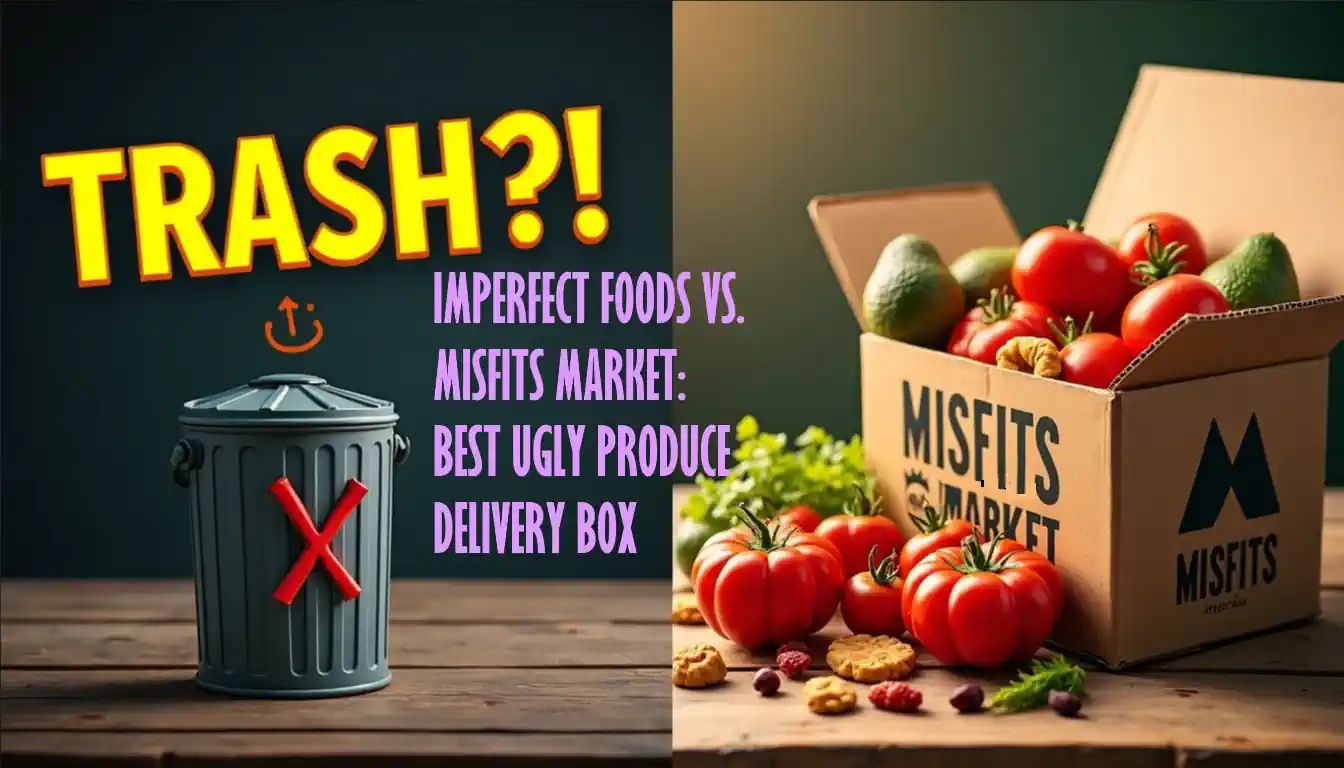
Imperfect Foods vs. Misfits Market: Head-to-Head Comparison
Now that they operate under the same parent company, the differences between these two services are more nuanced than before — but they still exist, and they're worth understanding before you subscribe.
Box Customization and Order Flexibility
Customization is where Misfits Market has a clear edge post-merger. The platform allows you to build your order item by item through its app rather than receiving a pre-packed mystery box. You can add, remove, or swap products each week before your cutoff date, giving you meaningful control over what lands on your doorstep. Order minimums sit at $15, and you can skip weeks or pause your subscription without penalty — a key flexibility feature for households with unpredictable schedules.
Produce Quality and What Arrives at Your Door
Produce quality has been one of the most discussed aspects of both services in customer reviews. The honest answer is that it varies. Most customers report receiving fresh, usable produce with only minor cosmetic flaws — exactly what the model promises. However, some boxes have included items that were already damaged or overripe on arrival, which is a real risk when shipping perishables across long distances. The good news is that both services have historically offered credits or replacements for quality issues when reported promptly.
Organic vs. Conventional Options
Misfits Market carries both organic and conventional produce, which is a meaningful upgrade from the earlier version of the service that leaned heavily organic. This matters because not every household wants or needs to pay the organic premium on every vegetable. The ability to mix and match gives you flexibility that a strictly organic service can't offer. For more on how supermarkets are addressing food waste, explore food waste management solutions.
Imperfect Foods had long been the stronger option for shoppers who specifically wanted conventional produce at the lowest possible price point. Post-merger, that distinction has largely collapsed — Misfits Market now covers both categories effectively, and the product catalog has expanded enough that most shoppers will find what they're looking for regardless of their organic preference.
Delivery Fees and Minimum Order Requirements
Misfits Market charges a flat delivery fee on top of your order total, and the minimum order threshold sits at $15. Delivery fees vary slightly depending on your location and whether you're in a dedicated driver zone or a FedEx delivery area. The company claims produce is priced up to 40% below conventional grocery store prices — and for most fruits and vegetables, that holds up. But that discount shrinks considerably on non-produce items, so building your order around fresh produce is where you'll see the most savings.
There's no membership fee required to shop with Misfits Market, which is a notable difference from services like Thrive Market that gate their pricing behind an annual subscription. You pay per item, per order, per delivery — nothing more. That straightforward structure makes it easier to evaluate whether the savings are real for your specific shopping habits without committing upfront.
Customer Service: Where Each Service Stands
Customer service has been a consistent pain point flagged across reviews for both services. Common complaints include damaged packaging on arrival — including reports of leaking containers and crushed items — and inconsistent follow-through on replacement requests. That said, when issues are reported promptly through the app, most customers do receive account credits. Managing expectations going in is key: this is a food rescue service operating at scale, and occasional imperfections in both the produce and the logistics are part of the trade-off for lower prices and a reduced environmental footprint.
Which Service Wins on Food Quality?
Post-merger, Misfits Market is the clear answer for most households. The integration of Imperfect Foods' delivery infrastructure with Misfits Market's broader product catalog and superior app experience gives customers the best of what both services originally offered. Former Imperfect Foods subscribers in dedicated delivery zones now receive the same direct-driver delivery they were used to, without losing access to the products they ordered regularly.
That said, quality consistency remains the biggest variable across both services. For more insights into how supermarkets are transforming food waste management, here's what to realistically expect when your box arrives:
- Fruits and vegetables are typically fresh with cosmetic flaws only — odd shapes, minor surface blemishes, or non-standard sizing
- Leafy greens can be hit or miss depending on transit time and season — inspect immediately and use within a day or two
- Packaged goods are often near their best-by date — rescued inventory, not expired, but plan to use them quickly
- Meat and dairy arrive cold but pricing isn't always the bargain that produce is — compare before you add to cart
- Damaged packaging is reported occasionally — document it immediately and contact support for a credit
The bottom line on quality is this: if you go in expecting supermarket perfection, you'll be disappointed. If you go in expecting fresh, edible, sustainably sourced food with the occasional imperfection, you'll rarely be let down.
What makes this model worth it isn't just the price — it's the fact that every box you receive represents food that would have otherwise been discarded. That's a tangible, measurable impact that a standard grocery run simply cannot offer.
How the 2023 Merger Changed Both Services
The Misfits Market and Imperfect Foods merger reshaped the ugly produce delivery landscape in ways that are still playing out for long-term subscribers of both services. Before the acquisition, the two companies competed directly for the same customer base, which kept both services sharp on pricing, customization, and product variety. Post-merger, that competitive pressure disappeared — replaced instead by a consolidated operation with significantly wider reach and a unified technology platform.
For most customers, the practical changes became visible in three areas: the shopping interface shifted entirely to the Misfits Market app, delivery logistics were reorganized around the Imperfect Foods driver network in key urban zones, and the combined product catalog grew substantially. Whether those changes felt like an upgrade depended almost entirely on which service you were coming from.
What Imperfect Foods Customers Gained
Imperfect Foods customers who had grown accustomed to their service largely got an upgrade in disguise. The Misfits Market app offered a more intuitive shopping experience, the product range expanded to include items that Imperfect Foods didn't carry, and — critically — delivery quality in dedicated zones remained consistent because the same driver infrastructure stayed in place. The biggest adjustment was adapting to a new platform, but most longtime Imperfect Foods users reported that the transition was smoother than anticipated.
What Misfits Market Customers Gained
For Misfits Market subscribers, the merger brought something they had long been missing: direct-to-door delivery in urban and suburban markets. Previously, Misfits Market relied heavily on FedEx for last-mile delivery, which introduced more variability in transit time and temperature control for perishables. Inheriting the Imperfect Foods delivery network solved that problem in a single move, giving Misfits Market customers in major metro areas a dramatically more reliable delivery experience.
The expanded product catalog was the other major win. With the two services now operating as one, the combined inventory gave Misfits Market shoppers access to a wider range of rescued pantry goods, dairy, and specialty items than the original platform carried. For households trying to source as much of their weekly grocery run as possible from a single sustainable service, that breadth makes a real difference.
Who Should Choose Misfits Market Post-Merger?
Misfits Market post-merger is the right call for almost any household that wants to reduce food waste, lower their grocery bill on fresh produce, and shop from a single sustainable platform. It works especially well for households that cook regularly with seasonal vegetables, don't need every item to be picture-perfect, and appreciate the flexibility of a customizable weekly order with no membership fee locked behind a paywall.
Where it makes less sense is for shoppers who need ultra-consistent produce quality every single week, or those who rely heavily on fresh meat and specialty items where Misfits Market's pricing advantage essentially disappears. If your grocery cart is 80% produce and pantry staples, this service will likely save you real money while keeping food out of landfills. If you're shopping primarily for premium proteins and specialty products, the savings case weakens considerably.
Here's a quick breakdown of who fits each profile:
- Best for budget-conscious produce shoppers who buy seasonal fruits and vegetables weekly and want up to 40% savings over conventional grocery pricing
- Best for eco-conscious households who want their shopping dollars to directly reduce food waste at the supply chain level
- Best for flexible schedules — the ability to skip weeks, pause delivery, and customize each order makes this workable even for households with unpredictable routines
- Less ideal for households that need guaranteed consistency in produce quality or regularly purchase large quantities of meat and dairy
- Less ideal for rural shoppers outside dedicated delivery zones who may experience longer transit times via FedEx, increasing the risk of produce arriving past its prime
Frequently Asked Questions
Ugly produce delivery services come with a lot of questions — especially after a major merger reshuffled how both services operate. Here are the most common ones, answered directly. For more insights, you can explore how supermarkets are transforming food waste management.
Is Imperfect Foods still operating independently from Misfits Market?
No. Imperfect Foods was acquired by Misfits Market in 2023 and is no longer operating as a separate independent service. Former Imperfect Foods customers were transitioned to the Misfits Market platform, where they now shop through the Misfits Market app. In dedicated urban and suburban delivery zones, the former Imperfect Foods driver network continues to handle last-mile delivery under the Misfits Market brand.
Are ugly produce delivery boxes actually cheaper than grocery stores?
For produce specifically, yes — Misfits Market claims savings of up to 40% compared to conventional grocery store pricing, and for most seasonal fruits and vegetables that figure holds up. The savings are less consistent on packaged goods, dairy, and especially meat and seafood, where prices can actually exceed what you'd pay at a standard supermarket. Build your orders around fresh produce to maximize the value.
Can you skip weeks or pause your subscription with Misfits Market?
Yes. Misfits Market allows customers to skip individual weeks or pause their subscription without penalty, provided you make changes before your weekly order cutoff date. This flexibility is one of the service's strongest features, particularly for households that travel frequently or have irregular cooking schedules. There's no fee to pause, and reactivating is straightforward through the app. For more insights on how supermarkets are transforming food waste management, explore related innovations in the industry.
Does Misfits Market deliver to all U.S. states?
Misfits Market delivers to nearly all zip codes across the lower 48 U.S. states. Hawaii and Alaska are not currently served. Within the contiguous U.S., delivery method depends on your location — customers in urban and larger suburban areas receive orders from a dedicated Misfits Market driver, while customers in rural areas or outside dedicated delivery zones receive their boxes via FedEx or another third-party carrier.
If you're in a rural area, it's worth factoring in the longer transit time when evaluating produce quality expectations. Perishables shipped via FedEx over greater distances carry more variability in arrival condition than those delivered directly by a local driver on the same day.
How much food waste do these services actually prevent?
Misfits Market has positioned food waste reduction as a core part of its mission, and the model itself is structurally sound — purchasing cosmetically rejected and surplus produce that would otherwise never reach consumers is a direct intervention in one of the most wasteful stages of the food supply chain. The U.S. food system wastes billions of pounds of produce annually at the farm and distributor level, and services like Misfits Market target exactly that point of loss.
That said, the environmental math only works if the food you receive actually gets eaten rather than composted at home. Ordering more than your household can realistically consume in a week, or selecting produce you're unfamiliar with and unlikely to cook, shifts the waste downstream from the farm to your kitchen. The most sustainable way to use these services is to order intentionally — choose familiar staples, plan your meals around what arrives, and treat the occasional imperfect item as a cooking challenge rather than a reason to discard.
Every box you receive represents a net positive for the food system — but how positive depends on what happens after it arrives at your door. Start with a smaller order than you think you need, build familiarity with the service's quality and quantities, and scale up from there. That approach turns an already sustainable choice into one that's genuinely waste-free from farm to fork.
Ready to make the switch? Misfits Market makes it easy to shop sustainably, save on groceries, and fight food waste — all from one straightforward platform with no membership fees required. Learn more about maximizing material recovery in food depackaging to further enhance your sustainable practices.