Article At A Glance
- Mechanical Biological Treatment (MBT) is a two-stage waste processing system that combines physical sorting with biological stabilisation to recover value from mixed municipal solid waste.
- MBT plants differ fundamentally from standard Materials Recovery Facilities (MRFs) because they are designed to process the entire mixed waste stream, not just pre-sorted recyclables.
- The mechanical stage separates metals, plastics, paper, and high-calorific fractions, while the biological stage handles the organic fraction through composting or anaerobic digestion.
- MBT is especially critical for regions where source separation is limited or inconsistent, acting as a safety net that diverts waste from landfill at scale.
- Keep reading to discover the three distinct MBT plant configurations and how each one determines what useful outputs — from biogas to compost to Solid Recovered Fuel — a facility can actually produce.
MBT Plants Turn Mixed Rubbish Into Recoverable Resources
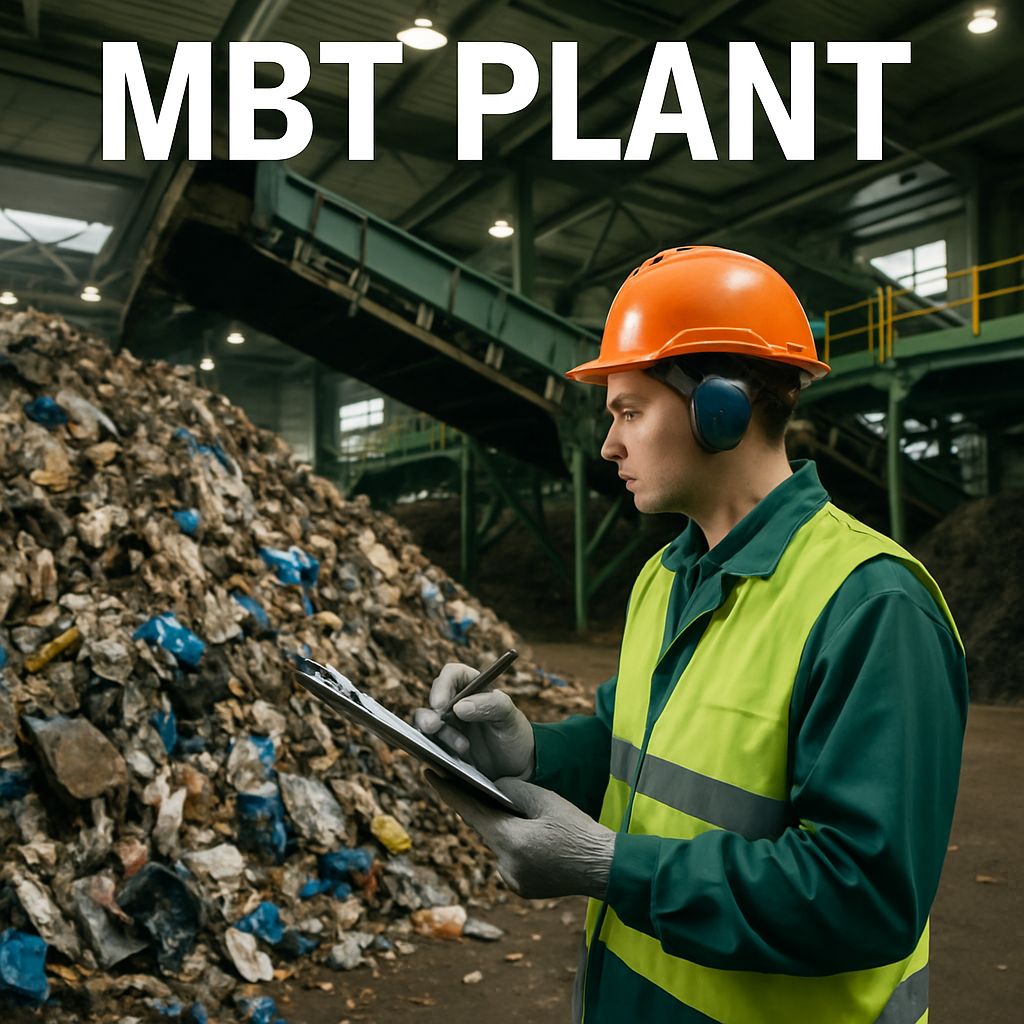
Most people assume a mixed rubbish bin is a dead end — once everything is thrown together, recovery is impossible. MBT plants exist to prove that assumption wrong.
Mechanical Biological Treatment is one of the most complete waste processing strategies available today. Rather than accepting that unsorted municipal solid waste (MSW) belongs in a landfill, an MBT facility systematically dismantles that waste stream into distinct fractions, each assigned a destination that delivers more value than burial. Metals get recycled. High-calorific plastics become Solid Recovered Fuel (SRF). Organic material is stabilised to prevent greenhouse gas emissions or converted into biogas. What remains after all of that is a drastically reduced, inert residue that is far safer to landfill than raw mixed waste.
MSWsorting is a provider of MBT and waste sorting solutions globally, and the principles behind their plant designs illustrate exactly how this process functions at an engineering level. Understanding how MBT works is not just useful for industry professionals — it is essential knowledge for anyone serious about the future of sustainable waste management.
What Is an MBT Plant?
An MBT plant is an integrated waste treatment facility that processes mixed municipal solid waste through two consecutive stages:
- a mechanical stage that physically separates the waste into distinct material fractions, and
- a biological stage that stabilises or valorises the organic-rich fraction that mechanical sorting cannot fully address.
At its highest level of investment, the result is a system where virtually every component of incoming mixed waste is assigned;
- a use,
- a market, or
- a managed disposal pathway.
For more information on subsequent methods of waste treatment, consider exploring energy from waste and incineration techniques.

“Mechanical biological treatment – Wikipedia” from en.wikipedia.org and used with no modifications.
How MBT Differs From a Standard MRF
A standard Materials Recovery Facility (MRF) is built around one primary goal: extracting high-value recyclables like aluminium, steel, PET plastic, and cardboard from a relatively clean, often pre-sorted input stream. It is optimised for purity and material quality.
An MBT plant operates on a completely different premise. It accepts the full mixed waste stream — the messy, contaminated, commingled output of households that do not separate their waste — and it is engineered to extract value from that chaos rather than reject it. Learn more about the recycling systems companies that facilitate these processes.
Where an MRF treats the leftover organic fraction as residue to be disposed of, an MBT plant treats that same fraction as a feedstock for biological processing. This dual mission is what fundamentally separates the two facility types.
The Two Core Missions: Recovery and Stabilisation
Every MBT plant is built around two non-negotiable objectives.
The first is resource recovery — pulling recyclable materials and energy-rich fractions out of the waste stream before they are lost to landfill. The second is biological stabilisation — treating the organic content of the waste to neutralise its environmental threat.
Raw organic waste in a landfill:
- generates methane, a greenhouse gas with over 80 times the warming potential of CO2 over a 20-year period, and
- produces toxic leachate that can contaminate groundwater.
MBT interrupts that process to a varying extent.
Why MBT Matters for Regions Without Source Separation
In countries or municipalities where household-level waste separation is not yet well established, MBT is not just beneficial — it is the most pragmatic large-scale intervention available.
Source separation programs take years to implement effectively and require consistent public participation. For source separation to work, it requires an educated population willing to participate. Where the population strongly supports a sustainable lifestyle, such as Wales, UK, source separation works well and reduces waste disposal costs for the ratepayers.
An MBT plant, by contrast, processes whatever arrives at the gate. It does not depend on behavioural change upstream to function. For rapidly urbanising regions generating growing volumes of mixed MSW, that operational reality makes MBT one of the highest-impact infrastructure investments a government or waste authority can make.
Stage 1: The Mechanical Treatment Process
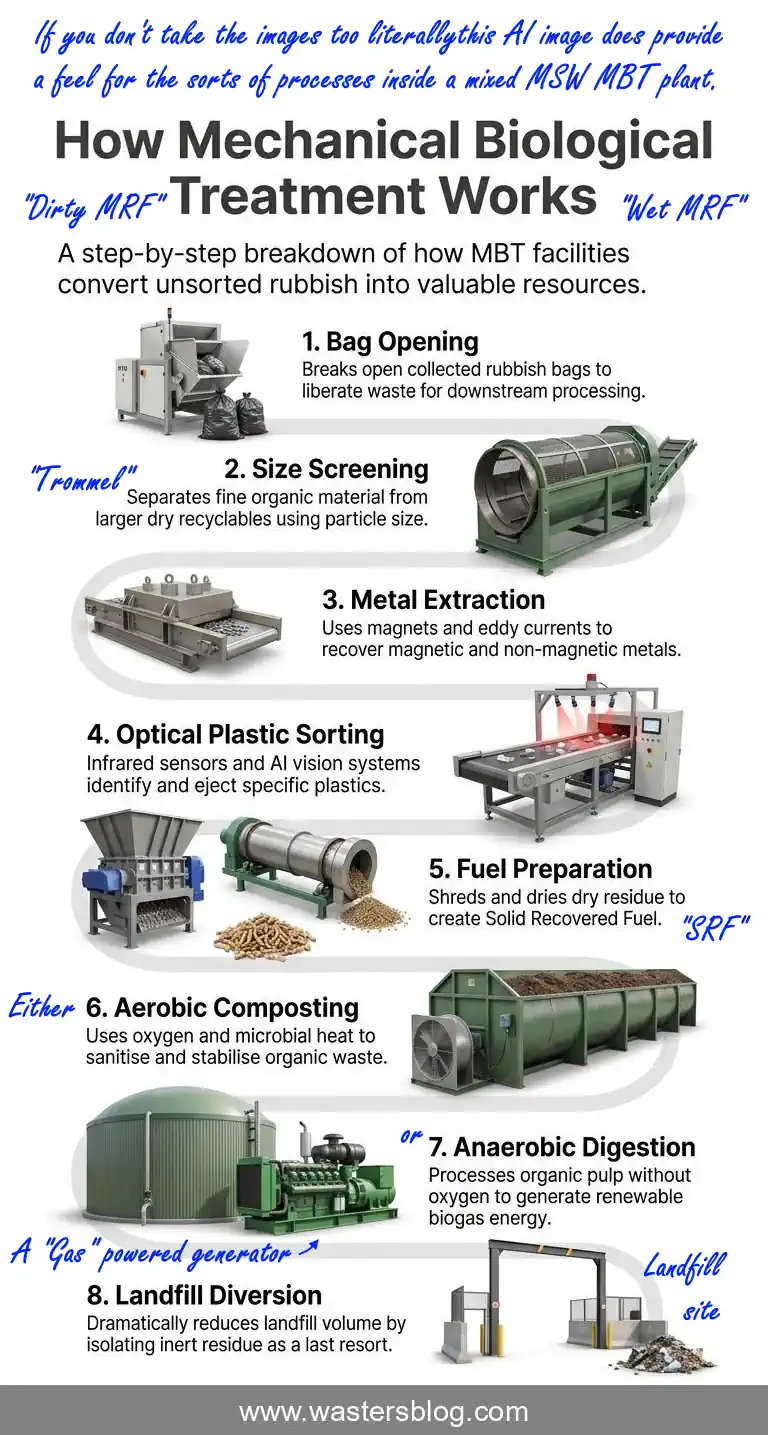
The mechanical stage is where raw mixed waste is transformed from an undifferentiated mass into sorted, processable fractions.
It relies on a sequence of physical processes, each designed to isolate a specific material type or size class. The exact configuration varies by plant design, but the core sequence follows a consistent logic:
- Bag opening and initial waste preparation — breaking open collected bags to liberate waste for processing
- Screening and size separation — splitting the waste stream by particle size to route organic-rich fines separately from larger dry fractions
- Ferrous metal separation — using overhead magnetic separators to pull out steel and iron
- Non-ferrous metal separation — using eddy current separators to recover aluminium and other non-magnetic metals
- Optical and AI-based sorting — near-infrared (NIR) sensors and machine vision systems identifying and ejecting specific plastic polymers and paper grades
- Shredding and drying — size-reducing and moisture-reducing the high-calorific fraction to produce SRF or RDF
1. Bag Opening and Initial Waste Preparation
Incoming MSW arrives compacted and bagged. Before any separation can occur, the waste must be liberated from its packaging. Industrial bag openers — typically rotating drum or star-screen style machines with cutting elements — tear open plastic bags and begin the initial breakup of the waste mass. This step is critical because unbroken bags would pass through downstream screens and sorters as a single unit, masking their contents and causing misrouting of materials. Effective bag opening at the front end directly determines the recovery efficiency of every process that follows.
2. Screening and Size Separation
Once the waste is liberated, trommel screens or ballistic separators divide it by particle size. A typical cut point is around 80–100mm. Material smaller than this threshold — called the unders — is predominantly organic matter, fine debris, and moisture-rich putrescible waste. This fraction is routed toward biological treatment. Material larger than the cut point — the overs — contains the bulk of the dry, high-calorific content: plastics, paper, textiles, and wood. This fraction continues through further mechanical sorting for recyclable extraction and SRF preparation.
The choice of screen aperture size is one of the most consequential design decisions in an MBT plant. A smaller aperture captures more organics in the unders fraction, improving the quality of the biological feedstock but potentially sending some recyclable-contaminated material to composting. A larger aperture keeps more material in the dry stream but may allow organic contamination into the SRF fraction. Plant designers calibrate this based on the specific composition of the local waste stream.
3. Magnetic and Eddy Current Separation for Metals
Metal recovery in an MBT plant follows a two-step process that mirrors what you would find in a high-specification MRF, but applied to a more challenging, contaminated input. Overhead magnetic separators (also called overband magnets) are positioned above conveyor belts carrying the oversized fraction. As the waste passes beneath, ferrous metals — steel cans, wire, metal fragments — are pulled upward and deflected into a dedicated chute. Recovery rates for ferrous metals using this method are consistently high, even from mixed waste streams.
Non-ferrous metals, primarily aluminium from cans and foil, require a different physics principle. Eddy current separators use a rapidly rotating magnetic rotor inside a conveyor head pulley to induce electrical currents in conductive non-ferrous metals. These induced currents create their own magnetic field, which repels the metal away from the conveyor belt in a trajectory that separates it cleanly from non-metallic material. Aluminium recovery through eddy current separation is a well-established, highly reliable process that works effectively even with the contamination levels typical of mixed MSW.
4. Optical and AI Sorting for Plastics and Paper
Once metals are removed, the remaining dry fraction moves through optical sorting systems. Modern MBT plants use near-infrared (NIR) spectroscopy sorters to identify specific plastic polymer types — PET, HDPE, PP, PVC — based on how each material reflects infrared light. When a target material is detected, a precisely timed jet of compressed air ejects it from the conveyor belt into a collection chute. These systems operate at belt speeds exceeding 3 meters per second and can process several tonnes per hour per unit. High-specification plants increasingly layer AI-powered vision systems on top of NIR technology, allowing the sorter to simultaneously identify material type, colour, shape, and contamination level, dramatically improving sort purity.
Paper and cardboard recovery follows a similar optical approach, with sorters calibrated to detect cellulose-based materials and separate them from the mixed stream. In MBT applications, paper recovery purity is typically lower than in a clean MRF due to the contamination levels in the incoming waste, but the recovered fraction still holds significant material value and diverts meaningful tonnage from landfill or the SRF stream.
5. Drying the Organic Fraction as Landfill Disposal Pretreatment
In some MBT configurations — particularly in regions where biological valorisation infrastructure is not yet available — the organic-rich undersized fraction is mechanically dried rather than composted or digested. This process, sometimes called Mechanical Biological Pretreatment (MBP), reduces the moisture content and biological activity of the organic fraction before landfilling.
The goal is not recovery but harm reduction: a dried, stabilised organic fraction generates significantly less methane and leachate in a landfill than raw putrescible waste. While this pathway extracts no energy or material value from the organic fraction, it represents a meaningful environmental improvement over direct landfilling of untreated mixed waste.
6. Shredding and Drying for SRF/RDF Preparation
The high-calorific residual fraction — primarily mixed plastics, textiles, rubber, and non-recyclable paper that cannot be economically recovered as clean recyclables — is processed into Solid Recovered Fuel (SRF) or Refuse Derived Fuel (RDF). SRF is the higher-specification product, produced to meet EN 15359 classification standards for use in cement kilns, industrial boilers, and dedicated energy-from-waste plants.
The production process involves heavy-duty shredders reducing particle size to a consistent range, followed by drying to reduce moisture content and improve calorific value. A well-produced SRF from an MBT plant can achieve net calorific values of 14–20 MJ/kg, making it a credible substitute for coal in certain industrial applications.
Stage 2: The Biological Treatment Process
After the mechanical stage has extracted recyclables and prepared the high-calorific fraction, the organic-rich undersized fraction enters the biological treatment stage. This is where the MBT process diverges most significantly from anything a standard MRF can do. The biological stage does not just manage the organic waste — it actively transforms it, either stabilising it into an inert soil-like material or converting it into usable energy.
Two primary biological pathways are used in MBT plants: aerobic composting and anaerobic digestion (AD). The choice between them — or the decision to combine both — depends on the plant's design objectives, local energy markets, regulatory requirements, and the quality of the incoming organic fraction. Some facilities run both in sequence, using AD first to extract biogas and then composting the digestate to produce a stable soil amendment.
Aerobic Composting: How Organic Waste Gets Stabilised
Aerobic Composting in MBT: Key Process Parameters
Parameter Target Range Why It Matters Temperature (active phase) 55–70°C Destroys pathogens and weed seeds Moisture content 50–60% Supports microbial activity without anaerobic pockets Oxygen level >5% by volume Prevents odorous anaerobic decomposition C:N ratio 25:1 to 30:1 Optimizes decomposition rate Active composting duration 3–6 weeks Achieves biological stability before maturation Total maturation period 8–16 weeks Produces stable, non-reactive output material
In the aerobic composting pathway, the organic-rich fraction from mechanical screening is loaded into enclosed composting tunnels, windrows, or in-vessel composting systems where forced aeration maintains oxygen levels throughout the mass.
Microorganisms break down the organic matter, generating heat as a byproduct. That heat is not a side effect to be managed away — it is a critical part of the process. Sustained temperatures above 55°C for a defined period are required to achieve hygienization, the destruction of pathogens, parasites, and viable weed seeds that would otherwise make the output material unsafe for land application.
MBT composting systems are almost always enclosed to control odour emissions, which are a significant operational and community relations challenge. Biofilters treat the exhaust air from composting halls before it is released. Modern enclosed in-vessel systems give operators precise control over aeration rate, temperature, and moisture, allowing them to consistently hit the biological stability targets required by waste regulations in most jurisdictions.
The end product of the composting pathway in an MBT context is often called compost-like output (CLO) rather than compost, because the input material — mixed MSW organic fraction — contains higher contamination levels than source-separated food or garden waste. CLO is typically used in land restoration, landfill cover, or as a soil conditioner where standards permit, rather than in high-grade horticultural applications.
Anaerobic Digestion: Turning Organic Pulp Into Biogas
Anaerobic digestion takes the organic fraction down a fundamentally different pathway. Instead of using oxygen-breathing microorganisms, AD relies on bacteria that thrive in oxygen-free environments to break down organic matter.
The primary output is biogas — a mixture of approximately 55–65% methane (CH?) and 35–45% carbon dioxide (CO?) — which can be combusted in a combined heat and power (CHP) unit to generate electricity and heat, or upgraded to biomethane for injection into the gas grid. The secondary output is digestate, a nutrient-rich slurry that can be further processed through composting to produce a stable soil amendment.
AD-equipped MBT plants are therefore capable of generating renewable electricity from waste that would otherwise have been buried. Learn more about composting and its environmental benefits.
How the Mechanical Stage Feeds the Biological Stage
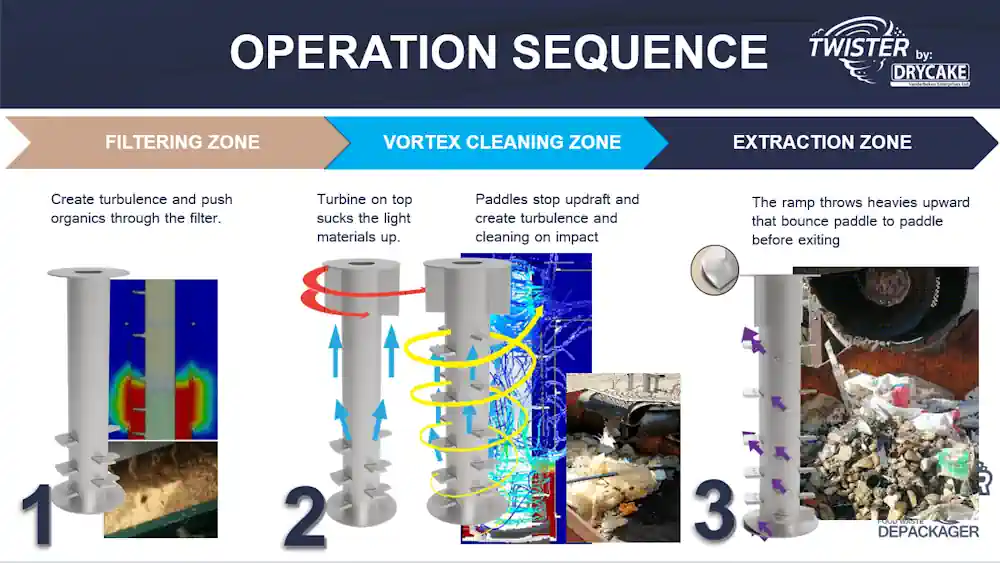
The quality and consistency of the biological stage's output depends heavily on what the mechanical stage delivers to it. If the screening process includes a well-designed 3rd generation process, the organic fraction entering composting or AD will have low levels of plastic contamination, appropriate moisture content, and a particle size distribution that supports efficient biological activity.
The Twister Depackager and Separator is a good example, as shown below:
Poorly designed, badly configured mechanical separation, on the other hand, sends oversized inert material and plastic fragments into the biological stage, reducing output quality, increasing contamination in the final compost or digestate, and creating operational problems in AD systems where plastics can cause pump blockages and reactor fouling.
This interdependency is why MBT plant design must be approached as a single integrated system rather than two separate processes bolted together. The screen aperture sizes, the shredder configurations, and the moisture management strategy in the mechanical stage all directly shape the performance and output quality of the biological stage. Getting that interface right is one of the defining challenges of MBT plant engineering.
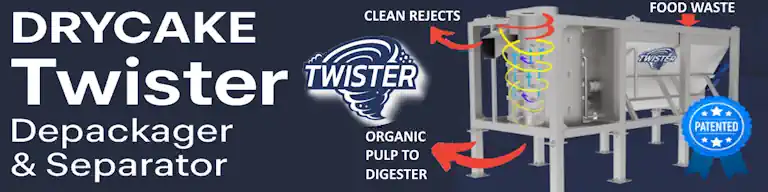
Contact the experts by clicking on the image below:
The Final Outputs of an MBT Plant
A well-designed MBT plant produces a portfolio of outputs, each with a defined end use. Understanding these outputs is the clearest way to grasp the value an MBT facility delivers compared to direct landfilling:
- Recovered recyclables — ferrous metals, non-ferrous metals, sorted plastic polymers, and paper/cardboard for material recycling markets
- Solid Recovered Fuel (SRF) or Refuse Derived Fuel (RDF) — high-calorific fraction processed for use in cement kilns, industrial boilers, or energy-from-waste plants
- Biogas or biomethane — from anaerobic digestion, used for electricity generation, heat, or grid injection
- Compost-like output (CLO) or stabilised digestate — for land restoration, landfill cover, or approved agricultural use
- Inert residue — a significantly reduced volume of non-recoverable material for managed landfill disposal
The critical point is that the inert residue fraction sent to landfill from a functioning MBT plant is dramatically smaller in volume and far less environmentally dangerous than the raw mixed waste that arrived at the gate. The biological activity has been removed, the metals and recyclables have been extracted, and the calorific content has been captured. What remains is genuinely the last resort fraction — not a default destination for everything.

“Mechanical biological treatment – Wikipedia” from en.wikipedia.org and used with no modifications.
Three MBT Plant Configurations and When to Use Each
No two MBT plants are identical because no two waste streams, regulatory environments, or economic contexts are identical. However, MBT facilities generally fall into three broad configuration types, each optimised for a different primary outcome.
The right configuration depends on local energy market prices, compost outlet availability, recyclable market access, and the specific composition of the incoming MSW.
1. Easily Recyclable Materials Removed with Drying of the “Undersize” Residue
This lowest form of treatment is a basic waste pretreatment before landfill to comply with EU Directives that require pretreatment before landfill. It is done at minimum processing cost to reduce methane emissions from the landfill. The true reduction is minimal once the waste rehydrates inside the landfill.
At the centre of the MBT facility is a screening system. The most easily recognisable type of screening system is known as a trommel screen, comprising an inclined rotating horizontal drum screen. The waste enters at the higher end and works its way down the slope; small items fall through the holes in the screens in the drum's perimeter, and larger items emerge from the end, as it gently turns.
These larger items tend to be more recyclable and are conveyed on belts through a succession of machines designed to remove specific recyclable materials.
MBT residue (undersize) is the smaller particle screened fraction (MBT residue) that falls through the screening system.
Drying of the MBT residue* may use the heat generated at the start of the composting process.
To save on the cost implications of compost production that normally requires 30 or more days to complete, only a few days of “composting” may be allowed. That's just enough time to dry the material, and no water is added, before it is landfilled with the what remains of the larger fraction.
It is the minimum requirement for landfill diversion and should be seen as a short-lived option until more sustainable pretreatment systems are installed.
2. Material and Organic Recovery MBT
This configuration prioritises the simultaneous extraction of high-purity recyclables and the production of a low-quality stabilised compost or soil amendment.
The mechanical stage is designed with intensive sorting technology — multiple NIR sorters, careful screen calibration, and robust metal recovery — to maximise both the quantity and purity of recovered materials. The biological stage uses controlled aerobic composting or a combined AD-plus-composting sequence to produce the best possible organic output.
This configuration is best suited to regions where there is a strong market or regulatory demand for compost products, where landfill diversion targets are the primary policy driver, and where the incoming waste stream has a relatively high organic content.
It is also the preferred choice where energy markets are unfavourable — for instance, where electricity prices are low enough that biogas-to-power economics are marginal — making material and organic recovery a more reliable value stream than energy generation.
3. Energy and Material Recovery MBT With Anaerobic Digestion
This is the most resource-efficient MBT configuration available, and it represents the direction most modern plant designs are heading. The mechanical stage recovers recyclables and prepares a clean, finely screened organic pulp that is fed directly into an anaerobic digestion reactor. The biogas produced powers a CHP unit, generating electricity and heat that can offset the plant's own energy consumption or be exported to the grid. The digestate from the AD process then moves into a composting maturation stage, producing a stabilised soil amendment as a secondary output.
This configuration makes the most sense where energy prices are favourable, where the incoming waste has sufficient organic content to sustain AD reactor performance, and where the operator wants to maximise the number of value streams the plant produces. The economics are more complex than a composting-only plant, but the resource recovery performance — and the environmental credentials — are significantly stronger. Plants designed this way can achieve landfill diversion rates well above 90% of incoming waste tonnage, with only the genuinely inert residue fraction requiring disposal. For more insights, explore the differences between energy from waste and incineration.
MBT Is the Bridge Between Disposal and Full Circularity
The mechanical biological treatment process does not represent the ultimate destination for waste management — a fully circular economy built on source separation, reuse, and clean recycling streams is the long-term goal.
But MBT is the most powerful tool available for the gap between where most of the world is now and where it needs to be. It meets mixed waste where it actually exists, rather than where policy documents wish it would be, and it extracts every recoverable fraction that current technology can reach.
For waste authorities, municipalities, and infrastructure investors serious about landfill diversion, emissions reduction, and resource recovery at scale, MBT is not optional infrastructure — it is foundational.
Frequently Asked Questions
The questions below address the most common points of confusion around MBT technology, covering both the technical fundamentals and the practical implications for waste management planning.
Whether you are evaluating MBT as an infrastructure investment, studying waste systems, or simply trying to understand where your rubbish actually goes, these answers cut through the jargon and give you the key facts.
What does MBT stand for in waste management?
MBT stands for Mechanical Biological Treatment. It refers to an integrated waste processing approach that combines a mechanical separation stage — which physically sorts mixed municipal solid waste into distinct material fractions — with a biological treatment stage that stabilises or valorises the organic-rich fraction through composting or anaerobic digestion. The term is used consistently across European waste policy, engineering specifications, and regulatory frameworks to describe this category of treatment facility.
What is the difference between MBT and composting?
Composting is one biological process that may occur within an MBT plant, but MBT is a complete waste treatment system that is far broader in scope. A standalone composting facility typically accepts source-separated organic waste — food scraps, garden waste — and processes only that clean organic feedstock.
An MBT plant accepts mixed unsorted municipal solid waste and first mechanically separates it into multiple fractions before any biological treatment begins. The composting or anaerobic digestion in an MBT plant is applied specifically to the organic-rich undersized fraction that the mechanical stage has isolated, not to the whole waste stream. MBT also produces recyclables, SRF, and metals as outputs, which a composting-only facility does not.
Can an MBT plant process all types of municipal solid waste?
An MBT plant is specifically designed to process mixed municipal solid waste (MSW) — the residual waste collected from households and small commercial premises that has not been source-separated. It handles this broad, contaminated stream effectively.
However, MBT is not typically used to process hazardous waste, clinical waste, large bulky items, or construction and demolition debris, as these require dedicated treatment pathways. Most MBT facilities also benefit from the removal of obviously oversized items before the waste enters the processing line, either at the collection stage or through a pre-processing step at the gate.
What happens to the residue left over after MBT processing?
The residue that remains after an MBT plant has completed its mechanical separation and biological treatment is a significantly reduced, inert fraction.
Because the organic content has been biologically stabilised, the metals have been recovered, and the high-calorific material has been extracted for SRF production, this residue presents a far lower environmental risk than raw mixed waste in a landfill.
It generates minimal methane and very little leachate. In most regulatory frameworks, MBT-treated residue qualifies as pre-treated waste, which is a requirement for landfill acceptance in the European Union under the Landfill Directive. This residue fraction typically represents between 5% and 25% of the original incoming waste mass, depending on plant configuration and waste composition.
Drying MBT Residue: Methods and Cost Implications
When the biological treatment stage in an MBT plant uses drying rather than composting or anaerobic digestion — a configuration sometimes called Mechanical Biological Pretreatment (MBP) — the organic-rich fraction is passed through mechanical drying systems before landfill disposal.
The two main drying approaches are low-temperature belt dryers, which use warm air passed over a moving belt of shredded waste material, and rotary drum dryers, which tumble the material through a heated rotating drum.
Both methods reduce moisture content substantially, lowering the biological activity of the material and its leachate-generating potential in landfill. For more insights on waste management practices, check out this article on waste management.
The cost implication of incorporating thermal drying is significant. Drying systems require consistent energy input — typically from waste heat recovered from an adjacent energy-from-waste plant or CHP unit — and the capital cost of drying equipment adds meaningfully to total plant investment.
Plants that integrate AD-generated heat for drying can offset operational energy costs, making the combination economically more attractive. However, where no renewable heat source is available, running fossil-fuel-powered dryers for residue pretreatment is increasingly difficult to justify both economically and environmentally.
For new MBT plants being designed today, the trend is decisively away from drying-to-landfill approaches and toward biological stabilisation through composting or AD, which delivers genuine resource recovery rather than just harm reduction.
The drying pathway remains relevant primarily as a transitional solution in markets where composting infrastructure and SRF outlets are not yet developed enough to support full MBT plant configurations. Regulatory pressure in most developed markets is progressively narrowing the window for drying-only pretreatment as a long-term strategy.
Is biogas from anaerobic digestion in MBT plants usable as renewable energy?
Yes — and this is one of the most compelling arguments for choosing an AD-equipped MBT configuration. The biogas produced by anaerobic digestion of the organic fraction from mixed MSW is classified as a renewable energy source in most regulatory frameworks, including EU renewable energy directives, because it is derived from biogenic material rather than fossil fuels.
In practice, MBT plant operators have two main options for utilising biogas. The most common is combustion in an on-site Combined Heat and Power (CHP) unit, which generates electricity that can either power the plant's own operations — significantly reducing energy costs — or be exported to the grid. The heat recovered from the CHP engine can be used for drying digestate, heating the composting hall, or warming the AD reactor to maintain optimal digestion temperatures.
The higher-value option, where local infrastructure supports it, is biogas upgrading to biomethane. This involves scrubbing the raw biogas to remove CO2 and trace impurities, producing a gas with a methane concentration above 95% that is chemically equivalent to natural gas.
This biomethane can be injected directly into the gas grid or compressed and used as vehicle fuel (Bio-CNG or Bio-LNG). Biomethane typically commands a higher market value than electricity generated from CHP, making it the preferred pathway for operators with access to gas grid connection infrastructure.
Mechanical and Biological Treatment (MBT) plants play a crucial role in modern waste management by processing mixed waste streams and recovering valuable materials. These facilities combine mechanical sorting and biological treatment processes to separate recyclables and reduce the volume of waste sent to landfills. For more information on effective waste management strategies, you can explore this comprehensive guide on waste management.