The waste hierarchy UK principle is more than a useful environmental idea. For many organisations, it is part of the legal and regulatory framework that shapes how waste should be managed.
In simple terms, the hierarchy says that waste should be dealt with in the following order: prevention first, then preparing for reuse, recycling, other recovery and disposal last. That order is not accidental. It reflects the general environmental preference for avoiding waste before trying to manage it after it has already been created.
For a general explanation of the principle, see our pillar article: Waste Hierarchy Explained: The Complete Guide to Reducing Waste Before Recycling.
This article focuses on the UK angle: what the rules say, who needs to care, how businesses and public bodies should apply the hierarchy, and how it links with newer waste reforms such as Simpler Recycling.
Key Takeaways
- The waste hierarchy is embedded in UK waste policy and guidance. It places prevention above reuse, recycling, recovery and disposal.
- Businesses and public bodies should consider the hierarchy when they produce, handle or treat waste.
- The hierarchy does not mean recycling is always the best answer. Prevention and reuse normally come first.
- Waste duty of care still matters. Waste must be described, stored, transferred and handled responsibly.
- Simpler Recycling has changed practical compliance in England. Workplace recycling requirements changed on 31 March 2025, and household collection requirements apply from 31 March 2026 unless transitional arrangements apply.
- UK waste performance has improved, but not enough. The UK household recycling rate was 44.6% in 2023, and biodegradable municipal waste sent to landfill was still 5.3 million tonnes.
- The practical message is clear: document decisions, separate waste properly, reduce residual waste and move material up the hierarchy wherever reasonably practicable.
What Does the Waste Hierarchy Mean in UK Practice?
In UK practice, the waste hierarchy is a structured way to decide what should happen to materials before they are thrown away or transferred as waste.
The order is:
- Prevention – stop waste being created.
- Preparing for reuse – clean, repair or refurbish products or components so they can be used again.
- Recycling – process waste materials into new products, materials or substances.
- Other recovery – recover useful value, commonly energy, from waste that cannot reasonably be reused or recycled.
- Disposal – landfill or other final disposal as the lowest option.
DEFRA’s official guidance explains what the hierarchy is, how it applies to common materials and products, what businesses and public bodies need to do, and the questions they should ask when dealing with waste. Guidance on applying the waste hierarchy
This is important because many people instinctively start with recycling. In legal and policy terms, that is already the third step. The first question should be whether the waste could have been prevented. The second should be whether the product or material could be reused.
Is the Waste Hierarchy a Legal Requirement?
The waste hierarchy is not just a voluntary slogan. It is reflected in UK waste legislation and official guidance.
The DEFRA guidance on applying the waste hierarchy was produced under the Waste (England and Wales) Regulations 2011. It is aimed at businesses and public bodies that generate, handle or treat waste. DEFRA waste hierarchy guidance
In practical terms, this means that organisations should be able to show that they have considered the hierarchy when making waste decisions. That does not mean the top option will always be possible. There can be technical, environmental, economic and health considerations. But the hierarchy should not be ignored.
For example, if a company sends reusable pallets directly for disposal, it may be difficult to argue that it has applied the hierarchy well. If an office sends clean paper and card in the general waste bin, it is also failing to move material up the hierarchy.
Who Needs to Apply the Waste Hierarchy?
The hierarchy is relevant to anyone making decisions about waste, but it is especially important for:
- businesses that produce waste;
- public sector bodies;
- local authorities;
- waste carriers;
- waste transfer stations;
- materials recovery facilities;
- recycling and composting operators;
- construction and demolition contractors;
- shops, offices, schools and hospitality businesses;
- manufacturers and distributors;
- facilities managers and procurement teams.
Householders are not usually expected to carry out formal legal assessments in the same way as a business, but the same principle is useful in daily life. Buy less, reuse more, recycle properly and put less in the residual bin.
For practical household, business and council scenarios, see: Waste Hierarchy Examples: How Homes, Businesses and Councils Should Apply It.
How the Waste Hierarchy Links to Duty of Care
The waste hierarchy should be understood alongside the waste duty of care.
The waste duty of care code of practice applies to those who import, produce, carry, keep, treat, dispose of, or act as a dealer or broker for certain waste in England and Wales. It provides practical guidance on meeting duty of care requirements. Waste duty of care code of practice
Duty of care is about making sure waste is managed responsibly. This includes describing waste correctly, storing it safely, transferring it only to authorised people and taking reasonable steps to prevent illegal handling or disposal.
The hierarchy adds another question: is this the best reasonable option for the waste?
So a business should not only ask whether its waste contractor is licensed. It should also ask whether valuable material is being unnecessarily lost to residual waste treatment or disposal.
England: Simpler Recycling and the Waste Hierarchy
In England, the practical waste compliance picture has changed because of Simpler Recycling.
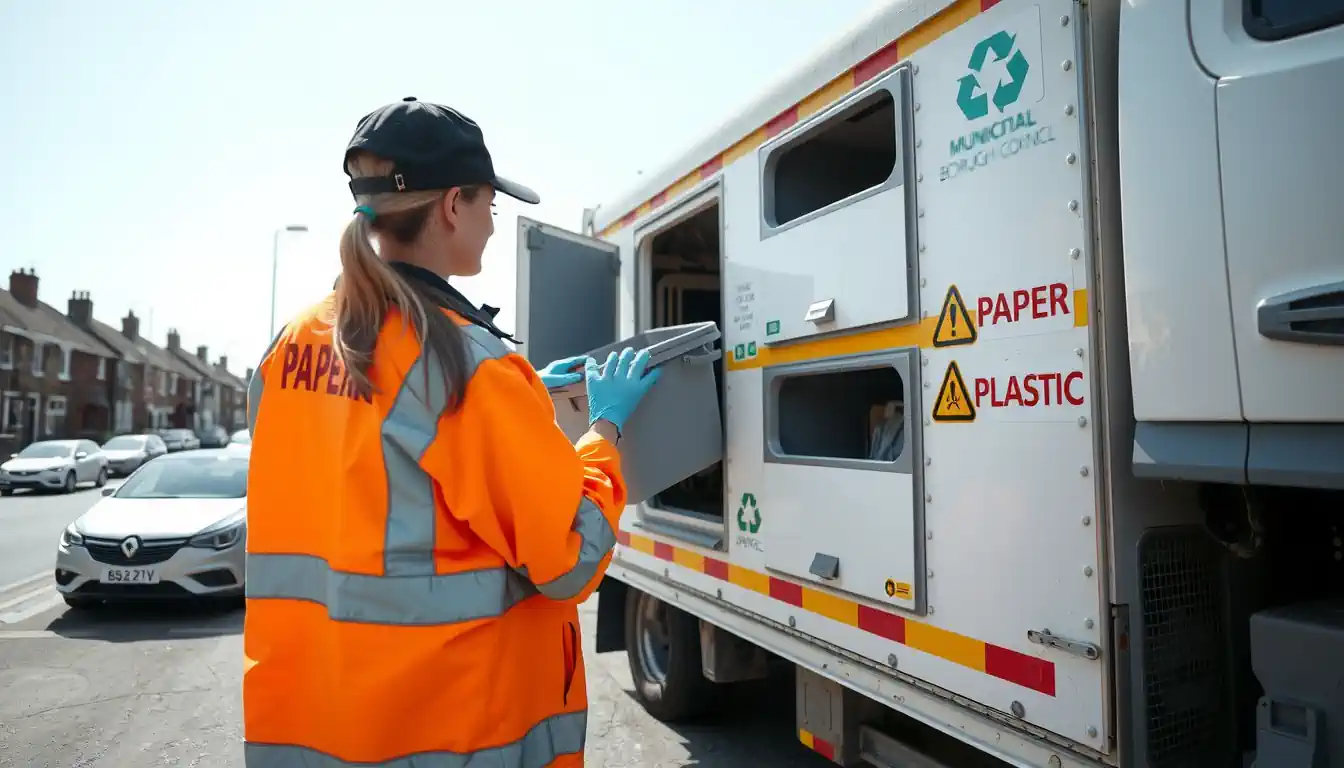
Workplace recycling requirements changed on 31 March 2025. GOV.UK guidance says the rules apply to businesses, charities and public sector organisations in England and cover the separation of recyclable waste streams. Simpler Recycling: workplace recycling in England
For households in England, GOV.UK guidance states that from 31 March 2026, waste collectors must meet Simpler Recycling requirements for household waste collections unless a transitional arrangement applies. Simpler Recycling: household recycling in England
These reforms are relevant to the hierarchy because they are intended to make recycling easier and more consistent. But they do not remove the need for prevention and reuse. Better collection is useful, but it still sits below reducing waste before it exists.
What Waste Streams Must Be Separated?
The exact requirements depend on the premises, timing and the relevant rules. However, Simpler Recycling generally aims to improve separation of core recyclable waste streams such as:
- food waste;
- paper and card;
- glass;
- metal;
- plastic;
- residual waste.
For businesses, the key practical step is to check the current guidance and make sure waste contracts, bins, staff instructions and collection arrangements are aligned with the rules.
A business that has recycling bins but allows staff to put food, liquids or general waste into them may still have a compliance and performance problem. The hierarchy depends on quality as well as intention.
Scotland, Wales and Northern Ireland
Waste policy is devolved, so organisations operating across the UK should not assume that one set of operational rules applies everywhere.
England, Scotland, Wales and Northern Ireland all use the broad principles of waste prevention, reuse, recycling, recovery and disposal, but the detailed regulations, reporting arrangements, targets and collection systems can differ.
Businesses operating in more than one UK nation should check the relevant regulator and government guidance for each jurisdiction. That is especially important for waste transfer, duty of care, carrier registration, producer responsibility, food waste separation and recycling requirements.
The practical lesson is simple: use the hierarchy as the common environmental framework, but check the local legal detail before making compliance decisions.
What Does “Reasonably Practicable” Mean in Real Waste Decisions?
Applying the hierarchy does not mean every item must always be reused or recycled regardless of cost, risk or practicality.
In real decisions, organisations may need to consider:
- whether a reuse or recycling route exists;
- whether the material is contaminated;
- whether separation is technically possible;
- whether the environmental benefit is real;
- whether transport would outweigh the benefit;
- whether the material is hazardous;
- whether there are health, safety or animal by-product restrictions;
- whether the cost is disproportionate;
- whether a different option would produce a better overall environmental outcome.
However, these considerations should not be used as a lazy excuse. A business should be able to explain why a lower option in the hierarchy was chosen.
Examples of UK Waste Hierarchy Compliance
Example 1: Office Paper
Poor approach: print documents unnecessarily and place waste paper in the general waste bin.
Better hierarchy approach: reduce printing, use double-sided printing, reuse scrap paper where appropriate, separate clean paper for recycling, and minimise residual waste.
Example 2: Food Business Waste
Poor approach: over-order food, discard edible surplus and put food waste in general waste.
Better hierarchy approach: improve purchasing, reduce preparation waste, redistribute edible surplus where safe and legal, collect unavoidable food waste separately for treatment such as anaerobic digestion or composting.
Example 3: Retail Packaging
Poor approach: accept excessive supplier packaging and send mixed packaging to residual waste.
Better hierarchy approach: ask suppliers to reduce packaging, use returnable transit packaging, separate cardboard and plastic film, and review residual waste regularly.
Example 4: Construction Materials
Poor approach: over-order materials, damage them on site and dispose of mixed waste skips.
Better hierarchy approach: plan material quantities, store materials properly, reuse surplus, segregate timber, metal, plasterboard, hardcore and packaging, and send only genuine residual waste for recovery or disposal.
Example 5: Electrical Equipment
Poor approach: replace working equipment on a fixed cycle and dispose of old units as waste.
Better hierarchy approach: extend equipment life, repair where possible, refurbish for reuse, donate or resell working items where appropriate, and use specialist recycling for equipment that cannot be reused.
What Records Should Businesses Keep?
Good records make it easier to show that the hierarchy and duty of care have been taken seriously.
Useful records may include:
- waste transfer notes or digital waste records;
- waste descriptions and European Waste Catalogue codes where relevant;
- contractor licences or registration details;
- recycling and residual waste tonnages;
- waste audit results;
- staff training records;
- procurement policies that reduce waste;
- supplier packaging agreements;
- evidence of reuse or repair schemes;
- records explaining why a lower hierarchy option was chosen.
This is not just bureaucracy. Good waste data often reveals where money is being lost. A heavy residual waste bin may contain materials that could have been avoided, reused or recycled.
How to Apply the Waste Hierarchy in a UK Business
A practical business process could look like this:
- List your main waste streams. Include packaging, food, paper, card, plastics, metals, timber, WEEE, hazardous waste and residual waste.
- Identify where the waste comes from. Waste prevention starts with purchasing, design, storage and operations.
- Ask whether each waste stream can be prevented. Could buying, stock control, maintenance or product design reduce it?
- Ask whether items can be reused. Consider repair, return, resale, donation or internal reuse.
- Separate recyclable materials properly. Clean, uncontaminated streams usually have better recycling options.
- Review recovery options for residual waste. Do this only after prevention, reuse and recycling have been considered.
- Minimise disposal. Landfill and final disposal should be the last resort.
- Keep evidence. Record decisions, contracts, training and waste data.
How Local Authorities Apply the Hierarchy
Local authorities apply the hierarchy through waste collection systems, contracts, household waste recycling centres, public communication and local waste strategies.
Good local authority practice may include:
- clear recycling guidance for residents;
- food waste collection systems;
- reuse shops at household waste recycling centres;
- bulky waste reuse schemes;
- support for repair cafes and community reuse;
- campaigns to reduce contamination;
- contracts that encourage recycling and residual waste reduction;
- monitoring of landfill, energy recovery and recycling performance.
However, councils cannot solve the problem alone. The waste hierarchy also depends on product design, producer responsibility, public behaviour and commercial decisions.
Why the UK Still Needs to Improve
The UK has made substantial progress since the old landfill-heavy approach to waste management. Recycling is now normal in many homes and workplaces, and far more biodegradable municipal waste is diverted from landfill than in the past.
Even so, the latest official UK waste statistics show that the UK household recycling rate was 44.6% in 2023, and biodegradable municipal waste sent to landfill was 5.3 million tonnes. UK statistics on waste
Those figures justify a balanced view. The UK has improved, but the job is far from finished.
Recycling alone will not be enough if total consumption and waste generation remain high. The UK needs more emphasis on waste prevention, repair, reuse, better product design, food waste reduction and residual waste minimisation.
Common UK Compliance Mistakes
Mistake 1: Treating recycling as the top of the hierarchy
Recycling is important, but prevention and reuse usually come first.
Mistake 2: Having bins but no staff training
Bins alone do not create compliance. Staff must understand what goes where and why contamination matters.
Mistake 3: Ignoring procurement
Many waste problems begin with buying decisions. A procurement policy that favours disposable or over-packaged products undermines the hierarchy.
Mistake 4: Forgetting duty of care
Even if waste is separated correctly, it must still be described, stored, transferred and handled responsibly.
Mistake 5: Assuming one UK rule applies everywhere
Waste policy is devolved. Businesses operating across UK nations should check the applicable rules for each location.
Mistake 6: Failing to review residual waste
Residual waste often contains preventable, reusable or recyclable material. Regular waste audits can reveal missed opportunities.
Waste Hierarchy UK Checklist
Use this checklist as a practical starting point:
- Have you identified your main waste streams?
- Have you considered how to prevent each waste stream?
- Have you looked for repair, reuse or donation routes?
- Are recyclable materials separated cleanly?
- Are staff trained on the correct bins and waste streams?
- Are food waste arrangements compliant with current rules?
- Are waste contractors authorised and suitable?
- Are waste transfer records accurate?
- Do you monitor residual waste?
- Can you explain why any lower hierarchy option was chosen?
How This Fits with Reduce, Reuse, Recycle
The phrase reduce, reuse, recycle remains useful because it captures the top three parts of the hierarchy in memorable language.
However, the full hierarchy is more complete. It also recognises that recovery and disposal exist, even though they are lower-order options.
For a public-facing explanation of this familiar phrase, see: Reduce, Reuse, Recycle: Why Recycling Is Not the First Step in Waste Management.
What Happens When Better Options Fail?
Even a well-managed waste system leaves some residual waste. This is the material left after prevention, reuse and recycling have been applied as far as reasonably practical.
Residual waste may go to energy recovery or disposal, depending on local and contractual arrangements. But the goal should be to reduce it over time.
For more on this lower part of the hierarchy, see: Residual Waste Explained: What Is Left After Reduce, Reuse and Recycle?.
More Waste Hierarchy Guides
This article is part of our Waste Hierarchy guide series. You may also find these related articles useful:
- Waste Hierarchy Explained: The Complete Guide to Reducing Waste Before Recycling
- Waste Hierarchy Examples: How Homes, Businesses and Councils Should Apply It
- Reduce, Reuse, Recycle: Why Recycling Is Not the First Step in Waste Management
- Residual Waste Explained: What Is Left After Reduce, Reuse and Recycle?
Conclusion: The UK Waste Hierarchy Is a Practical Compliance Tool
The waste hierarchy is not just a diagram for environmental education. In the UK, it is a practical framework for better waste decisions and better compliance.
Businesses and public bodies should be able to show that they have thought about prevention, reuse, recycling, recovery and disposal in the correct order. Households can also use the same logic in everyday choices.
The UK has improved, especially in moving away from the landfill-first habits of the past. But large amounts of waste are still produced, and too much material still ends up in residual waste.
The real test is whether organisations can move waste up the hierarchy in practice: buying less wasteful products, using materials for longer, repairing and reusing items, recycling cleanly and reducing what remains.
That is the practical meaning of the waste hierarchy in the UK: prevent first, reuse where possible, recycle properly, recover value only when better options are not practical, and dispose of as little as possible.
FAQs About the Waste Hierarchy in the UK
What is the waste hierarchy in the UK?
The waste hierarchy in the UK ranks waste options in order of environmental preference: prevention, preparing for reuse, recycling, other recovery and disposal.
Is the waste hierarchy a legal requirement in the UK?
The hierarchy is reflected in UK waste legislation and guidance. Businesses and public bodies that generate, handle or treat waste should consider it when making waste decisions.
Does the waste hierarchy apply to households?
Households are not usually expected to carry out formal assessments, but the hierarchy is still useful. It encourages people to buy less, reuse more, recycle properly and reduce residual waste.
What is the most preferred option in the waste hierarchy?
Prevention is the most preferred option. The best waste is the waste that is not created in the first place.
Where does recycling sit in the hierarchy?
Recycling is the third level of the hierarchy. It comes after prevention and preparing for reuse, but before other recovery and disposal.
What is the lowest option in the hierarchy?
Disposal is the lowest option. Landfill is the most familiar example of disposal and should normally be the last resort.
How does Simpler Recycling relate to the waste hierarchy?
Simpler Recycling is intended to improve separation and collection of recyclable waste streams in England. It supports recycling, but it does not replace the higher priorities of prevention and reuse.
What should a business do first?
A business should identify its main waste streams, then ask how each can be prevented, reused, recycled, recovered or disposed of in that order.
Does waste duty of care replace the waste hierarchy?
No. Duty of care and the hierarchy work together. Duty of care concerns responsible handling and transfer of waste, while the hierarchy concerns the preferred environmental order for managing it.
Why does the UK still need to improve?
The UK has improved, but household recycling rates and residual waste levels show that more effort is needed, especially on waste prevention, reuse and clean recycling.
References
- Guidance on applying the waste hierarchy – GOV.UK
- Waste duty of care code of practice – GOV.UK
- Simpler Recycling: workplace recycling in England – GOV.UK
- Simpler Recycling: household recycling in England – GOV.UK
- UK statistics on waste – GOV.UK
- Assessment of resources and waste policy in England – Office for Environmental Protection