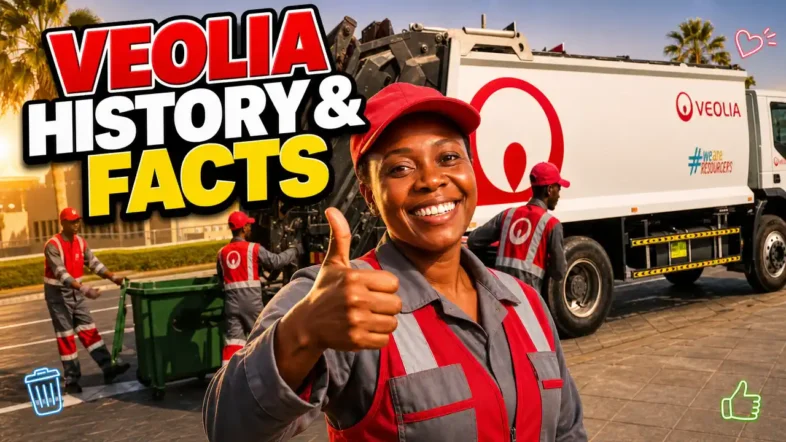
Veolia is one of the world’s largest environmental-services companies, but it is not solely a waste collection business. Its three principal activities are waste, water and energy management.
In the UK, Veolia collects and treats commercial and household waste, operates recycling and energy-recovery facilities, manages water and wastewater infrastructure and supplies energy services to public- and private-sector customers.
This guide explains what Veolia does in the UK, who owns Veolia and how its waste-management operations fit into the wider international group. It also provides 30 current facts about the company, replacing a much older collection of unsupported “factoids” previously published on this page.
Company figures in this article are taken principally from Veolia’s 2025 group results and its current UK website. Global and UK figures are identified separately because they should not be treated as interchangeable.
Key takeaways
- Veolia is a French multinational environmental-services group with operations in water, waste and energy.
- The group traces its history to the creation of Compagnie Générale des Eaux in France in 1853.
- Veolia Environnement is a publicly traded company listed on Euronext Paris, rather than a privately owned subsidiary of one individual or investment company.
- Veolia reported approximately 215,000 employees and revenue of €44.396 billion in 2025.
- In the UK, Veolia employs more than 14,000 people across its waste, water and energy activities.
- Veolia UK says it recycles more than two million tonnes of waste annually.
- The company also operates energy-from-waste facilities. Energy recovery reduces reliance on landfill but remains below prevention, reuse and recycling in the waste hierarchy.
What is Veolia?
Veolia is an international environmental-services company headquartered in France. The present business operates through three complementary areas:
- water management, including drinking-water production, water treatment, wastewater treatment and water reuse;
- waste management, including collection, sorting, recycling, treatment, hazardous waste and energy recovery; and
- energy services, including heating and cooling networks, energy efficiency, industrial utilities and lower-carbon energy production.
Veolia uses the term “ecological transformation” to describe its strategy. In practical terms, this includes conserving water, recovering materials, reducing pollution, improving energy efficiency and helping customers reduce their environmental impacts.
What does Veolia do in the UK?
Veolia UK provides waste, recycling, water and energy services to businesses, industries, public bodies and local authorities.
The UK operation includes:
- commercial waste and recycling collections;
- household waste services delivered under local-authority contracts;
- street cleansing and public-space services;
- materials recovery and recycling facilities;
- food and organic waste treatment;
- hazardous waste management;
- confidential waste destruction;
- waste electrical and electronic equipment services;
- energy recovery from residual waste;
- industrial water and wastewater treatment;
- district heating and combined heat and power;
- industrial energy management;
- facilities management; and
- industrial cleaning and decommissioning services.
This breadth explains why descriptions of Veolia as simply a “bin collection company” are incomplete. Waste collection is an important part of its business, but the group also designs, builds and operates complex environmental infrastructure.
Who owns Veolia?
Veolia Environnement is owned by its shareholders. It is a French public limited company whose shares are traded on the Euronext Paris stock exchange under the ticker symbol VIE.
Unlike Biffa, which is privately owned by an infrastructure investment business, Veolia does not have one parent company that owns the entire group. Its shares are held by institutional investors, employees and other shareholders.
Veolia has stated that its employees collectively form its largest shareholder group. However, the proportions held by different shareholders can change as shares are bought, sold or issued.
The UK businesses operate as part of the wider Veolia group through UK-registered subsidiaries. They are not a separate, independently owned British group.
Is Veolia a French company?
Yes. Veolia is a French multinational company whose history began in France in 1853.
The group now operates internationally, including through substantial businesses in the UK. Therefore, it is accurate to describe Veolia UK as a major UK environmental-services operator, but its ultimate corporate headquarters and listed parent company are in France.
A brief history of Veolia
Veolia’s origins lie in the Compagnie Générale des Eaux, which was authorised by an imperial decree signed by Napoleon III on 14 December 1853. Its initial purpose was to improve organised water supplies for expanding towns and cities.
The company received an early water-distribution concession in Lyon and later expanded into other French cities. International expansion began during the nineteenth century.
Businesses that eventually formed the modern group moved into household waste collection, heating and energy services during the twentieth century. This brought together the three areas that continue to define Veolia: water, waste and energy.
Compagnie Générale des Eaux became Vivendi in 1998. Its environmental activities were grouped into Vivendi Environnement, which was floated on the Paris stock exchange in 2000.
In 2003, Vivendi Environnement was renamed Veolia Environnement. The Veolia name was subsequently applied across its water, waste, energy and transport businesses.
After 2011, Veolia progressively withdrew from transportation and concentrated on environmental services. In 2022 it completed the acquisition of most of the international activities formerly owned by Suez, substantially expanding the group.
Veolia UK waste-management services
Commercial waste collection
Veolia supplies commercial waste collections to businesses ranging from small organisations with a few containers to large companies operating across multiple sites.
Collection options include:
- general waste;
- dry mixed recycling;
- paper and cardboard;
- glass;
- food waste;
- plastics and metal containers;
- wood;
- electrical equipment;
- hazardous waste; and
- confidential material.
A business remains legally responsible for taking reasonable steps to ensure that its waste is correctly described and transferred to an authorised organisation. Using a large contractor does not remove the waste producer’s duty of care.
Municipal waste services
Veolia works under contract to local authorities, providing services that can include household refuse and recycling collections, food waste collections, street cleansing and the operation of household waste recycling centres.
 Residents whose council uses Veolia will normally need to contact their council about missed collections, replacement household bins or collection-day information.
The local authority commissions and administers the public service.
Materials recovery and recycling
Recyclable material collected from households and businesses may be taken to a materials recovery facility. Mechanical and manual sorting systems separate materials such as cardboard, paper, metals and plastics.
Sorted materials can then be supplied to reprocessors and manufacturers. The environmental value depends on the quality of the separated material, the availability of suitable markets and whether it genuinely replaces virgin raw material.
Veolia UK states that it recycles more than two million tonnes of waste each year.
Food and organic waste
Separately collected food waste may be sent for anaerobic digestion, composting or another suitable treatment process. Anaerobic digestion produces biogas and a nutrient-containing digestate.
Keeping food waste separate can also reduce contamination in dry recycling. However, preventing edible food from becoming waste should take priority over recycling it after disposal.
Hazardous waste
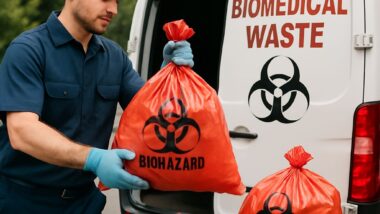
Veolia provides services for certain hazardous and difficult waste streams, including chemicals, contaminated materials, batteries, healthcare-related wastes and industrial residues.
Hazardous waste requires appropriate classification, containment, documentation, transport and treatment. Businesses should obtain competent, waste-specific advice rather than placing uncertain material in a general waste or mixed recycling container.
Water and wastewater services
Veolia’s water operations distinguish it from companies focused almost entirely on waste collection. It designs, builds, operates and maintains systems for drinking water, process water, wastewater treatment and water reuse.
Its customers include water companies, manufacturers, commercial organisations and public bodies.
Energy services
Veolia also operates energy infrastructure, including combined heat and power systems, district heating, industrial utilities and building energy-management services.
Some energy is generated using residual waste, landfill gas, biogas or biomass. The company also helps customers improve energy efficiency and reduce the carbon emissions associated with buildings and industrial processes.
Veolia and energy from waste
Veolia UK says its ten energy-recovery facilities process approximately 2.5 million tonnes of residual waste each year and generate more than 1,600 GWh of electricity.
At an energy-recovery facility, controlled combustion reduces the volume of residual waste and produces heat. That heat is used to make steam, which can generate electricity or supply heating networks.
Metals can be recovered from the resulting bottom ash, while suitably processed ash may be used as an aggregate. Air-pollution-control residues require specialised management.
Energy from waste is not the same as recycling. Burning plastics and other fossil-derived materials releases carbon dioxide, while building large plants can create a long-term requirement for residual waste feedstock.
For this reason, energy recovery should be used for genuinely residual material after reasonable opportunities for prevention, reuse and recycling have been exhausted. You can read more in our guide to energy from waste and incineration.
30 key facts about Veolia
- Veolia is a French multinational environmental-services company.
- The group’s history began with the creation of Compagnie Générale des Eaux in 1853.
- The company was originally established to provide organised water services to growing towns and cities.
- Its first public water-distribution concession was obtained in Lyon, France.
- The business began expanding internationally during the nineteenth century, initially through European water operations.
- A company that later became part of the group entered the Paris household waste-collection market in 1919.
- The group’s energy-service heritage includes an early energy-performance contract dating from 1937.
- Compagnie Générale des Eaux was renamed Vivendi in 1998.
- Vivendi Environnement was created to group together its environmental-service businesses.
- Vivendi Environnement was floated on the Paris stock market in 2000.
- The company was renamed Veolia Environnement in 2003.
- The Veolia brand was subsequently adopted by the group’s water, waste, energy and former transport activities.
- After 2011, the group progressively withdrew from transport to concentrate on environmental services.
- Veolia acquired most of Suez’s international activities in 2022.
- Veolia Environnement remains a publicly traded company listed on Euronext Paris under the ticker VIE.
- Veolia reported revenue of approximately €44.396 billion in 2025.
- The group reported approximately 215,000 employees worldwide in 2025.
- Veolia’s three principal business activities are water, waste and energy.
- The group reported treating approximately 64 million metric tonnes of waste during 2025.
- It reported operating 845 waste-processing facilities worldwide.
- Veolia recorded 561,051 business waste clients in its 2025 group figures.
- The group provided municipal waste-collection services to approximately 42 million people.
- Veolia supplied drinking water to approximately 110 million people worldwide.
- It connected approximately 97 million people to wastewater services.
- The group reported producing approximately 45 million MWh of energy in 2025.
- Estelle Brachlianoff is the chief executive officer of the international Veolia group. She took over as CEO in July 2022.
- Veolia employs more than 14,000 people in the UK across its environmental-service activities.
- Richard Kirkman became CEO of Veolia UK and Northern Europe in April 2026.
- Veolia UK says it recycles more than two million tonnes of waste annually.
- Veolia UK’s ten energy-recovery facilities process approximately 2.5 million tonnes of residual waste each year, according to the company.
Veolia and the circular economy
Veolia’s collection and processing infrastructure can help recover materials that might otherwise be landfilled. Its water and energy services can also improve efficiency and reduce the consumption of some resources.
However, a circular economy cannot be created through waste treatment alone. It also requires durable products, reduced material consumption, repair, reuse, remanufacturing and markets for recovered materials.
A large environmental-services company operates within commercial and contractual constraints. Some of its facilities depend on continuing quantities of waste, while circular-economy policy seeks to prevent waste and retain products and materials at their highest value.
There is therefore potential both for progress and for tension. Recycling and resource recovery can support circularity, but they should not be used to justify avoidable consumption or the routine incineration of recyclable material.
Frequently asked questions about Veolia
What does Veolia do?
Veolia provides water, waste and energy-management services. Its work includes waste collection, recycling, hazardous waste treatment, wastewater treatment, energy recovery, district heating and industrial environmental services.
What does Veolia do in the UK?
Veolia UK collects and treats commercial and household waste, operates recycling and energy-recovery facilities and provides water, wastewater, energy and facilities-management services.
Who owns Veolia?
Veolia Environnement is a publicly traded French company owned by its shareholders. Its shares are listed on Euronext Paris under the ticker symbol VIE.
Is Veolia a British company?
No. Veolia is a French multinational group. However, it has a substantial UK operation employing more than 14,000 people through UK-based businesses and facilities.
Is Veolia the same as Suez?
No. They remain separate brands and businesses. However, Veolia acquired most of the former Suez group’s international activities in 2022. A new Suez business continued independently with assets retained or divested as part of that transaction.
Is Veolia only a waste company?
No. Waste is one of its three main activities. The other two are water management and energy services.
Does Veolia collect household bins?
Yes. Veolia provides household waste, recycling and street-cleansing services under contracts with a number of UK local authorities. Residents should normally contact their council about the service.
Does Veolia recycle waste?
Yes. Its operations include collection, sorting, materials recovery and specialist recycling. Veolia UK says it recycles more than two million tonnes of waste annually.
Does Veolia operate incinerators?
Yes. Veolia UK operates energy-recovery facilities that incinerate residual waste to generate electricity and, at some locations, useful heat.
Is energy from waste recycling?
No. Under the waste hierarchy, energy recovery is classified separately and sits below recycling. It should principally be used for residual waste that cannot reasonably be prevented, reused or recycled.
Who is the CEO of Veolia?
Estelle Brachlianoff is CEO of the international Veolia group. Richard Kirkman became CEO of Veolia UK and Northern Europe in April 2026.
Where is Veolia headquartered?
The international Veolia group is headquartered in France. Its UK businesses operate from multiple offices, depots and treatment facilities around the country.
Sources and further information
- Veolia UK: Waste, water and energy services
- About Veolia in the UK
- Veolia Group: 2025 key figures
- Veolia Group history
- Veolia share and stock-market information
- Veolia UK energy-recovery facilities
- Veolia UK CEO appointment, April 2026
This is an independent informational article. WastersBlog is not affiliated with, endorsed by or acting on behalf of Veolia. Services, contracts, facilities and company statistics can change. Readers requiring current commercial or investment information should consult Veolia directly.
First published: 30 September 2018. Substantially rewritten and updated: 20 July 2026.