
Commercial waste recycling has moved a long way from the days when sending mixed waste to landfill was often the cheapest and easiest option. For UK businesses in 2026, recycling is no longer just a “green” add-on. It is now part of legal compliance, cost control, carbon reporting, customer reputation and practical resource efficiency.
The old argument that landfill was the default option has largely been won. Landfill Tax, tighter environmental controls, corporate sustainability targets and better recycling infrastructure have all changed the economics of waste. Yet the next challenge is just as important: improving the quality of the material collected for recycling.
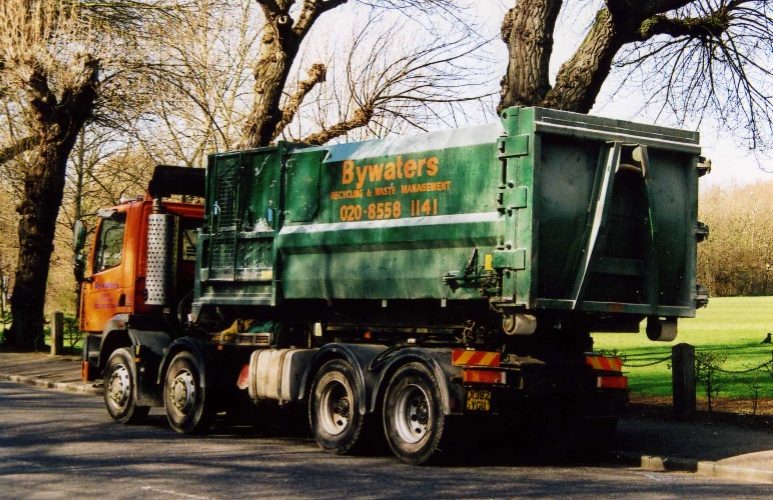
That is where commercial waste recycling companies, including operators such as Bywaters in London, continue to play an important role. Their job is not simply to collect bins. The best operators help businesses separate waste correctly, reduce contamination, improve reporting and turn more material into usable recycled products.
Key Takeaways
- Commercial waste recycling is now a legal requirement for many businesses in England. Since 31 March 2025, most workplaces have had to separate dry recyclables, food waste and residual waste before collection.
- Micro-firms have longer to comply. Businesses with fewer than 10 full-time equivalent employees have until 31 March 2027.
- Landfill is still strongly discouraged by tax policy. From 1 April 2026, the standard Landfill Tax rate is £130.75 per tonne, before collection, haulage and disposal charges are added.
- Recycling rates have improved dramatically since the early 2000s, but progress has stalled. England’s household recycling rate was 43.7% for the rolling 12 months to March 2025.
- Cleaner source-separated waste is worth more. Contaminated recycling can be rejected, downgraded or charged as residual waste.
- The future is not just recycling more, but recycling better. Quality, traceability and end-market confidence now matter as much as headline recycling percentages.
From Landfill Dependence to Recycling Obligation
When the UK government’s “Waste not, want not” report was published in 2002, the country was still heavily dependent on landfill. The waste industry was being asked to change direction after decades in which burying waste had been normal practice.
That change did not happen overnight. It required a mix of regulation, infrastructure investment, public participation and financial pressure. The most powerful financial driver was the Landfill Tax escalator. By making landfill progressively more expensive, government policy helped create a commercial reason to look again at recycling, reuse, composting, anaerobic digestion and energy recovery.
In April 2018, the standard rate of Landfill Tax was £88.95 per tonne. From 1 April 2026, the standard rate is £130.75 per tonne, with the lower rate rising to £8.65 per tonne. In simple terms, a business that still sends avoidable waste to landfill is paying for a route that policy is deliberately designed to discourage.
Source: GOV.UK Landfill Tax rates from 1 April 2026
The New Reality: Simpler Recycling for Workplaces
The biggest recent change for businesses in England is the introduction of Simpler Recycling rules for workplaces. These rules came into force on 31 March 2025 for businesses, charities and public sector organisations, except micro-firms, which have until 31 March 2027.
Workplaces must separate waste before collection into:
- dry recyclable materials, including plastic, metal, glass, paper and card;
- food waste;
- non-recyclable residual waste.
This applies not only to waste produced by staff, but also to waste generated by customers, visitors and other users of the premises. That is especially important for offices, hospitality businesses, schools, healthcare sites, retail premises, entertainment venues, transport hubs, warehouses, factories and construction sites.
The message is clear: commercial waste recycling is no longer something a business can leave entirely to the waste contractor after collection. The business itself has to take responsibility for separating material properly at source.
Source: GOV.UK Simpler Recycling workplace guidance
Why Source Separation Matters So Much
For many years, businesses were encouraged to recycle by putting mixed dry recyclables into a single bin. That approach still has a place, but it is not a substitute for good waste management inside the business.
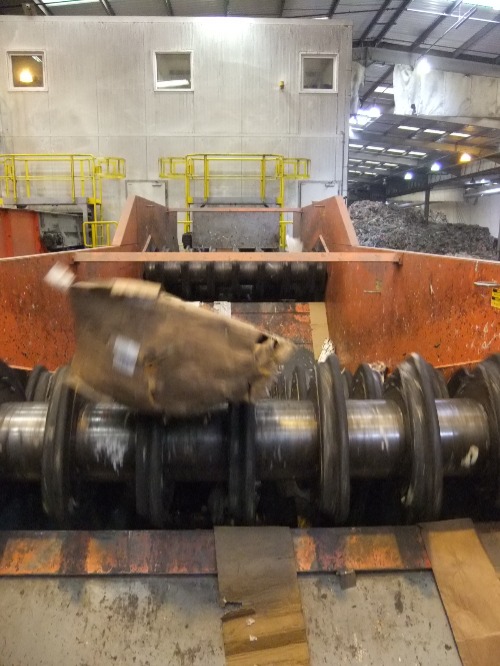
The reason is contamination. A recycling bin contaminated with food, liquids, plastic film, broken crockery, sanitary waste or non-recyclable packaging can lose much of its value. In serious cases, the whole load may need to be treated as residual waste. That increases cost and undermines the environmental benefit.
Clean cardboard, paper, glass, plastics and metals are much easier to sort, bale and sell into recycling markets. Food waste collected separately can be sent to composting or anaerobic digestion rather than being left to contaminate dry recyclables. Businesses that separate material well usually obtain better recycling performance and more credible waste data.

Bywaters Recycling and the London Commercial Waste Example
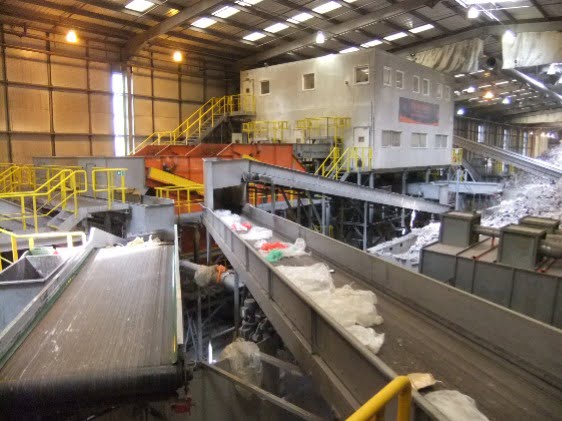
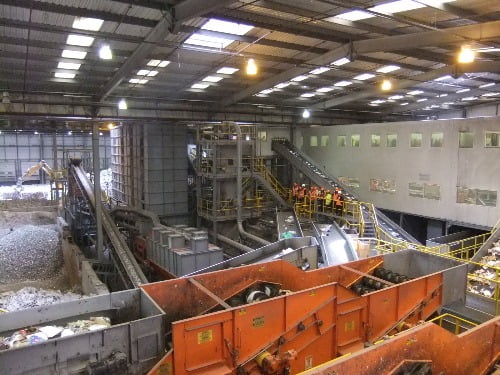
Bywaters has long been a useful example of how commercial and industrial waste recycling has developed in London. Its Bow materials recovery facility has been promoted as one of the UK’s major MRFs, and the company says it provides commercial waste and recycling services across London and more widely across the UK.
Today, Bywaters describes its services as covering reuse, recycling, recovery, reporting, equipment and sustainability support. It also states that its Bow facility is powered by a large solar array and that it works with clients to increase recycling rates and reduce carbon impacts.
This reflects a wider shift in the waste industry. Modern commercial waste operators are increasingly expected to provide data, carbon reporting, compliance support and practical advice, not just collection vehicles and containers.
Source: Bywaters sustainable waste management services
Source: Bywaters information on Bow MRF and London waste services
Has UK Recycling Improved Enough?
The UK has undoubtedly made major progress since the early 2000s. The country no longer treats landfill as the easy default for most municipal waste. Recycling collections are more common, landfill sites are more tightly regulated and businesses are under far more pressure to account for their waste.
However, the improvement has not gone far enough. England’s household recycling rate has remained stuck in the low-to-mid 40% range for years. DEFRA reported that the rolling 12-month waste from households recycling rate was 43.7% at the end of March 2025.
That figure is not directly the same as commercial waste recycling, but it does show the wider problem: the UK has moved a long way from landfill dependence, but recycling performance has plateaued.
Source: DEFRA local authority collected waste statistics 2024/25
The Circular Economy Needs Better Commercial Recycling
The next stage is not simply about collecting more tonnes. It is about producing better-quality recycled materials that can compete with virgin raw materials.
That is the real circular economy test. A business has not fully “recycled” a material just because it placed it in the correct bin. The material still has to be collected, sorted, processed and sold into a real end market. If the quality is too poor, the circular economy breaks down.
This is why businesses should treat waste separation as part of operational management, not as a janitorial afterthought. The best results come when staff understand what goes into each container, bins are clearly labelled, cleaners are trained, food waste is kept separate, and waste contractors provide regular feedback.
Practical Steps for Businesses
Any business that wants to improve commercial waste recycling should start with a simple waste review. The aim is to identify the main waste streams, where they arise and how they are currently collected.
- Check your legal duties. Confirm whether your business is already covered by the Simpler Recycling workplace rules.
- Separate food waste. Food waste is one of the most damaging contaminants in dry recycling.
- Improve bin placement. Put recycling and residual waste containers next to each other so people are not forced into the wrong choice.
- Use clear signage. Avoid vague labels such as “mixed waste” where better instructions are possible.
- Train staff and cleaners. Many recycling systems fail because the final internal collection stage mixes the streams again.
- Ask for waste data. Your contractor should be able to provide useful reporting on weights, recycling rates and residual waste.
- Review contamination charges. If recycling is often rejected, find out why and fix the cause.
- Reduce waste before recycling it. Reuse, refill systems, better purchasing and packaging reduction should come before disposal decisions.
Why Commercial Waste Recycling Still Makes Business Sense
Good commercial waste recycling can reduce disposal costs, improve regulatory compliance and support environmental reporting. It can also help businesses respond to customer expectations, procurement requirements and corporate ESG policies.
The strongest business case comes when recycling is treated as part of resource management. A company that throws away clean cardboard, metals, plastics, food waste or reusable items is not merely disposing of rubbish. It is losing materials that have value elsewhere in the economy.
Landfill Tax helped create the original financial push away from landfill. Simpler Recycling now adds a clearer legal framework for separation at source. The next winners will be the businesses that go beyond minimum compliance and design waste systems that produce cleaner, more reliable recyclable material.
Conclusion: Recycling Has Won the Argument, But Quality Will Decide the Future
The UK has come a long way since the early 2000s. Landfill is no longer the cheap and easy answer it once appeared to be. Commercial waste recycling has become mainstream, and businesses now have clearer responsibilities for separating waste properly.
But the job is not finished. Recycling rates have stalled, contamination remains a persistent problem and the circular economy needs higher-quality recycled materials if it is to displace virgin resources at scale.
For businesses, the conclusion is simple. Commercial waste recycling is no longer optional, and it is no longer enough to “put a recycling bin somewhere in the office”. The modern requirement is to separate waste properly, keep recyclables clean, measure performance and work with a competent waste contractor that can help turn waste into a genuine resource.
FAQs About Commercial Waste Recycling
What is commercial waste recycling?
Commercial waste recycling is the collection, separation and processing of recyclable waste produced by businesses, charities, public sector organisations and other non-household premises. It may include paper, card, plastics, metals, glass, food waste, wood, electrical waste and other materials depending on the business type.
Do UK businesses have to recycle?
In England, most workplaces must separate dry recyclables, food waste and residual waste before collection under the Simpler Recycling rules. These rules came into force on 31 March 2025 for most workplaces. Micro-firms with fewer than 10 full-time equivalent employees have until 31 March 2027.
What waste streams must workplaces separate?
Workplaces in England must separate dry recyclable materials, food waste and non-recyclable residual waste. Dry recyclables include plastic, metal, glass, paper and card.
Why is food waste separation important?
Food waste can contaminate dry recyclables, reducing their value and sometimes causing whole loads to be rejected. When collected separately, food waste can often be sent to composting or anaerobic digestion.
Is landfill still used in the UK?
Yes, landfill is still used, but far less than in the past. It is now heavily discouraged by tax, regulation and environmental policy. From 1 April 2026, the standard Landfill Tax rate is £130.75 per tonne.
Why do recycling rates appear to have stalled?
Several factors contribute, including contamination, inconsistent collection systems, packaging complexity, public confusion and insufficient demand for some lower-quality recycled materials. This is why current policy focuses not only on collecting more material, but on improving separation and quality.
How can a business improve its recycling rate?
A business can improve its recycling rate by carrying out a waste audit, separating food waste, improving bin labels, training staff and cleaners, using the right containers, monitoring contamination and working with a waste contractor that provides clear performance data.
What is the circular economy?
The circular economy is an approach that keeps materials in productive use for as long as possible. In waste management, it means reducing waste, reusing products, recycling materials and designing systems that reduce reliance on virgin raw materials.
Source References
- GOV.UK: Simpler Recycling workplace recycling in England
- GOV.UK: Landfill Tax rates from 1 April 2026
- DEFRA: Local authority collected waste management annual results 2024/25
- Bywaters: Sustainable waste management services
- Bywaters: Bow MRF and London commercial waste information
This article replaces and updates an earlier article first published in 2009 and updated in 2018. The new version reflects current commercial waste recycling rules, current Landfill Tax rates and the continuing importance of clean source separation.
[This article was first posted on 10 June 2009 and updated in April 2018. The current rewritten article was published in May 2018.]


I know what some of this stuff is but I like your channel dude I’m gonna subscribe to your channel?.
Thank you for your article. It is most informative. Please tell me why the lorry drops it on the floor.
Contamination – If there are impurities or toxins on the original material, like lead, they??™ll usually make it through the recycling process and end up buried in the new product, like say, a soda can. Have a nice day.
Thank you for your article. It is most informative. Think about buying products that are made from bamboo when you are purchasing wood items. Bamboo is a very green product and is technically a grass, but it is stronger than many commercially available woods. It grows very fast and is being made into a variety of products from flooring to hard wood cutting boards for retail purchase. This saves energy in recycling and production ends of manufacturing products. Buy Bamboo
Contamination – If there are impurities or toxins on the original material, like lead, they??™ll usually make it through the recycling process and end up buried in the new product, like say, a soda can. Have a nice day.
Hello!! I want to work in Bywaters!! I have experience!! I am from Romania, 43 years!!! My phone number is [removed]!! Thanks
Radian. Sorry to disappoint you, but you need to contact Bywaters to offer your services.