Fish waste management converts fish processing by-products (viscera, skin, bones) into valuable resources like fishmeal, fertiliser, fish silage, and biofuel, rather than landfilling. Common methods include ensiling with acid for fertiliser/feed, rendering for fish oil, and composting.
We Consider the Following Fish Waste Management Points:
- Waste from fish processing and aquaculture contains up to 57% protein, so it's far too valuable to simply be thrown away in landfills.
- Through innovative recycling techniques such as biodiesel production, organic fertilisers, and aquaculture feed, fish waste is being transformed into valuable resources.
- Incorrect disposal of fish waste results in oxygen-depleted “dead zones” in bodies of water, putting entire aquatic ecosystems at risk.
- Recirculating Aquaculture Systems (RAS) and Integrated Multi-Trophic Aquaculture (IMTA) are examples of fish farm waste management systems that are leading the way towards zero-waste fish farming.
- Regulations such as the Magnuson-Stevens Act and the Marine Protection, Research, and Sanctuaries Act set strict limits on how fish waste can be legally disposed of, but the real opportunity lies in going beyond compliance.
Every year, the global seafood industry produces millions of tonnes of fish waste, much of which is unnecessarily discarded.
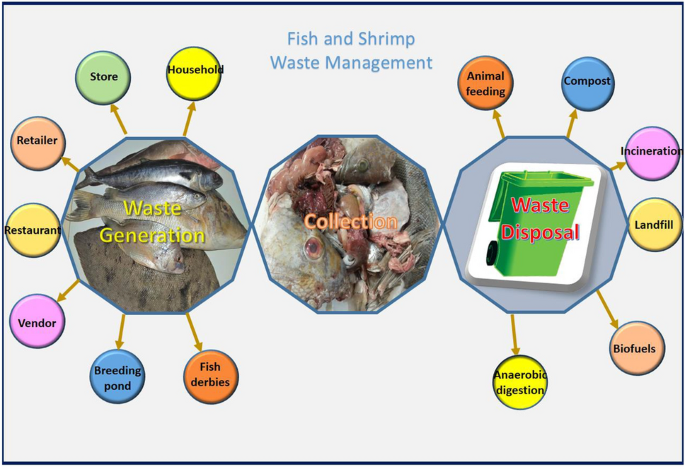
“Fish and shrimp waste management at …” from link.springer.com and used with no modifications.
One of the most overlooked organic resources in the world is fish waste. The seafood supply chain, from processing plant scraps to effluent from aquaculture farms, generates a large amount of biological material that is high in proteins, lipids, and minerals. Shapiro provides information on sustainable waste management practices in various industries, and fish waste recycling is one of the most promising opportunities available today. The problem isn't that there aren't enough solutions; it's that people aren't aware of them and aren't using them.
Fish Waste Is a Larger Issue Than Most People Think
Just the fish processing facilities throw away heads, bones, scales, viscera, and skin — materials that can make up 30% to 70% of the total fish weight, depending on the species and processing method. When you add in aquaculture waste like fish excretions, uneaten feed, and faeces, the size of the problem becomes obvious. This isn't a small environmental issue. It's a systemic inefficiency that's built into one of the world's most important food industries.
Fish farming, or aquaculture, is a rapidly expanding industry due to the worldwide demand for seafood. However, the rapid growth of this industry also results in a proportional increase in the amount of organic waste it produces. If not properly managed, this nutrient-rich waste can flow into nearby bodies of water, causing algal blooms, reducing oxygen levels, and creating conditions that can lead to the formation of aquatic dead zones. The environmental impact of not addressing this issue is significant.
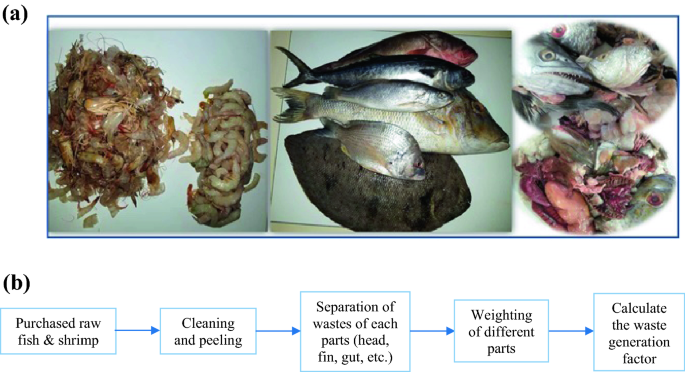
“Fish and shrimp waste management at …” from link.springer.com and used with no modifications.
Present-Day Methods for Fish Waste Disposal
Quick Review: Standard Fish Waste Disposal Methods
The seafood industry currently depends on a few typical disposal methods. Some are simple but wasteful. Others are starting to incorporate principles of sustainability. Here's a look at how the industry currently tackles the problem before we delve into the more inventive recycling solutions.
Most of the fish waste disposal today can be classified into three main categories: landfill disposal, land application, and composting. Each plays a role, but none of them fully utilises the resource value that fish waste holds. Understanding the current state of the industry is the first step towards knowing where it needs to go.
1. Dumping in Landfills
The easiest and, sadly, the most wasteful method is to simply dump fish waste into landfills. These landfills are specially designed to handle organic material. This method is so popular because it is simple, inexpensive in the short term, and requires very little processing. The downside is that it buries a resource that could be used to generate income and help the environment. For a deeper understanding of landfill operations, you can explore the conceptual site model of landfills.
2. Land Application
One option that's a bit more sustainable is to grind up fish waste and till it directly into agricultural or silvicultural land, in compliance with solid waste regulations. This method takes advantage of the natural nutrient content of fish waste to enrich soil, reducing the need for synthetic fertilisers. When done correctly, it can support healthier crop yields and reduce the total waste footprint of a processing facility.
- Fish waste needs to be ground down to an appropriate size before use
- Application rates are controlled to avoid nutrient runoff
- It is most effective when used in conjunction with crop rotation methods
- Land application is best suited for solid fish waste, not liquid waste
The downside is that this method doesn't work well on a large scale. Land application is great for smaller operations that have nearby farmland, but it isn't able to handle the amount of waste produced by large processing facilities.
3. Composting
Composting fish waste through a controlled decay process is one of the most environmentally friendly traditional disposal methods out there. Fish waste can be broken down into a compost rich in nutrients that can be used in a variety of agricultural applications. It reduces the amount of waste going to landfill, cuts down on methane emissions from organic decay, and creates a product that can be sold. The downside is that it can be difficult to manage the smell and it takes time for the waste to fully decay — but both of these problems can be solved with the right infrastructure.
Understanding the Composition of Fish Waste
Before we delve into the recycling techniques, it's important to understand why fish waste is so valuable and why it can cause problems when not managed properly. The composition of fish waste varies depending on the species and processing method, but the overall profile is consistent enough to be used on an industrial scale.
What Makes Up Solid Waste: Proteins, Fats, and Ash
Dry fish waste is a material dense in biochemistry. Here's how it typically breaks down:
When you look at the nutritional content of fish waste, you’ll see that it’s:
- 49–57% protein — which is a high-quality raw material for making feed and fertilizer
- 21–30% ash — mainly calcium and phosphorus from bones and scales
- 7–19% fat — a direct feedstock for making biodiesel and extracting omega-3
Just the protein content alone makes fish waste as good as many protein crops that are purpose-grown. But unlike those crops, fish waste is a byproduct that already exists. No extra land, water, or energy is needed to produce it. So, from a resource efficiency point of view, it’s simply indefensible to treat it as rubbish.
The Impact of Liquid Fish Waste on Water Quality
From an environmental standpoint, liquid fish waste is the more immediate danger. This includes wastewater from processing plants, aquaculture effluent that's rich in nitrogen and phosphorus, and fish silage liquids. When these substances make their way into waterways without being treated, they cause a rapid increase in algae, which depletes the water of dissolved oxygen. This is exactly how aquatic dead zones are created. The problem is made worse by improper disposal of solid waste, as rotting material in or near bodies of water speeds up the process of oxygen depletion.

“Fish processing – Wikipedia” from en.wikipedia.org and used with no modifications.
Breaking Ground with Fish Waste Recycling
It’s time to turn the tide from the problem to the solution. The same biochemical properties that make fish waste a danger to the environment when mishandled also make it an excellent resource when properly managed. There are now several techniques that are ready for use on an industrial scale, while others are quickly developing with promising commercial viability.
Top-notch fish waste recycling methods don't look at waste as just one kind of material — they break it down by what it's made of and send each part to its best use. Proteins become feed or fertiliser. Fats are turned into biodiesel or health supplements. Bones and scales are made into mineral supplements or bioactive compounds. There's no need for anything to go to waste.
Transforming Fish Waste into Organic Fertiliser
The concept of fish waste fertiliser is not new, but the level of sophistication and scale at which it can now be produced is genuinely impressive. Fish emulsion, fish meal, and hydrolysed fish fertilisers are all derived from processing waste, and each delivers a concentrated dose of nitrogen, phosphorus, and potassium — the three primary macronutrients that drive plant growth. Unlike synthetic fertilisers, these organic alternatives also introduce beneficial microorganisms and amino acids that improve soil biology over time.
There are two main methods used in the production process: heat rendering and enzymatic hydrolysis. Heat rendering is a process that removes moisture and fat, leaving a protein-rich fish meal that can be dried and granulated for easy use. On the other hand, enzymatic hydrolysis is a process that is done at a lower temperature, which preserves more of the bioactive compounds. This results in a liquid fertiliser that has a higher biological activity. Both of these methods are commercially proven and can be scaled up.
There is a growing market demand for organic fertilisers as more and more farms are moving away from synthetic inputs. Fertilisers made from fish by-products can demand premium prices, especially in organic certified farms where synthetic alternatives are not allowed. For those in the fish processing industry, this is a real opportunity to generate revenue from what would otherwise be a cost of disposal.
Hydrolysed fish fertiliser has been shown in multiple independent agricultural studies to significantly improve crop yield and soil health. In particular, the amino acid content helps plants absorb nitrogen more quickly, reducing the amount of fertiliser needed to achieve the same growth results as synthetic alternatives.
- Fish emulsion — a liquid fertiliser made from whole fish or fish parts, high in nitrogen and fast-acting
- Fish meal — a dry granular product rendered from fish solids, used as both a fertiliser and animal feed supplement
- Hydrolyzed fish fertiliser — enzyme-processed liquid retaining full amino acid and peptide profiles
- Fish bone meal — calcium and phosphorus-rich powder ground from bones and scales, ideal for root development
- Fish compost — whole fish waste composted with carbon materials for a balanced, slow-release soil amendment
Fish Waste as High-Quality Aquaculture Feed
One of the most efficient uses of fish processing waste is routing it back into the aquaculture feed supply chain. Fish meal derived from processing offcuts — heads, frames, viscera, and trimmings — is one of the most digestible and protein-dense feed ingredients available for farmed fish. It closely mirrors the natural diet of carnivorous species like salmon and sea bass, supporting faster growth rates and better feed conversion ratios than plant-based alternatives.
There are strong economic arguments for this approach. Feed is typically the largest cost for fish farms, often making up 40-60% of all production costs. If fish processing waste can be turned into certified fish meal, it will help to reduce this cost. At the same time, it will also reduce the amount of waste that needs to be disposed of. This is a good example of a circular supply chain, where waste from one part of the process is used as a resource in another part. This is the kind of efficiency that will make fish farming truly sustainable.
Turning Fish Waste into Biodiesel
Fish waste has a fat content of 7–19% of dry weight, which can be used to make biodiesel through a chemical reaction known as transesterification. To create biodiesel, fish oil extracted from waste is combined with an alcohol (usually methanol) and a catalyst to create fatty acid methyl esters (FAME), the scientific term for biodiesel. Biodiesel made from fish oil has a high energy density and can be mixed with regular diesel or used in engines designed for biodiesel. Large processing plants can produce their own biodiesel from waste oil on-site, which can significantly reduce fuel costs and eliminate a waste stream.
Extracting Energy and Fertiliser from Fish Waste through Biogas Production
Biogas production is a biological process that decomposes organic materials in an oxygen-free environment, resulting in biogas, a mixture of methane and carbon dioxide, and a nutrient-rich digestate that can be used as a high-quality fertilizer. Fish waste is an ideal feedstock for biogas production because it is rich in organic matter and decomposes quickly. Processing facilities can use the biogas produced to generate electricity and heat for their operations, significantly reducing energy costs and carbon emissions at the same time.
The byproduct of anaerobic digestion, the digestate, retains most of the original nitrogen and phosphorus content from the fish waste. This makes it a concentrated, ready-to-use liquid fertiliser. This double recovery, energy from biogas and nutrients from digestate, represents the most complete use of fish waste's resource potential currently available at an industrial scale. Several European fish processing operations have already integrated anaerobic digestion systems. This allows them to operate as near-net-zero facilities.
Waste Management Solutions for Fish Farms
Waste management strategies for fish farms differ greatly from those used in processing plants. The waste produced in aquaculture is spread out, ongoing, and closely mixed with the water the fish live in. This means that waste management must be integrated into the farming system from the start, rather than added on later. The best waste management solutions for fish farms all have one thing in common: they are designed to turn waste into a resource before it has the chance to become a problem.
Fish Farm Waste Management: Recirculating Aquaculture Systems (RAS)
Recirculating Aquaculture Systems are the most advanced fish farm waste management solution currently in commercial use. These systems continuously filter, treat, and recirculate water back to the fish tanks, rather than discharging it into the environment. Mechanical filtration removes solid waste, such as faeces and uneaten feed, while biological filtration converts toxic ammonia from fish excretions into less harmful nitrates. The concentrated solid waste collected from filtration can then be composted, digested anaerobically, or used to produce fertiliser. Recirculating Aquaculture Systems use up to 99% less water than traditional flow-through systems and almost completely eliminate nutrient discharge into surrounding waterways.
Combined Multi-Level Aquaculture (CMLA)
Combined Multi-Level Aquaculture is a new, innovative waste management solution that uses waste as a nutrient source for other species within the same operation, rather than removing it. In a standard CMLA setup, nutrient-rich waste from finfish farming is used to feed filter-feeding shellfish such as mussels and oysters, while seaweed or algae remove dissolved inorganic compounds from the water by absorbing nutrients. Each species occupies a different level of the food chain, and the waste from one becomes a resource for the next.
IMTA's ecological rationale reflects the self-regulation of natural marine ecosystems. It's not just about making the environment better — it's a true business diversification strategy. An IMTA operator can produce multiple marketable species from a single input of feed and water, significantly reducing the nutrient footprint of the entire operation. Research from the Kyuquot Sound area in British Columbia has shown significant reductions in sediment nutrient loading at IMTA-managed sites compared to traditional monoculture finfish farming.
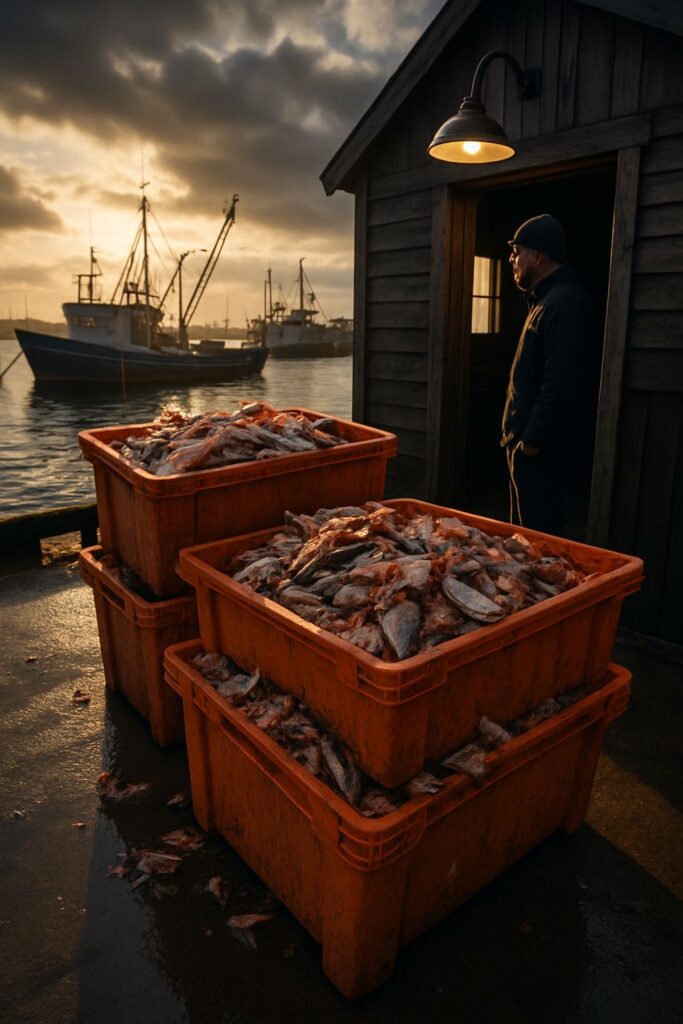
Eliminating Waste in Fish Farming
Eliminating waste in fish farming isn't just a theoretical concept — it's an operational goal that leading aquaculture producers are actively pursuing. The strategy involves tracking every waste stream generated on the farm and identifying the highest-value recovery pathway for each one. Solid sludge goes to anaerobic digestion or compost. Nutrient-rich effluent irrigates adjacent agricultural land or feeds algae cultivation systems. Mortalities are rendered for fish meal or processed into biogas. The goal is a closed-loop system where nothing leaves the farm gate as waste.
Landia Pumps for Fish Waste Siloing
Handling and transporting viscous, high-solid-content waste material without clogging equipment or creating sanitation hazards is one of the practical engineering challenges in fish waste recycling. Purpose-built pump technology plays a critical role in this process. Landia GasMix pumps, for example, are specifically designed for agitating and mixing fish waste slurries in storage silos and biogas digesters.
The Landia system uses a chopper pump that's external and a mixing nozzle that's venturi-driven to break down solid material and maintain a slurry that's homogeneous and predictably flows through processing pipelines. This prevents the stratification and crusting that typically occurs in organic slurries with high-protein, which can otherwise make storage tanks unusable and dramatically reduce the efficiency of biogas production downstream.
When it comes to fish processing operations that have included anaerobic digestion as part of their waste management strategy, having a dependable slurry handling system is not just a minor detail. It's the foundation for the entire operation. If the equipment fails, it can lead to processing shutdowns, increased odour events, and even potential regulatory violations. One of the best ways to ensure the success of a fish waste-to-energy system is to invest in purpose-engineered pumping systems.
Landia GasMix System: Key Performance Characteristics
Feature Specification / Benefit Pump Type External chopper pump with venturi mixing nozzle Primary Application Fish waste slurry agitation and biogas digester mixing Solids Handling Breaks down fibrous and high-protein organic solids Key Benefit Prevents stratification and surface crusting in storage silos System Integration Compatible with anaerobic digestion and composting infrastructure Operational Advantage Reduces downtime and maintenance events in waste processing pipelines
For operations scaling up their fish waste recycling infrastructure, matching the right pump technology to the specific characteristics of their waste stream — viscosity, solids content, temperature — is an engineering decision that pays dividends across the entire system lifecycle.
On the Isle of Lewis, salmon waste was becoming a disposal problem for their landfill. The community also operate an anaerobic digestion plant at their CREED recycling facility. They also knew it would work better and generate more electricity if fed daily with ensiled fish waste.
How they found suitable, reliable equipment to feed fish waste into their digester. And how they coped with the need to pasteurise the fish waste and find the funding to use it makes for a fascinating story.
Read about the Landia Pasteurizer that has been vital for Fish Waste Treatment in Scotland by clicking here.
Important Fish Waste Regulations to Be Aware Of
- The Magnuson-Stevens Fishery Conservation and Management Act — manages fisheries in U.S. federal waters and provides a structure for sustainable fish stock usage, indirectly influencing waste volumes at the processing level
- The Marine Protection, Research, and Sanctuaries Act (MPRSA) — regulates ocean dumping of fish waste and processing byproducts, requiring permits for any marine disposal and prohibiting materials that could harm marine ecosystems
- EPA Clean Water Act regulations — apply to fish processing facility discharge, setting effluent limits for biochemical oxygen demand (BOD), total suspended solids, and other parameters in wastewater discharge permits
- State-level solid waste regulations — manage land application and landfill disposal of fish processing solids, with requirements varying significantly by state
- USDA National Organic Program (NOP) standards — determine which fish-derived fertilisers and soil amendments are approved for use in certified organic agriculture
The regulatory landscape for fish waste disposal in the United States is complex — federal law sets the minimum requirements, and state regulations often go beyond that. The Magnuson-Stevens Act is primarily a fisheries management statute, but its emphasis on minimising waste and bycatch has direct implications for how processors handle offcuts and non-target species material. Compliance isn't optional, but the most progressive operators are using regulatory requirements as a baseline to build more comprehensive waste management programs on top of.
The Marine Protection, Research, and Sanctuaries Act is the main law that governs fish waste disposal in marine environments. Under this law, ocean dumping of fish processing waste requires a permit from the EPA. These permits have strict conditions around location, volume, and waste composition. The message is clear: the ocean is not a dumping ground. Fish waste that ends up in marine environments must get there through controlled, permitted, and monitored pathways — not as an easy way out. For more on sustainable waste management, explore source-separated food waste processing techniques.
Regulations are becoming stricter, requiring greater accountability for waste and offering stronger incentives for resource recovery. Processors who invest in recycling infrastructure, such as fertiliser production, anaerobic digestion, and feed-grade rendering, are not just preparing for future regulations. They are also positioning themselves to benefit from the increasing market demand for sustainably produced seafood, organic agricultural inputs, and renewable energy. In this case, regulation and commercial opportunity are perfectly aligned.
Magnuson-Stevens Act
The Magnuson-Stevens Fishery Conservation and Management Act is the main federal law that manages marine fisheries in U.S. waters. Although its main focus is to prevent overfishing and keep fish populations sustainable, it also affects the amount and type of waste that commercial fishing operations produce. Processors who operate under the Magnuson-Stevens frameworks are more and more required to account for bycatch and offcut use as part of larger fisheries management plans.
The focus of the Act on minimising waste during harvest has a knock-on effect throughout the supply chain. When fishing operations are obliged to cut down on discards and make the most of landed catch, processing facilities end up with more whole fish – which in turn means more offcuts, more viscera and more biological material that needs to be disposed of responsibly. The Act does not directly require recycling, but it sets the stage for fish waste recycling programs to become both necessary and economically feasible.
It's important to look at the Magnuson-Stevens Act, not just as a compliance issue for fish processors, but as a strategic planning tool. Federal fisheries policy is clearly moving towards greater accountability for every pound of fish that enters the supply chain. This means that processors who invest in strong waste recycling infrastructure now will be in a much better position as regulatory expectations increase.
Key Waste-Related Provisions of the Magnuson-Stevens Act
Provision How It Relates to Fish Waste Management Bycatch Reduction Requirements Increases the total material available for processing by reducing discards of non-target species Fishery Management Plans (FMPs) Can include requirements for using landed catch to minimize processing waste Annual Catch Limits (ACLs) Manages the total waste load entering processing facilities by controlling harvest volume Observer Programs Creates accountability for waste generated before fish reach shore by monitoring at-sea discards
The Ocean Dumping Act
The Ocean Dumping Act, also known as the Marine Protection, Research, and Sanctuaries Act, sets strict legal limits on the ocean disposal of fish waste. Any deliberate disposal of fish processing waste into U.S. marine waters requires a permit from the Environmental Protection Agency, and these permits have stringent requirements for waste composition, disposal location, and volume limits. The main idea is clear — ocean dumping should be the last option, not the standard operating procedure. For most fish processors, complying with the Ocean Dumping Act means finding land-based or value-added solutions for their waste, which is where the recycling techniques discussed in this article come in.
The Business Case for Recycling Fish Waste
Recycling fish waste isn't just good for the environment — it fundamentally changes the economics of the seafood industry. When fish processing byproducts are turned into fertiliser, when waste from fish farms is used to grow algae, and when waste from fish rendering is used to generate energy on-site, the cost structure of a fish processing or farming operation changes dramatically. Disposal costs become sources of revenue. Waste becomes a productive resource. Recycling fish waste isn't just a sustainability goal for the fish industry — it's a viable business model that leading companies are already proving at a commercial scale. The question isn't whether it works. The question is how quickly the rest of the industry will catch up.
Don't Throw Fish Waste Away, It's Too Valuable
It's clear from the data that the technology has been tested, and the market demand for organic products derived from fish is rapidly increasing. Fish waste, which contains up to 57% protein, 19% fat, and 30% ash, is not a waste disposal problem, but a misclassified raw material. Every ton of fish waste that ends up in a landfill represents lost fertiliser, lost feed, lost biodiesel, and lost biogas that could have been used to offset real operational costs and environmental impacts. The seafood industry has a unique opportunity to improve its sustainability profile and its bottom line at the same time by doing one thing: treating waste as a resource. Learn more about food waste processing techniques that can help in this transformation.
Looking ahead, we need to invest in processing infrastructure, collaborate with recycling technology providers, and be open to reshaping supply chains based on circular principles. Although this is not an easy task, it is doable. The operations that take the initiative will set the benchmark that everyone else will eventually have to match. Fish waste recycling is not the future of sustainable seafood. It is the present, and it is already benefiting the producers who have decided to implement it.
Common Questions
Here are clear answers to the most frequent questions about fish waste management, disposal rules, and recycling methods.
Whether you are a seafood processor looking to cut disposal costs, a farmer interested in fish-based fertilizers, or just someone interested in the environmental impact of the seafood industry, these answers cover the key issues in a clear and practical way.
What are the greenest ways to dispose of fish waste?
The greenest ways to dispose of fish waste are those that get the most use out of the waste while having the least impact on the environment. Anaerobic digestion is the best — it gets both energy (biogas) and nutrients (digestate fertiliser) from one stream of waste and makes almost no greenhouse gases compared to rotting in a landfill. Composting, hydrolysis to make organic fertiliser, and rendering to make feed for aquaculture are all much better than putting the waste in a landfill when it comes to their impact on the environment.
Applying treated fish waste to land is another established green option, as long as it's managed properly and application rates are kept in check to avoid nutrients running off into water bodies. The least green method — landfill disposal — is sadly still the most popular, which is why it's important to know about these alternatives. The aim should always be to direct fish waste to its most valuable use, whether that's recovering energy, enriching soil, or producing feed, instead of just finding the cheapest way to get rid of it.
Can fish waste be used to produce renewable energy?
Yes, fish waste can be used to produce renewable energy in two ways. The first is through anaerobic digestion, where fish waste is broken down without oxygen to produce biogas. This biogas, a combination of methane and carbon dioxide, can be burned to produce electricity and heat. The second is through the production of biodiesel. In this process, fish oil is extracted from the fat in fish waste and chemically converted into fatty acid methyl esters (FAME). This can be used as a direct substitute for diesel fuel made from petroleum.
These two methods are both commercially viable and scalable. In countries like Norway, Iceland, and the United Kingdom, large fish processing facilities are already using integrated waste-to-energy systems. These systems allow them to offset a significant portion of their energy costs by using waste material that they previously had to pay to dispose of. The transition from fish waste to energy is not something that will happen in the future — it's something that is already happening. The most operationally advanced seafood processors in the world are already doing it.
What laws control fish waste disposal in the US?
Main U.S. Laws Controlling Fish Waste Disposal
Law Regulatory Agency Main Requirement Magnuson-Stevens Act NOAA / NMFS Management of fisheries including reduction of bycatch and utilization of catch Marine Protection, Research, and Sanctuaries Act EPA Permits needed for any ocean disposal of fish processing waste Clean Water Act EPA Limits on effluent for BOD, suspended solids, and nutrient discharge from processing facilities Resource Conservation and Recovery Act (RCRA) EPA Controls solid waste management including fish processing leftovers State Solid Waste Laws State Environmental Agencies Rates of land application, landfill acceptance criteria, composting permits USDA National Organic Program USDA AMS Approves fish-derived inputs for certified organic agricultural use
Fish waste disposal in the United States works under a regulatory framework with many layers where federal law sets the baseline requirements and state laws often set stricter standards on top. The EPA is the main federal authority for most fish waste disposal laws, with jurisdiction over ocean dumping under the MPRSA, wastewater discharge under the Clean Water Act, and solid waste management under RCRA.
State environmental agencies provide additional oversight, especially for land application programs where nutrient loading rates must be carefully controlled to prevent groundwater pollution and surface runoff. Some coastal states with significant seafood processing industries, including Alaska, Maine, Louisiana, and Washington, have developed specific guidance documents for managing fish waste that exceed federal minimums and provide detailed protocols for composting, rendering, and land application operations.
Regulatory policy is getting more stringent, with a stronger emphasis on resource recovery. Processors who view regulatory compliance as a minimum standard, rather than a maximum, are investing in recycling infrastructure that goes beyond the minimum requirements. This not only prepares them for potential future increases in regulation, but also allows them to tap into growing markets for sustainably produced organic inputs and renewable energy.
How can fish waste be used as fertiliser?
There are several ways to transform fish waste into fertiliser, each resulting in a product with a unique nutrient profile and application method. The most common products include fish emulsion (a liquid fertiliser made by heating and pressing fish waste), fish meal (a dry granular product made from heat rendering), and hydrolysed fish fertiliser (a liquid made through enzymatic breakdown at lower temperatures that retains more bioactive compounds such as amino acids and peptides).
Fish-based fertilisers are rich in nutrients, particularly nitrogen, which is often more concentrated and easier for plants to absorb than in many man-made alternatives.
When it comes to using fish fertilisers, they are commonly used in vegetable farming, fruit orchards, turf management, and greenhouse horticulture. Liquid fish emulsions and hydrolysates are typically applied as foliar sprays or through drip irrigation systems, while dry fish meal and bone meal are incorporated directly into soil before planting. For certified organic operations, fish-derived fertilisers are among the most nitrogen-dense inputs approved under USDA National Organic Program standards. This makes them both environmentally friendly and commercially essential for the organic farming sector.