Recycling is the environmental habit most of us learned first. It’s tidy, it’s visible, and it feels like the planet’s version of putting your shopping cart back in the corral. But recycling is also the “end of the line” solution. It deals with what’s already been produced, packaged, purchased, and used. If you want real eco impact, you have to move upstream, where habits change what you consume in the first place.
This isn’t an anti-recycling manifesto. Recycling still matters. It’s just not the main event. The most effective habits reduce waste before it exists, cut energy demand at its source, and reshape daily life so “eco-friendly” becomes the default, not a special effort you summon only when you’re feeling heroic.
Here are the most effective habits beyond recycling, organised by where they actually move the needle: less consumption, less energy use, less food waste, smarter transportation, and community-level influence. Pick a few, build them into your routine, and let consistency do the heavy lifting.
1) Buy Less, Buy Slower, Buy Better
The most underrated eco habit is simply purchasing fewer new things. Manufacturing and shipping stuff has a huge footprint: raw materials, energy, water use, packaging, transportation, and eventually disposal. If an item never enters your life, it never needs to be recycled, donated, or regretted.
A few habits that make this realistic:
- Adopt a 24-hour rule for non-essentials. If you see something you want, wait a day. Most impulse wants fade. The ones that don’t are more likely to be genuine needs.
- Keep a running “needs list.” When something truly needs replacing, put it on a list and shop intentionally later, instead of panic-buying.
- Avoid “aspirational purchases. If you’re buying something for a version of your life that doesn’t exist, it’s likely to become clutter.
- Choose durability over novelty. One item used for years beats a cycle of cheap replacements.
Think in cost-per-use. A higher-quality purchase can be more sustainable if it’s used often and lasts longer.
This habit can feel less like environmentalism and more like reclaiming your time and attention.
Fewer purchases mean fewer decisions, less clutter, and less background stress.
2) Make “Used First” Your Default
If you need something, secondhand is often the biggest footprint reduction you can make, and it’s usually cheaper. Buying used reduces demand for new manufacturing and keeps items in circulation longer.
Where this works especially well beyond recycling:
- Clothing, especially basics and outerwear.
- Furniture, especially solid wood pieces and decor.
- Kitchen gear: pots, pans, bakeware, small appliances.
- Tools and hobby equipment: items people buy, use twice, then sell.
- Kids’ items: they outgrow things fast, so used makes sense.
A practical habit: when you need something, check a used source first, then buy new only if needed. That single rule can reshape your consumption in a powerful way. 3) Repair, Maintain, and Extend the Life of What You Own
A repair habit is an eco habit with compound interest. Every extra year you get out of an item reduces replacement demand and waste. You don’t need to become a master craftsperson. Start with tiny repairs and maintenance that prevent bigger failures.
Beginner-friendly examples:
- Sew a button back on.
- Patch small holes.
- Replace a worn phone cable instead of buying a new device.
- Keep appliances efficient: clean filters, clear vents, descale kettles, vacuum fridge coils if accessible.
- Sharpen knives and tools so they work better, and you don’t replace them.
- Learn one simple fix per month. Even a little skill goes a long way.
Maintenance is unglamorous, but it’s one of the most effective sustainability strategies because it directly reduces demand for new production.
4) Cut Food Waste With a Weekly “Use-It-Up” Rhythm
Food waste is a big deal because it wastes everything that went into producing that food: water, fertiliser, land use, transportation, packaging, and labour. When food gets tossed, you’re not just wasting the item. You’re wasting the entire supply chain behind it.
A few habits that reduce waste fast:
- Create a “Use First” shelf in your fridge for anything that needs to be eaten soon.
- Plan one “use-it-up” meal each week: soup, stir-fry, tacos, fried rice, pasta clean-out.
- Store fragile items visibly. Hidden food becomes forgotten food.
- Freeze proactively: bread, berries, herbs, leftovers.
- Buy smaller amounts of fragile produce unless you have a plan to use it quickly.
- Keep a simple list of what’s in your fridge and freezer. Even a messy note helps.
Reducing food waste is one of those rare habits that’s good for the planet and immediately good for your budget.
5) Shift Your Diet Gradually Toward Plant-Forward Meals
You don’t have to take an all-or-nothing approach. The most effective dietary shift for many people is simply eating more plant-based meals more often. Even small changes, repeated weekly, can create a meaningful impact over time.
Practical ways to make it stick:
- Choose one or two plant-forward dinners per week.
- Use meat as a flavour accent rather than the main portion.
- Swap beans or lentils into soups, chilli, tacos, and pasta sauces.
- Pick a reliable set of easy meals so it doesn’t feel like a new lifestyle.
- Avoid food perfectionism. Consistency beats purity.
The best dietary changes are the ones you can keep doing without feeling deprived.
6) Prioritise Home Energy Efficiency (The Quiet Giant)
Home energy use is a major part of many households’ footprint. The good news: efficiency upgrades often save money, too. You don’t need a full renovation to get meaningful benefits.
High-impact habits and upgrades:
- Seal drafts: weatherstripping, door sweeps, outlet gaskets on exterior walls.
- Use LED bulbs in high-use areas.
- Adjust thermostat habits: slightly lower in winter, higher in summer, especially at night.
- Use ceiling fans strategically to improve comfort.
- Wash clothes in cold water and run full loads.
- Air-dry some items when convenient.
- Maintain HVAC filters regularly to keep systems efficient.
- Reduce hot water waste: low-flow showerhead, shorter showers, faucet aerators.
Energy improvements are powerful because they reduce demand every day, not just when you remember to do something.

7) Drive Less Through “Trip Bundling” and Smarter Defaults
Transportation emissions can be significant, especially in car-dependent areas. You don’t need to overhaul your life to make progress. Start with habits that reduce unnecessary driving.
Simple shifts:
- Bundle errands into one trip instead of multiple short trips.
- Choose walkable options when possible: a local store, a park, or a nearby service.
- Carpool when it’s easy.
- Keep tyres properly inflated for better fuel efficiency.
- Avoid idling and aggressive acceleration.
If you can replace even one or two car trips per week with walking, biking, or consolidated errands, the impact adds up over a year.
8) Swap Single-Use Convenience for Reusables in High-Frequency Areas
The highest-impact reusable items are the ones you use constantly. Don’t start with obscure gadgets. Start with what you touch daily.
High-frequency reusables:
- Reusable water bottle
- Reusable shopping bags
- Reusable produce bags
- Reusable coffee cup (if you buy coffee out often)
- Washable rags instead of paper towels
Make it stick by storing these items where they’ll be used: bags in the car or by the door, bottle by your keys, rags by the sink. Eco habits fail when they depend on memory. They succeed when they’re built into your environment.
9) Choose “Fewer, Better” Cleaning and Personal Care Products
An eco impact habit is also a “less stuff” habit. Many households accumulate piles of specialized products that create waste and clutter.
A simpler approach:
- Use a small core set of cleaners that cover most tasks.
- Choose concentrates or refills when possible.
- Use cloth rags instead of disposable wipes.
- Avoid heavy fragrances if possible, which can be irritating and unnecessary.
- Finish what you have before replacing it with a “greener” version.
This reduces waste and decision fatigue. And it’s easier to maintain.
10) Compost If You Can, but Don’t Let It Become a Barrier
Composting is great for reducing landfill waste and returning nutrients to soil. But it shouldn’t become an all-or-nothing test of eco-worthiness. If composting fits your life, do it. If it doesn’t, focus on food waste reduction first, which often has a bigger upstream impact anyway.
If you want a low-gross, low-effort compost habit:
- Use a small lidded kitchen container and empty it often.
- Keep a stash of browns (shredded cardboard, dry leaves) to prevent smell.
- Store scraps in the freezer to avoid odour and fruit flies.
- Use municipal pickup or drop-off if available.
Composting is a bonus habit. Reducing food waste is the core habit.
11) Advocate and Normalise Better Choices (The Multiplier Effect)
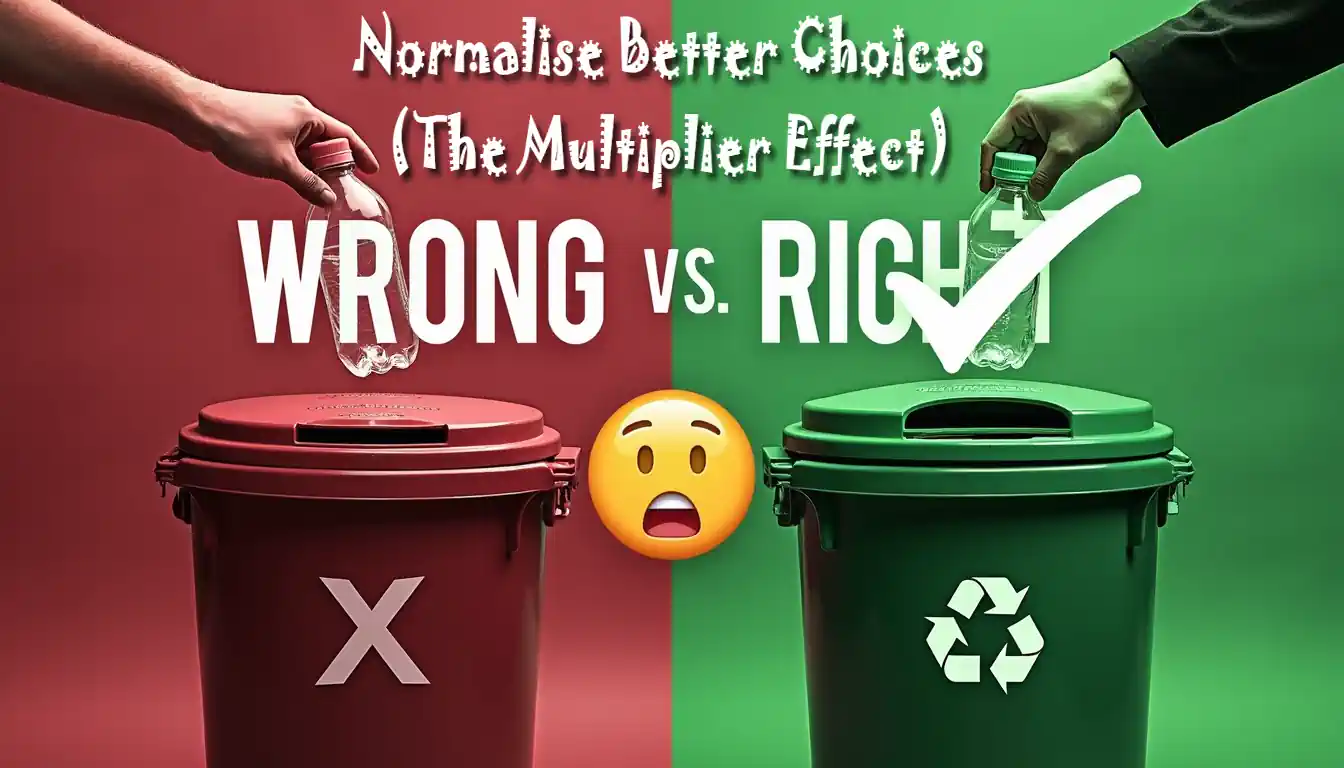
Individual habits matter, but systems matter more. One of the highest-impact things you can do is influence what’s normal in your home, your workplace, and your community.
High-leverage actions:
- Choose a renewable energy option through your utility if available.
- Support policies and local initiatives that improve transit, efficiency, and waste reduction.
- Share practical tips without moralising.
- Leave reviews that reward businesses for sustainable practices.
- Support local repair shops and circular economy businesses.
When better choices become normal, more people adopt them without needing motivation every day. That’s how impact scales.
How to Start Without Overwhelm
If you try to do all of this at once, you’ll burn out and end up ordering takeout in a plastic bag while staring at a pile of reusable containers you forgot existed. Start smaller. Here’s a simple approach:
Pick one habit from each category:
- Consumption: 24-hour rule for non-essential purchases
- Food: “Use First” fridge shelf + one use-it-up meal per week
- Energy: seal one drafty door and swap a few high-use bulbs to LED
- Transportation: bundle errands into one trip weekly
- Reusables: keep a water bottle and bags in the same place
Do that for a month. Then add one more habit. Sustainability is a practice, not a personality.
Eco Impact Comes From Upstream Choices
Recycling is helpful, but it’s the last step. The most effective eco habits happen earlier: buying less, keeping things longer, wasting less food, using less energy, driving less, and building systems that make sustainable choices automatic. The goal is not to be perfect. The goal is to design your daily life so that better choices require less effort.
Start with what feels easiest, not what feels most impressive. The planet doesn’t need a handful of people doing sustainability perfectly. It benefits from millions of people doing it consistently, one habit at a time.
Key Takeaways
- Recycling matters, but it’s the end of the line. The biggest eco wins come from upstream habits that prevent waste and emissions before they happen.
- Buy less, buy slower, and choose durable items. The greenest purchase is often the one you don’t make, and the second-greenest is the one that lasts.
- Default to “used first,” then repair before replacing. Secondhand and simple maintenance reduce demand for new manufacturing and keep items in circulation longer.
- Food waste reduction is a fast, high-impact habit. A “use-first” fridge shelf, one weekly use-it-up meal, and proactive freezing can cut waste dramatically.
- Go plant-forward without perfection. A couple of plant-forward meals per week adds up over time, especially when it becomes a repeatable routine.
- Home energy efficiency is a quiet giant. Draft sealing, LEDs, thermostat tweaks, and hot-water savings reduce daily demand and often lower bills.
- Drive less by changing defaults, not your entire life. Trip bundling, walkable swaps, and basic car maintenance reduce emissions with minimal disruption.
- Reusables work best where they’re used most. Put bags, bottles, and rags where you’ll actually grab them, so habits don’t rely on memory.
- Composting is helpful, but not the gatekeeper. Focus on preventing food waste first, then compost as a bonus if it fits your life.
- Community influence multiplies impact. Normalising better choices, supporting repair and circular businesses, and backing smart local policies scales change beyond your household.
FAQ
Is recycling still worth doing if it’s “not the main event”?
Yes. Recycling helps, especially for materials that are widely accepted and properly sorted. The point isn’t to stop recycling, it’s to pair it with upstream habits like buying less, reusing more, and wasting less food, which typically move the needle further.
What’s the single most effective habit if I can only pick one?
For many households, it’s one of these three: buy less new stuff, cut food waste, or improve home energy efficiency. If you want a quick win with immediate savings, start with food waste (use-first shelf + use-it-up meal).
How do I start without getting overwhelmed?
Choose one habit per category (consumption, food, energy, transportation, reusables) and commit to it for one month. Make it easy and repeatable. Sustainability works best as a routine, not a personality makeover.
Does buying used really make a difference?
Often, yes. Buying secondhand can be one of the biggest footprint reductions because it avoids new manufacturing and keeps products in circulation. It’s especially impactful for furniture, clothing, tools, and kids’ items.
Isn’t repairing stuff inconvenient or expensive?
Sometimes, but many repairs are cheap and simple. Start with “maintenance first” actions like cleaning filters, tightening screws, patching small holes, replacing a cable, or sharpening tools. Even small fixes extend lifespan and reduce replacement demand.
Do I have to go fully vegetarian or vegan to make an impact?
No. The most sustainable diet shift for most people is plant-forward consistency, not all-or-nothing purity. Try one or two plant-forward dinners per week or use meat as a smaller “flavour accent.”
What are the best home energy upgrades if I rent?
Focus on low-cost, renter-friendly steps: LED bulbs, draft sealing (temporary weatherstripping or door sweeps), smart thermostat habits, window coverings, and HVAC filter changes (if accessible). Washing clothes in cold water is another easy win.
Is composting worth it if I don’t have a yard?
It can be, especially with municipal pickup or drop-off programs, or by storing scraps in the freezer to avoid odours. But composting is a bonus, not a prerequisite. Reducing food waste first usually delivers bigger upstream benefits.
What reusables are actually worth it?
The best reusables are the ones you’ll use constantly: a water bottle, shopping bags, cloth rags, and a coffee cup if you buy drinks often. Place them where you’ll grab them (by keys, in the car, by the sink).
How can I influence impact beyond my own household without being preachy?
Focus on normalising and enabling, not moralising. Share what’s worked for you, support businesses that make sustainable practices easy, leave helpful reviews, and back local initiatives that improve transit, efficiency, and waste reduction. Quiet consistency spreads faster than guilt.
Written by Dreamstime.com