
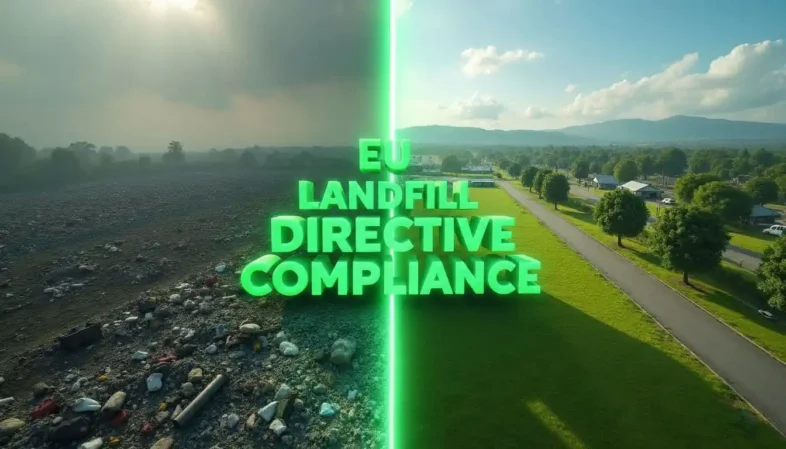
Landfill Directive compliance has been an issue across the EU for almost 20 years. We first posted about this in December 2006, when ISWA posted an article, reproduced below. EC legal action against non-compliant member states, over the Landfill Directives, isn't just a pedantic wish from compliant states. It brings many real health concerns and cross-border pollution concerns with it. It is essential that when EU Regulations are agreed, ALL member nations must comply in accordance with the agreed dates.
The ISWA Post that Started this follows:
EC Starts Legal Action Against Member States on Landfill Directive Compliance

15 December 2006 (Waste Management World – ISWA): The European Commission decided to start legal action against seven Member States for inadequately transposing the EU's legislation on the landfill of waste into their national law.
The Commission is sending first warning letters to Austria, Belgium, France, Germany, Luxembourg, the Netherlands and Portugal.
Compliance with the Landfill Directive is a serious problem throughout the EU. The Commission therefore launched a screening exercise to compare Member States' national legislation with the Directive to detect where the shortcomings are. The aim is to ensure that landfills operate in full accordance with the Directive (i.e. in a way which do not harm human health or the environment).
Stavros Dimas, European Commissioner for Environment, said:
‘The Landfill Directive is an essential measure for protecting people's health and the environment against the dangers that waste can pose. However, it is clear that the directive cannot have its full effect unless Member States turn all of its requirements into their national legislation. I urge them to do so without delay.'
It can be seen now that the above article was just the start of further actions, which led to the imposition of fines. The next article shows that in the months and years that followed, individual states were enjoined in legal action.
What is the Landfill Directive?
The Landfill Directive, adopted in 1999, establishes a set of detailed rules with which waste landfills must comply. The objective is to prevent or minimise the negative effects that landfill sites can have, such as pollution of water, soil and air, and emissions of methane, a powerful greenhouse gas. T
The directive also helps to promote the recovery and recycling of waste. In particular, it bans certain types of waste from being put in landfill sites, for example, used tyres, and requires member states to reduce the amount of biodegradable waste they landfill to 35 per cent of 1995 levels by 2016.
Landfill Directive Compliance Update: Did EU Member States Ignore the Rules, and Were Any Ever Fined?
Introduction: EU Landfill Rules Were Clear — But Compliance Was Far Less Clear
The EU Landfill Directive was meant to bring every Member State onto a common environmental footing. It set rules for landfill design, operation, closure, aftercare, waste acceptance and the diversion of biodegradable municipal waste from landfill. In principle, this was a major step forward for public health, methane reduction, groundwater protection and modern waste management.
In practice, the history of Landfill Directive compliance has been far more uncomfortable. Some countries moved quickly. Others delayed, transposed the law incompletely, allowed illegal dumps to continue, or failed to create the waste infrastructure needed to comply with the Directive in real-world conditions.
This raises a blunt but important question: were any of these EU nations ever fined by the European Commission for not complying?
The strictly correct answer is: the European Commission itself does not normally “fine” Member States directly in these cases. It starts infringement proceedings and may refer a Member State to the Court of Justice of the European Union. The Court can then impose lump-sum fines and continuing penalty payments. In landfill and waste-law cases, that has happened. Greece and Italy are the clearest examples.
Key Takeaways
- Yes, EU Member States have been financially penalised for waste and landfill non-compliance. Greece and Italy were ordered to pay substantial penalties in 2014 for continuing failures over illegal waste sites and landfill-related obligations.
- The European Commission starts the legal process, but the Court of Justice imposes the fines. This distinction matters when discussing whether “the EU Commission fined” a country.
- Enforcement has often been slow. Some cases took many years from initial infringement action to financial penalties.
- The 1999 Landfill Directive has since been tightened. The EU now aims to limit municipal waste landfilled to 10% by 2035, with restrictions from 2030 on landfilling waste suitable for recycling or other recovery. See the EUR-Lex summary of the Landfill Directive.
- Large compliance gaps remain. In 2023, the European Commission reported that 13 Member States were still far from the 2035 landfill target, including Bulgaria, Croatia, Cyprus, Czechia, Greece, Hungary, Latvia, Malta, Poland, Portugal, Romania, Slovakia and Spain. See the European Commission 2023 early warning report on waste targets.
- The deeper political issue is not only environmental law, but trust. If Member States agree to EU environmental rules but fail to implement them properly, confidence in the fairness of the EU legal order is inevitably weakened.
What Was the Landfill Directive Designed to Achieve?
The Landfill Directive 1999/31/EC was adopted to prevent or reduce the adverse effects of landfill on the environment and human health. Its concerns include pollution of surface water, groundwater, soil and air, as well as methane emissions from biodegradable waste.
The Directive set requirements for landfill permitting, site engineering, waste acceptance, closure and aftercare. It also introduced targets to reduce the landfilling of biodegradable municipal waste. These targets were central to the shift from traditional disposal-led waste management toward recycling, biological treatment, composting, anaerobic digestion and energy recovery.
Later amendments under the EU circular economy package made the direction of travel even clearer. Directive (EU) 2018/850 amended the Landfill Directive to restrict, from 2030, landfilling of waste suitable for recycling or other recovery, and to seek a maximum of 10% municipal waste landfilled by 2035. See the EUR-Lex summary: Landfill of Waste.
The Early Warning Signs: Legal Action Against Member States
The original article recorded that, as early as December 2006, the European Commission started legal action against Austria, Belgium, France, Germany, Luxembourg, the Netherlands and Portugal for inadequate transposition of the Landfill Directive into national law.
In March 2007, the Commission extended similar action to Cyprus, the Czech Republic, Denmark, Estonia, Finland, Ireland, Lithuania, Malta, Poland, Slovakia, Slovenia, Spain, Sweden and the United Kingdom.
The issue was not a minor technicality. Common failures included incomplete or incorrect transposition of definitions, waste acceptance rules, landfill classes, permit requirements, pricing obligations, aftercare cost provisions and the rules governing existing landfill sites.
In plain terms, many Member States had agreed to a common EU landfill law, but their national legislation did not fully reproduce or implement what had been agreed.
Were Any EU Nations Ever Fined for Not Complying?
Yes. But the legal wording matters. The European Commission starts the infringement procedure. If the Member State does not correct the breach, the Commission can refer the case to the Court of Justice of the European Union. The Court can then issue a judgment and, in persistent cases, impose financial penalties.
The most important landfill and waste law examples are Greece and Italy.
Greece: Illegal Landfills and Continuing Penalties
Greece had long-running problems with illegal and uncontrolled waste disposal sites. In 2014, the Court of Justice ordered Greece to pay a lump sum of €10 million and a further penalty payment of €14.52 million for each six-month period of continued non-compliance. The penalties were linked to failures to comply with earlier judgments concerning illegal landfills and waste management obligations. See this summary of the large EU waste-law fines imposed on Greece and Italy.
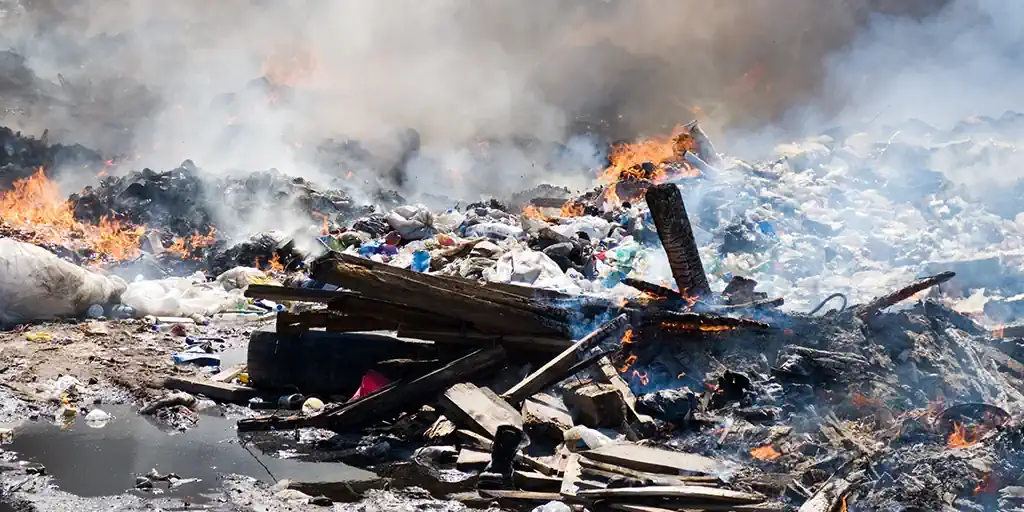
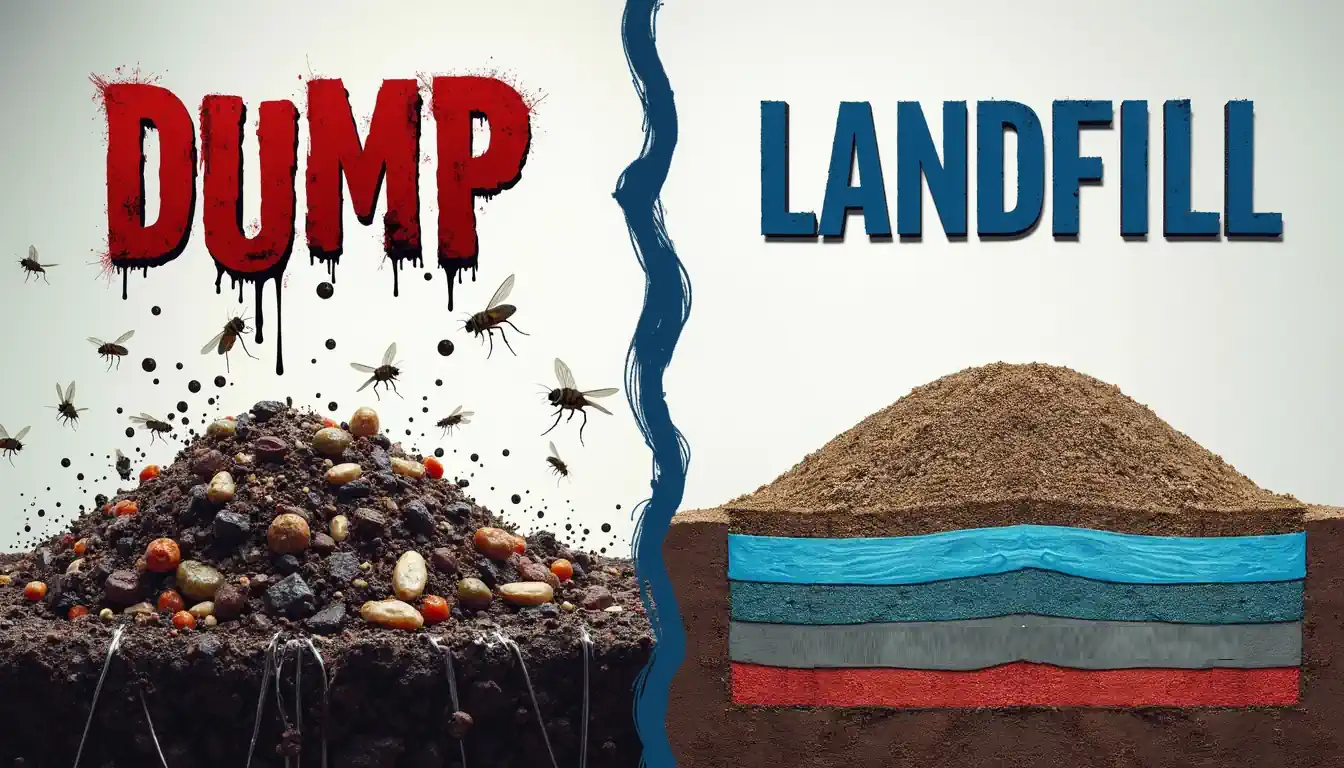
This was not merely a paperwork failure. Illegal and poorly controlled landfills can cause odour, litter, vermin, fires, methane emissions, leachate pollution and long-term contamination risks. The environmental stakes were substantial.
Italy: One of the Largest Waste-Law Penalties
Italy was also penalised in 2014. The Court ordered Italy to pay a lump sum of €40 million. It also imposed a decreasing six-monthly penalty payment, initially reported at €42.8 million, linked to the continued failure to remedy illegal waste sites. The Court noted that the failure had persisted for more than seven years and that progress had been slow. See the Court of Justice press release on financial penalties against Italy.
These penalties showed that EU environmental law does have enforcement teeth. However, they also showed something less flattering: enforcement can take years, and penalties often arrive only after prolonged non-compliance.
Did All the Countries Named in 2006 and 2007 Get Fined?
No. The available enforcement record does not show that every country named in the early transposition cases was eventually fined for Landfill Directive non-compliance.
In many infringement cases, a Member State changes its legislation or administrative practice before the matter reaches the penalty stage. In others, the issue may be narrowed, closed, superseded by later legislation, or absorbed into broader waste-law proceedings.
That is one reason the public record can appear unsatisfactory. A country can be named in infringement proceedings, correct the immediate legal defect, and avoid a fine.
That does not necessarily prove that waste management practice on the ground became fully satisfactory. It only shows that the formal legal case was resolved, or at least not pursued to the penalty stage.
Portugal, Greece and the Continuing Problem of Landfill Dependency
The original article referred to Portugal and Greece as examples of countries struggling with landfill diversion and biodegradable municipal waste reduction.
Those concerns remain relevant. The EU’s 2023 early warning assessment stated that 13 Member States were still far from the 2035 target of reducing municipal waste landfilled to a maximum of 10%. Those countries were Bulgaria, Croatia, Cyprus, Czechia, Greece, Hungary, Latvia, Malta, Poland, Portugal, Romania, Slovakia and Spain. See the European Commission report identifying Member States at risk of missing waste targets.
The same report noted that the EU average municipal waste landfilling rate was still around 23% in 2020, and that eight Member States landfilled more than 50% of municipal waste, with three above 70%. See the 2023 EU early warning report on waste and landfill targets.
That finding is significant. It shows that, more than two decades after the Landfill Directive was adopted, landfill dependence remained a structural problem in parts of the EU.
Recent Enforcement: The Issue Has Not Gone Away
The compliance problem did not end with the 2014 fines against Greece and Italy. In 2021, the Commission announced action against Bulgaria, Croatia, Greece, Romania and Slovakia for failing to comply with EU waste laws, including the Waste Framework Directive and the Landfill Directive. See the European Commission infringement package on waste and landfill law.
In 2023, the Commission referred Greece back to the Court over the landfill site on Zakynthos, a Natura 2000 protected area. The Commission said the site still needed to be closed and rehabilitated to comply with an earlier 2014 Court judgment, and that a second referral could result in financial penalties. See the European Commission infringement decisions from October 2023.
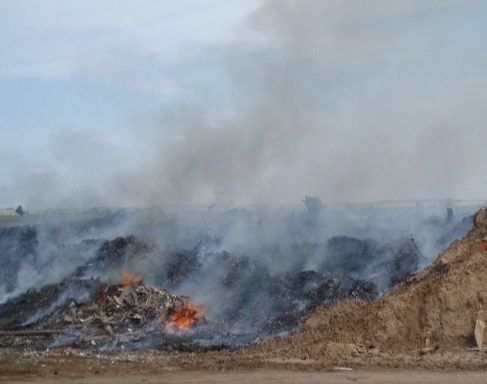
This is an important update to the 2018 article. It shows that landfill compliance problems are not simply historic. They remain live enforcement issues in some Member States.
The Political Question: Do Some Member States Treat EU Directives as Optional?
There is an uncomfortable political issue here. If EU Member States agree to environmental directives but fail to implement them promptly, consistently and honestly, the credibility of the EU legal system suffers.
It is reasonable to argue that this was one of the frustrations behind the UK’s decision to leave the EU. Many UK businesses, local authorities and regulators spent years trying to comply with EU environmental rules, often at considerable cost. If other Member States were perceived as paying only lip service to the same rules, then the result was not a level playing field.
That said, the evidence needs to be stated carefully. It would be too broad to say that a majority of EU states simply ignored EU rules on landfill and waste management.
The documented position is more precise:
- many Member States had transposition or implementation problems;
- some corrected them before fines were imposed;
- others, notably Greece and Italy, faced major financial penalties after persistent non-compliance.
The strongest criticism is therefore not that EU law was wholly unenforced. It is that enforcement was often slow, uneven and dependent on long infringement procedures before meaningful sanctions were imposed.
Why Landfill Directive Compliance Matters
Landfill compliance is not an abstract legal exercise. Poorly controlled landfills can cause real harm, including:
- leachate pollution of groundwater and surface water;
- methane emissions contributing to climate change;
- odour, litter and nuisance impacts on nearby communities;
- fire and explosion risks from landfill gas;
- long-term liabilities after landfill closure;
- unfair competition where non-compliant operators avoid proper engineering and aftercare costs.
Good landfill regulation is therefore essential, even in a circular economy. The objective may be to reduce landfill to a residual role, but that residual role still needs high standards.
What Has Changed Since the 2018 Version of This Article?
- The EU’s landfill reduction ambition has become tougher. The amended Directive seeks to limit municipal waste landfilled to 10% by 2035. See the EUR-Lex summary of the amended Landfill Directive.
- The Commission now uses early warning reporting to identify Member States at risk of missing waste targets before deadlines arrive. See the European Commission 2023 early warning report.
- Greece and Italy remain the key examples of large waste-law penalties arising from persistent non-compliance.
- Several Member States remain far from the 2035 landfill target, according to the Commission’s 2023 assessment. See the EU assessment of progress toward waste and landfill targets.
- Enforcement actions continue, including cases involving landfill rehabilitation, waste pre-treatment and incorrect application of EU waste law. See the European Commission infringement action on waste law compliance.
Conclusion: The EU Did Fine Some States — But Only After Long Delays
So, were EU nations ever fined for failing to comply with landfill and waste rules?
Yes. Greece and Italy were both hit with major financial penalties following long-running waste and landfill failures. However, it is more legally accurate to say that the European Commission brought the cases and the Court of Justice imposed the penalties.
The wider lesson is less comfortable. The Landfill Directive was adopted in 1999, yet more than twenty years later the EU was still identifying Member States far from the 2035 landfill target. That does not mean the Directive failed.
It has undoubtedly helped reduce landfill reliance and improve waste regulation across Europe. But it does show that agreeing EU environmental rules is far easier than enforcing them evenly across all Member States.
For those who believe in environmental protection, this is frustrating. For those who believe in fair competition and honest law-making, it is even more serious. A directive that is rigorously applied in one country but weakly implemented in another creates both environmental risk and political resentment.
The real test of EU waste policy is therefore not whether ambitious targets can be written into law. It is whether Member States actually deliver them — and whether non-compliance is dealt with quickly enough to maintain public confidence.
FAQs: Landfill Directive Compliance and EU Fines
What is the EU Landfill Directive?
The Landfill Directive 1999/31/EC is EU legislation that sets environmental standards for landfill sites. It covers landfill design, operation, waste acceptance, closure, aftercare and the reduction of biodegradable municipal waste sent to landfill.
Were any EU countries fined for failing to comply with landfill or waste law?
Yes. Greece and Italy are the clearest examples. In 2014, Greece was ordered to pay a €10 million lump sum plus six-monthly penalties for continued non-compliance. Italy was ordered to pay a €40 million lump sum plus continuing penalty payments linked to illegal waste sites. See this article on large EU waste-law penalties against Greece and Italy.
Did the European Commission fine those countries?
Strictly, no. The European Commission starts infringement proceedings and can refer a Member State to the Court of Justice of the European Union. The Court is the body that imposes financial penalties.
Did every country named in early infringement proceedings receive a fine?
No. Many infringement procedures are resolved before fines are imposed. A country may amend national law, improve transposition, or satisfy the Commission before the case reaches the penalty stage.
Which EU countries are still far from the 2035 landfill target?
In its 2023 assessment, the Commission identified Bulgaria, Croatia, Cyprus, Czechia, Greece, Hungary, Latvia, Malta, Poland, Portugal, Romania, Slovakia and Spain as still far from the 2035 target of landfilling no more than 10% of municipal waste. See the European Commission 2023 early warning report.
What is the 2035 landfill target?
The amended Landfill Directive seeks to reduce municipal waste landfilled to a maximum of 10% by 2035. It also introduces restrictions from 2030 on landfilling waste suitable for recycling or other recovery. See the EUR-Lex Landfill Directive summary.
Why does landfill compliance matter?
Landfill compliance matters because poorly controlled sites can pollute water, soil and air, emit methane, create nuisance impacts and leave expensive long-term liabilities. It also matters economically because compliant operators should not be undercut by lower-cost non-compliant disposal.
Does this prove that EU environmental law is ineffective?
No. EU landfill law has helped drive major improvements in waste management. However, the enforcement record shows that implementation has often been slow and uneven. The key criticism is not that EU law has no effect, but that non-compliance can persist for too long before meaningful penalties are imposed.
Sources Used for This Update
- EUR-Lex: Landfill of Waste — summary of Directive 1999/31/EC and later amendments
- European Commission 2023 early warning report on progress toward EU waste targets
- Court of Justice press release on financial penalties against Italy for waste-law non-compliance
- Summary of major EU waste-law fines imposed on Greece and Italy
- European Commission infringement package on waste and landfill compliance, 2021
- European Commission infringement decisions, October 2023
Under What Authority Does the EC Invoke the Legal Process?
Article 226 of the Treaty gives the Commission powers to take legal action against a member state that is not respecting its obligations.
Finally, check out our Landfill Directive pdf here.
[Published in 2006. Updated 9 April 2018. Updated and rewritten May 2026.]




Boring article i do not like this very complicated? Too looooong.
This should be shown in schools. Thank you for sharing!?
Yay! Me, thanks for writing this. We call them countries which sign up and ignore. Many countries – corrupt politicians are still in power. This is nothing.
I don’t see why we can’t just burn most of the trash and use it as energy and just put air scrubbers to filter the smoke, and do more recycling. Creates more jobs and energy..win win?
This can mean the UK has to pay fines right??