Waste managers know the hard part is rarely deciding whether to use anaerobic digestion. The real decision is choosing a process that matches your municipal solid waste stream, available water, site footprint, and end market for biogas and digestate.
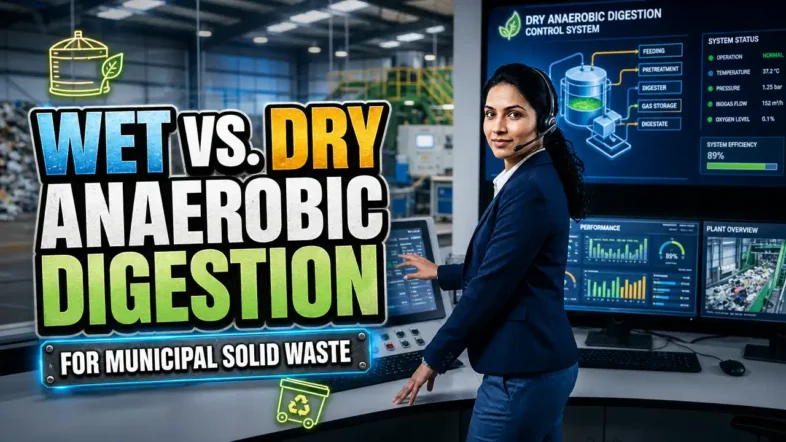
Wet Digestion vs. Solid State AD (SSAD) comes down to solids content and material handling. That distinction drives the size of your tanks, the need for pumps or loaders, pre-processing costs, and how easily you can absorb changes in food waste quality.
This guide compares wet and dry anaerobic digestion, explains where each process fits, and gives you a practical way to select the right design for municipal solid waste.
Key Takeaways
- Wet anaerobic digestion usually processes pumpable slurry with less than 15% total solids.
- Dry anaerobic digestion, also called high-solids digestion or dry fermentation, generally processes stackable feedstock above 15% total solids.
- Wet systems are common in the United States because they fit wastewater sludge, manure, food-processing liquids, and depackaged food waste.
- Dry systems can reduce dilution water and reactor volume, which can make sense for source-separated food scraps, yard material, and other concentrated organics.
- Feedstock preparation matters as much as digester type. Screening, de-packaging, grit removal, and contamination control protect equipment and preserve digestate value.
- Your best choice depends on feedstock consistency, water requirement, hauling distance, available site area, energy use, and local outlets for digestate.
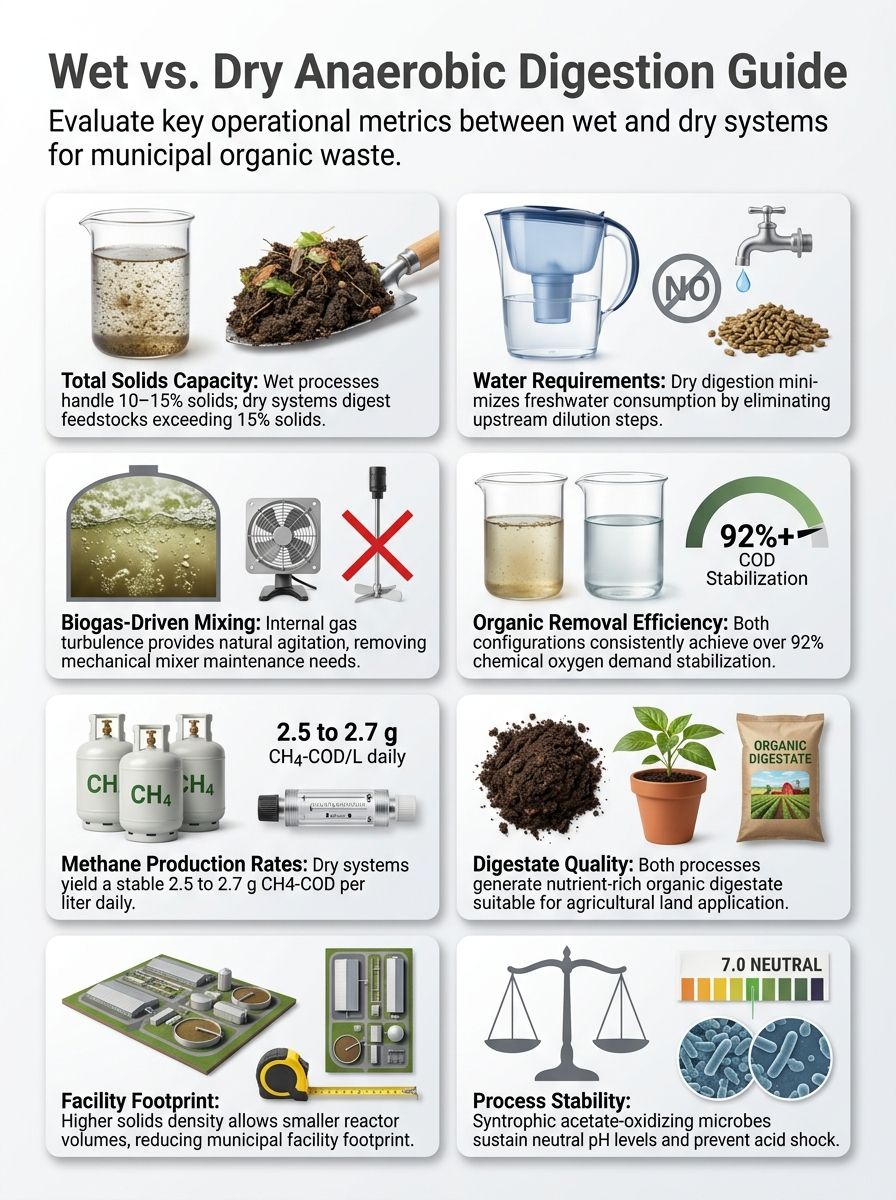
Overview of Anaerobic Digestion
Anaerobic digestion uses microbes to break down organic matter without oxygen. The process produces biogas, mainly methane and carbon dioxide, plus digestate, the remaining liquid and solid material.
For municipal solid waste, the key question is whether your feedstock behaves like a pumpable slurry or a stackable solid. That single choice affects nearly every part of the project, from receiving equipment and mixing to wastewater treatment and digestate handling.
Wet Anaerobic Digestion
Wet anaerobic digestion processes feedstock with less than 15% total solids. Operators usually create a pumpable slurry by blending food waste with water, wastewater sludge, manure, liquid organics, or recirculated process liquid.
This approach fits facilities that already have tanks, pumps, piping, and liquid-handling staff. It also works well for co-digestion at wastewater resource recovery facilities, where food waste can supplement wastewater sludge.
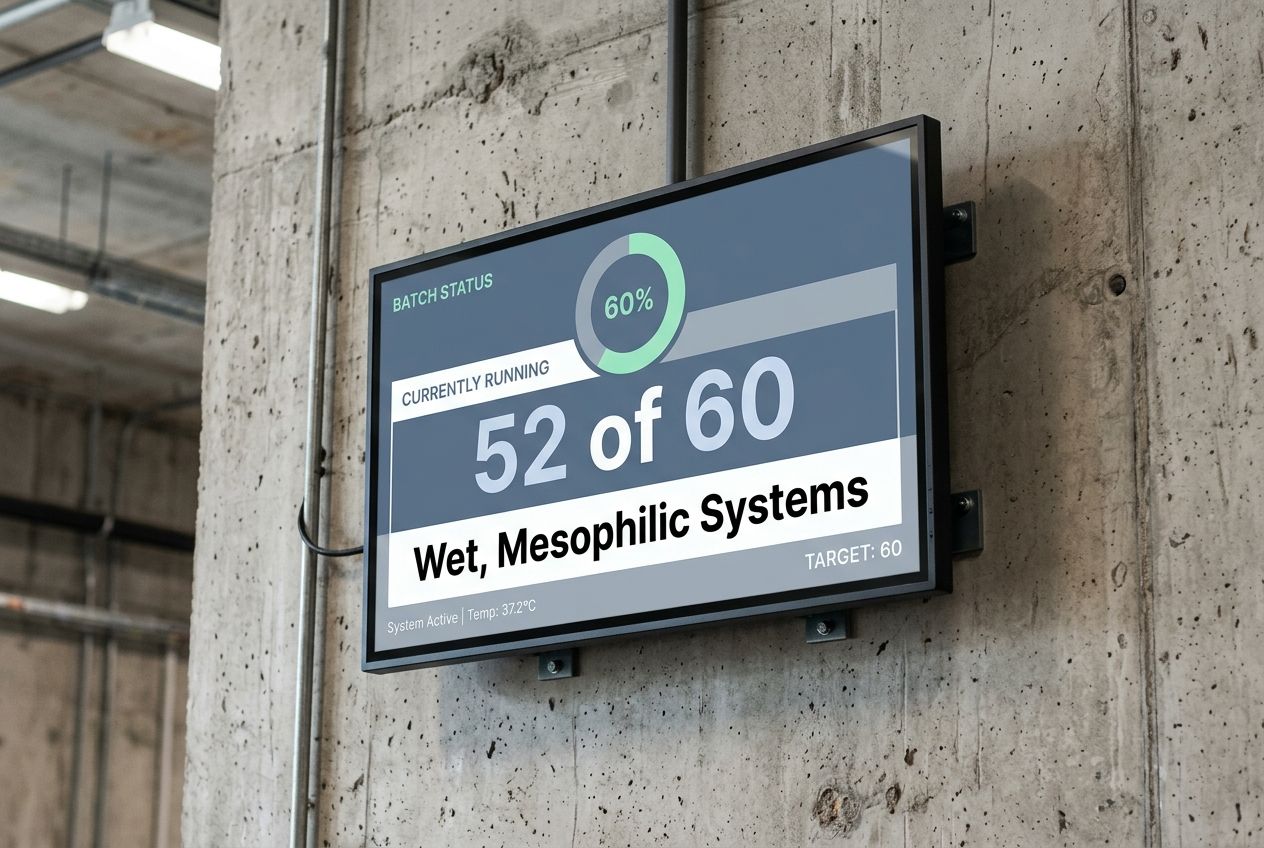
Wet digestion is usually the practical choice when your feedstock already moves through pipes.
EPA's latest food-waste digester survey found that 52 of 60 reporting facilities used wet, mesophilic systems. That matters because a wet design gives municipalities a well-established operating model when they have access to liquid infrastructure and reliable pre-processing.
- Best fit: depackaged food waste, wastewater sludge, manure, fats, oils, grease, and food-processing liquids.
- Operational advantage: pumps and mixers can keep the feedstock uniform and help operators respond to short-term changes in loading.
- Tradeoff: dilution increases water use and can increase the volume that needs downstream treatment.
- Design focus: remove plastics, grit, packaging, and other inert material before it reaches pumps, heat exchangers, and tanks.
Wet systems may use complete-mix tanks, plug-flow digestion, or other anaerobic reactors. The right configuration depends on particle size, water requirement, available heating, and whether you need continuous or batch feeding.
Dry Anaerobic Digestion
Dry anaerobic digestion processes feedstock above 15% total solids. Instead of making a slurry, the facility handles material with front-end loaders, conveyors, screw feeders, or enclosed fermenter boxes.
This process is often a strong match for source-separated household food waste and other concentrated municipal organics. It can reduce the amount of added water and limit the volume of liquid digestate that needs treatment.
Dry AD does not mean every project avoids mechanical mixing. Some designs rely on plug-flow movement, recirculated liquid, percolation, or batch loading rather than tank mixers, while others use mixing equipment to maintain contact between biomass and feedstock.
- Best fit: stackable food waste, yard material, solid organics, and feedstock with limited access to process water.
- Operational advantage: less dilution can reduce reactor volume per ton of incoming material.
- Tradeoff: receiving and contamination removal need careful planning because dry systems handle more packaging, grit, and bulky material.
- Design focus: use consistent sizing, screening, and feedstock blending to prevent uneven digestion and blocked material flow.
Dry fermentation can work in batch tunnels or continuous plug-flow systems. For a city with limited water supply or high disposal costs for liquid residuals, that lower water requirement can change the project economics.
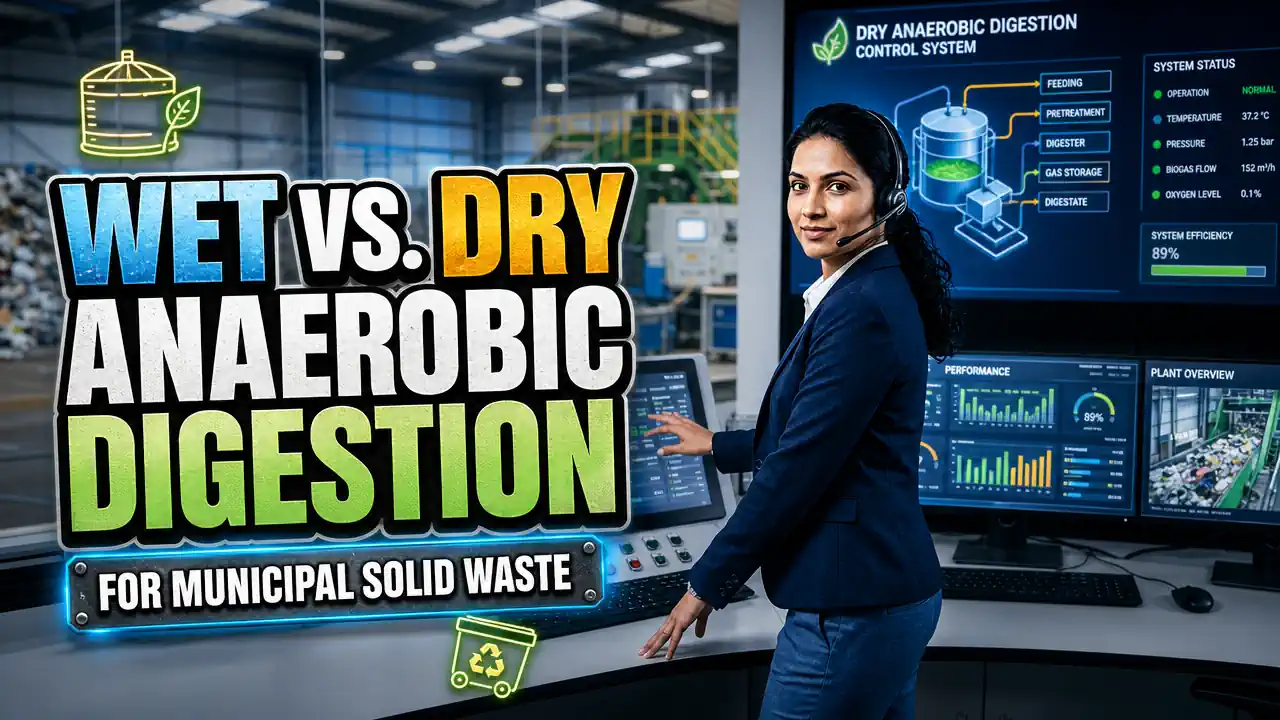
Watch our video about this, below:
Key Differences Between Wet and Dry Anaerobic Digestion
Wet Digestion vs. Solid State AD (SSAD) is not a contest with one universal winner. It is a feedstock and infrastructure decision.
The table below gives municipal decision-makers a quick way to compare the two approaches before moving into detailed design and financial modeling.
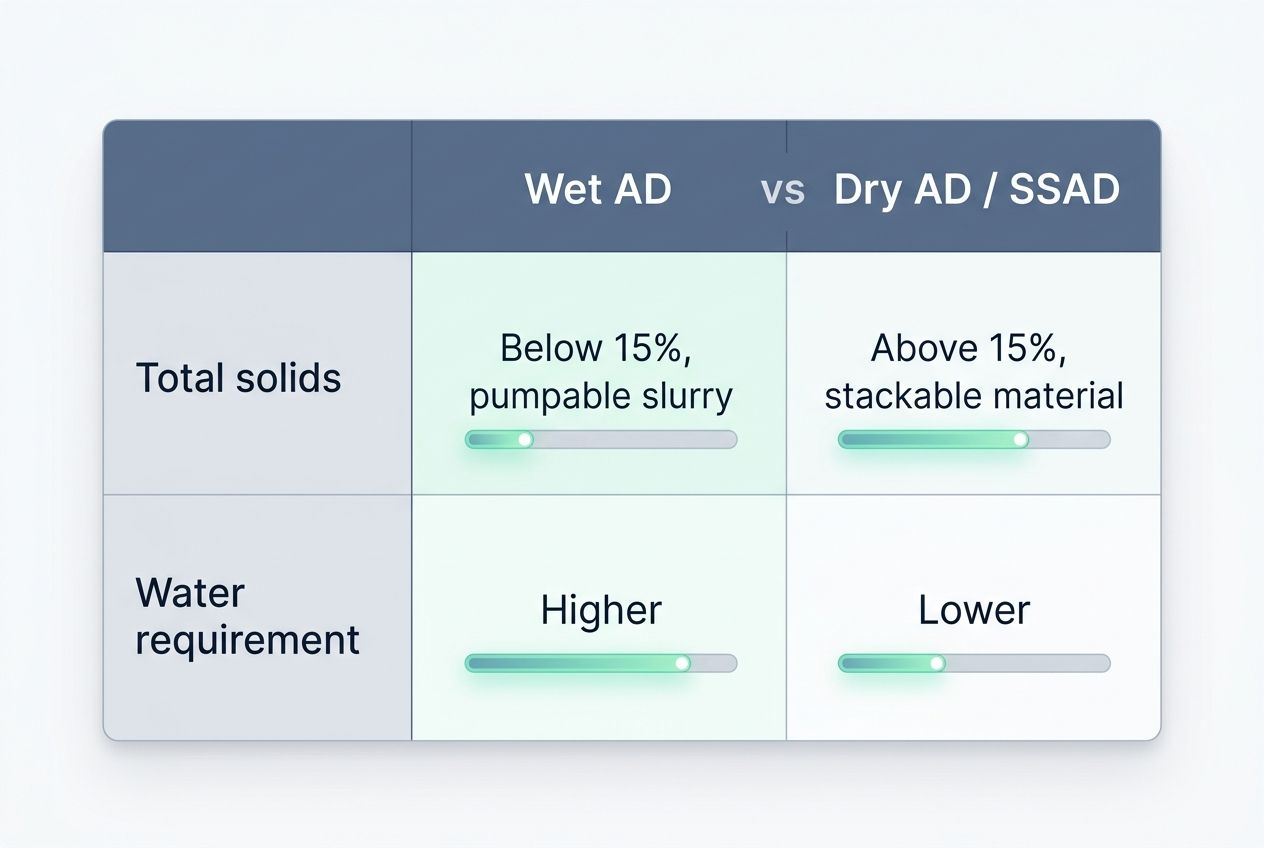
| Decision Factor | Wet AD | Dry AD / SSAD |
|---|---|---|
| Total solids | Generally below 15%, pumpable slurry | Generally above 15%, stackable material |
| Water requirement | Higher, often needs dilution or liquid co-feed | Lower, can use concentrated feedstock with limited added water |
| Material handling | Pumps, pipes, tanks, and slurry processing | Loaders, conveyors, screw feeders, tunnels, or plug-flow equipment |
| Strongest feedstock match | Wastewater sludge, manure, liquid food waste, fats, oils, and grease | Source-separated food scraps, yard organics, and solid municipal feedstock |
| Major operational risk | Excess water volume and pump damage from contaminants | Contamination, uneven feed distribution, and difficult material movement |
Moisture Content in Feedstock
Moisture content determines whether you can pump the feedstock or need to move it as a solid. EPA defines wet digesters as low-solids systems that generally process feedstock below 15% solids, while dry digesters generally process feedstock above that threshold.
Start with a seasonal feedstock study before choosing a design. Measure total solids, volatile solids, contamination, and available liquid co-feed for each incoming stream, rather than relying on a single sample from a good week.
Control the feedstock first. The digester can only perform as well as the material you consistently deliver to it.
Food waste can vary sharply by source. Grocery and produce waste may be wetter and easier to slurry, while curbside organics can contain more paper, compostable bags, yard debris, and packaging that favor a dry receiving system with stronger sorting.
Total Solids and Material Handling
Total solids tell you how much water is in the feedstock. Volatile solids are the portion that can break down biologically and contribute to biogas production.
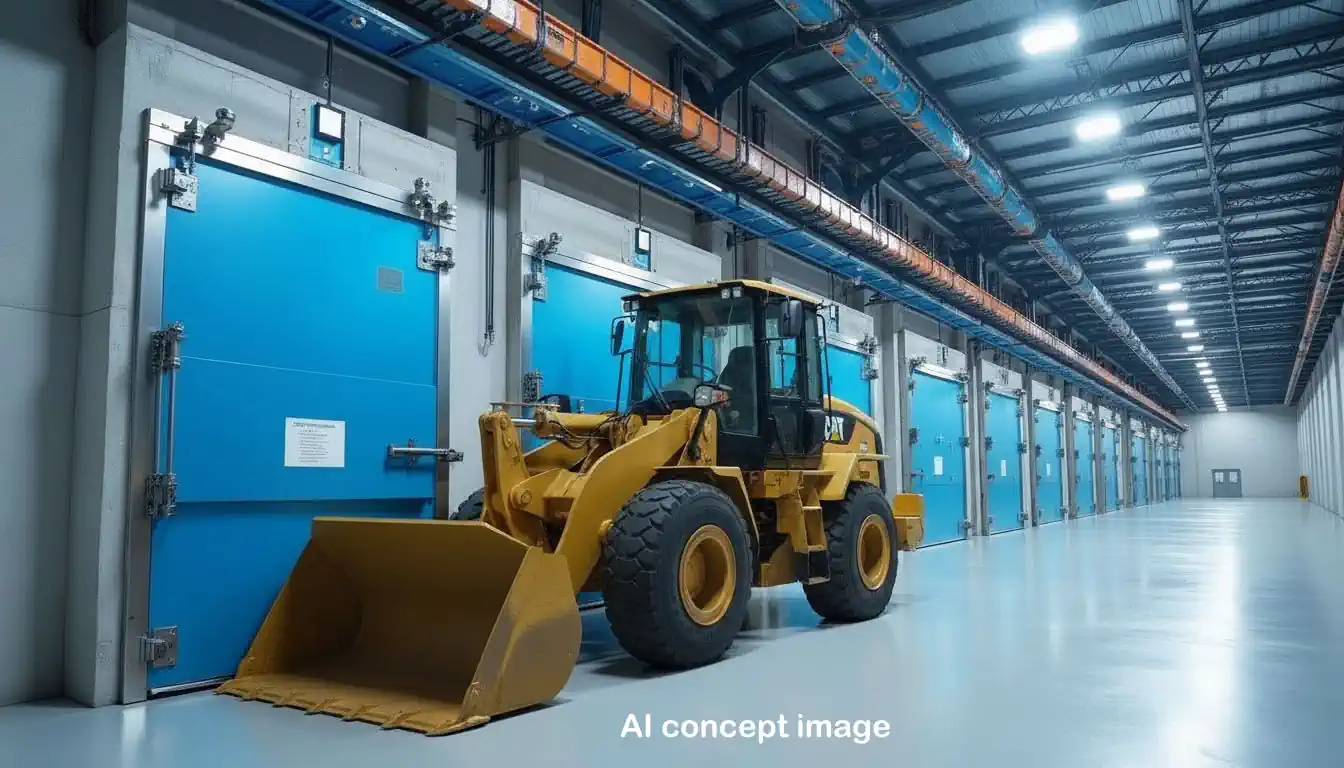
In practice, contamination can become the more expensive problem. EPA's food-waste facility survey found that screening or sorting was the most common pre-processing step, and 21 facilities reported manual or mechanized de-packaging.
- For wet AD: install front-end screening and grit removal before pumps and heat exchangers.
- For dry AD: size-shred or separate feedstock before loading so large items do not interrupt conveyors or tunnel doors.
- For both: track plastics, glass, metal, and packaging by incoming route so you can improve collection rules where contamination starts.
- For co-digestion: test each new feedstock at a controlled rate before making it part of the standard blend.
Do not treat incoming material as uniform simply because it comes from the same hauler. A restaurant collection route, a grocery route, and a residential organics route can have very different solids levels and contamination patterns.
Biogas Production Efficiency
Biogas production depends on the biodegradable fraction of the feedstock, loading rate, retention time, temperature, and process stability. A well-run wet or dry system can recover meaningful energy from food waste, but neither format can overcome poor feedstock control.
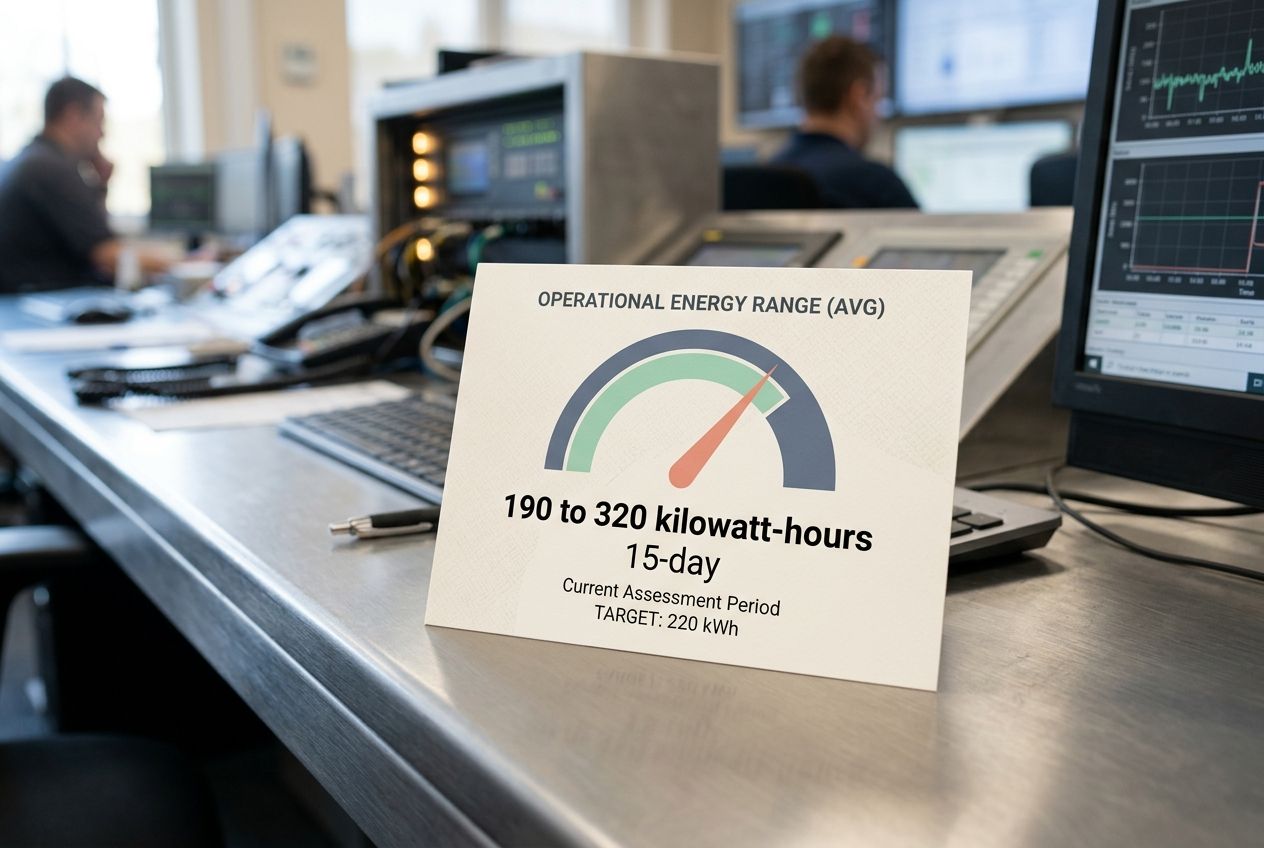
An EPA-supported food-waste digestion study reported 190 to 320 kilowatt-hours per wet ton of food waste at a 15-day mean cell residence time. Use that range as an early planning reference, then replace it with pilot data and a feedstock-specific gas estimate before committing to equipment size.
Monitor methane percentage, gas flow, pH, volatile fatty acids, alkalinity, total solids, volatile solids, and ammonia. These readings help operators spot an overload before it becomes a serious loss of methanogenesis.
- Rising volatile fatty acids: can signal that acid-forming microbes are outpacing methane-forming microbes.
- Falling pH: can reduce methane production and point to an unstable loading rate.
- Lower gas flow: can indicate weak feedstock quality, cold conditions, foaming, leaks, or inhibition.
- High hydrogen sulfide: increases corrosion risk and may require gas cleaning before electricity generation or biomethane upgrading.
Biogas is commonly 50% to 75% methane, with carbon dioxide, water vapor, and trace hydrogen sulfide. Plan for moisture removal, leak testing, ventilation, gas detection, and corrosion-resistant equipment from the start.
Advantages of Wet Anaerobic Digestion
Wet anaerobic digestion gives municipalities a familiar path when they already manage liquids, wastewater sludge, manure, or pumpable food waste. It can also make co-digestion easier at existing wastewater treatment facilities.
- It fits liquid infrastructure. Pumpable feedstock can move through enclosed pipes and tanks, which can reduce truck and loader movements inside the digestion area.
- It supports co-digestion. A wastewater facility can blend food waste with wastewater sludge to increase available organic matter and biogas production.
- It allows continuous feeding. Operators can make smaller, more frequent feed adjustments instead of loading large batches of solids at once.
- It can simplify heat transfer. Slurry systems generally make it easier to distribute heat evenly and maintain mesophilic or thermophilic operating conditions.
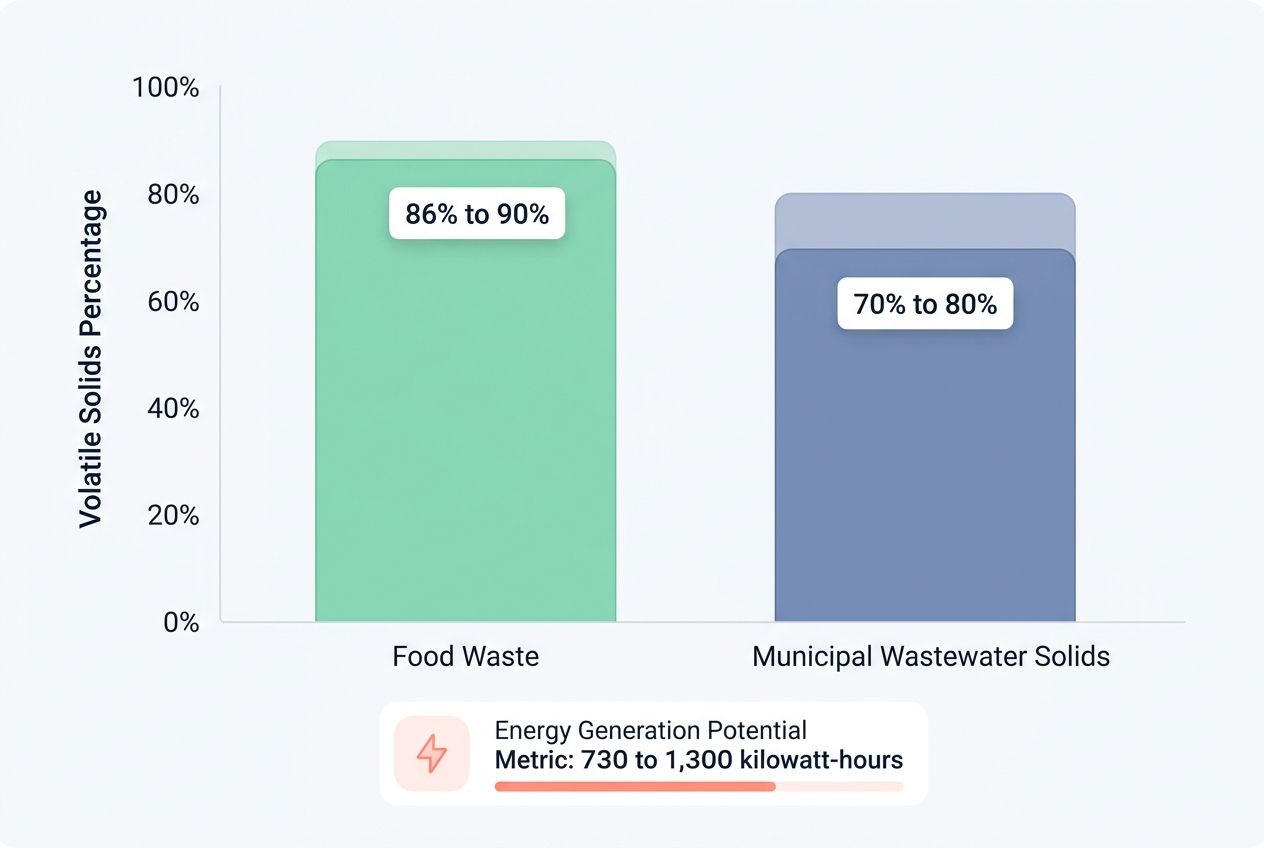
- It offers a strong fit for food waste pulp. In a major EPA-supported study, food waste had 86% to 90% volatile solids as a share of total solids, compared with 70% to 80% for municipal wastewater solids.
- It can create useful energy. The same study found food waste produced 730 to 1,300 kilowatt-hours per dry ton applied, helping justify investment where a facility can use electricity, heat, renewable natural gas, or biomethane.
Wet AD does require discipline around dilution rates. Adding too much water can make pumping easier, but it also increases tank volume, heating needs, and the amount of liquid digestate that must be managed.
For municipalities with a wastewater resource recovery facility, wet AD can be especially attractive because it can use existing solids-handling knowledge. Still, confirm that the plant has enough receiving capacity, odor control, pretreatment, and downstream treatment capacity before adding food waste.
Advantages of Dry Anaerobic Digestion
Dry anaerobic digestion suits concentrated municipal organics that are difficult or expensive to dilute. It is often the better physical match for source-separated solid waste collected in carts, bins, and transfer trailers.
- It lowers the water requirement. Dry AD can process stackable feedstock without turning every ton into a pumpable slurry.
- It can reduce digester volume. Less dilution means more organic material per unit of reactor space, which can help constrained sites.
- It works with solid-waste equipment. Loaders, conveyors, and enclosed receiving halls can handle feedstock that would be difficult to pump.
- It can pair well with composting. Facilities can digest the energy-rich fraction first, then cure or compost the solid digestate if the material meets local quality standards.
- It supports batch operation. Fermenter boxes can be loaded, sealed, digested, unloaded, and returned to service on a planned schedule.
- It reduces liquid residuals. This can be valuable where wastewater discharge capacity is limited or expensive.
Dry AD still needs liquid management. Operators may recirculate percolate, add process liquid, or separate liquid digestate after digestion, so a dry system does not eliminate pumps, piping, or wastewater planning.
The main operational priority is feedstock consistency. A dry system can tolerate higher total solids, but it cannot tolerate a steady stream of plastic film, glass, metal, or oversized items without strong front-end processing.
Applications of Wet and Dry Anaerobic Digestion in Municipal Solid Waste Management
Cities can use anaerobic digestion to recover energy and nutrients from food waste that would otherwise move to landfill or combustion. The best projects start by matching the technology to the local collection system.
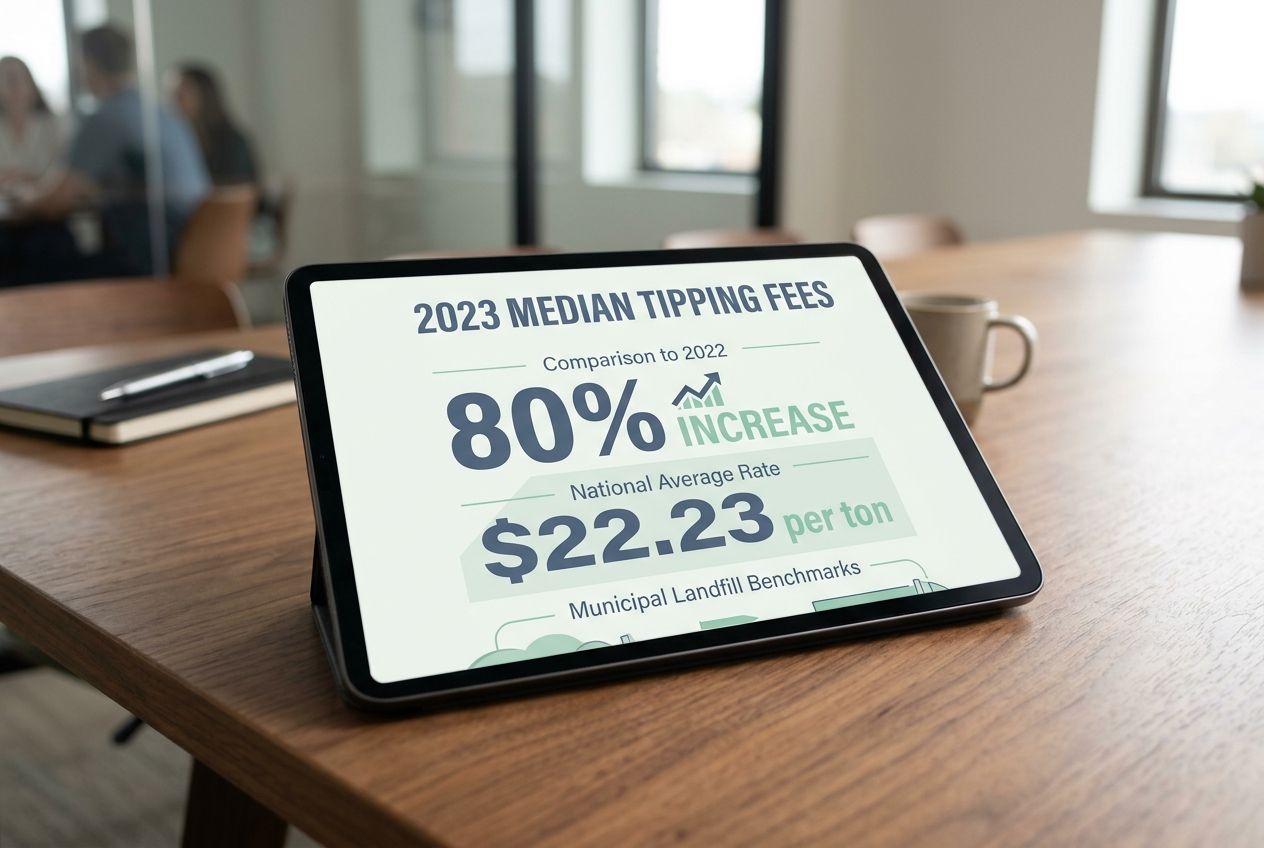
EPA's final national food-waste digester survey covered facilities operating in 2022 and 2023. Of 60 respondents that reported tipping-fee information, 80% collected fees, and the 2023 median was $22.23 per ton. That figure is not a universal project price, but it shows why local disposal costs, contamination, and hauling distance belong in every feasibility model.
Where Wet AD Makes Sense
Wet AD is a strong option for wastewater resource recovery facilities, food-processing plants, dairies, swine farms, and municipal projects with abundant liquid co-feed. Michigan State University offers a useful operating example: its campus digester processes dairy manure and food waste, and its biogas-generated electricity powers about 10 south-campus buildings.
Use wet AD when your facility can receive depackaged food waste as a slurry and has the staff, tanks, pumps, heating, odor control, and liquid-treatment capacity to support it.
Where Dry AD Makes Sense
Dry AD is often a better fit for a stand-alone organics facility handling source-separated household waste. It can accept material closer to the condition in which collection crews deliver it, provided the facility has strong sorting and contamination removal.
Choose dry AD when water is limited, the feedstock is consistently stackable, or site constraints make lower liquid volume more valuable than pumpable handling.
Plan for Digestate Before You Build
Digestate is not an afterthought. It is a major product stream that needs a permitted, reliable destination.
EPA reports that solid digestate from stand-alone facilities is often composted into a reusable or salable product, while liquid digestate may go to land application or a wastewater treatment plant. Build those outlets into your project plan before selecting a digester size.
Do not assume anaerobic digestion alone creates Class A biosolids. Under federal biosolids rules, the final material must meet applicable pathogen reduction and vector attraction requirements. Mesophilic digestion is generally easier to operate, while thermophilic operation may support greater pathogen reduction but can require tighter process control.
Conclusion
Wet and dry anaerobic digestion can both turn municipal solid waste into renewable energy, but they solve different material-handling problems. Wet AD fits pumpable slurry and existing liquid infrastructure, while dry AD fits stackable food waste and projects that need to limit added water.
Choose anaerobic digestion based on measured total solids, contamination levels, available water, site space, digestate outlets, and the end use for biogas. If you match the feedstock to the process before final design, you will build a system that is easier to operate and more likely to deliver steady value.
FAQs
1. What is the main difference between wet and dry anaerobic digestion for municipal solid waste?
Wet anaerobic digestion handles low solids, high feedstock moisture, and uses liquid mixing to break down food waste and other wet organics, producing methane-rich biogas and liquid digestate. Dry anaerobic digestion treats high solids, like yard trimmings or source-separated organics, and yields solid digestate with less water handling.
2. Which option works best for MSW, wet or dry?
It depends on the feedstock and goals, feedstock moisture and composition drive the choice. Wet AD fits mixed, wet MSW and gives steady treatment efficiency but needs more leachate control and higher operational costs. Dry AD can cut capital costs and water use for clean, high-solids streams, yet it may need more pre-treatment and careful sorting.
3. Do these systems need pre-treatment?
Yes, both need pre-treatment, but dry systems often require more sorting and size reduction to protect equipment and boost energy recovery.
4. How should a city choose between wet and dry AD for MSW?
Assess your MSW stream, check feedstock moisture, test for contaminants, and compare capital costs, operational costs, and expected energy recovery. Run a pilot or consult engineers to match treatment efficiency goals and to meet landfill diversion targets.