Waste Management Pricing gets confusing when a simple rubbish service turns into a larger garbage bill with taxes, extra collection fees, and changing disposal costs.
For Snohomish County households, the key distinction is between the monthly rate and the amount shown on the invoice. WM bills every three months, so your bill usually reflects three months of service rather than one.
This guide breaks down commercial service, residential garbage & recycling pickup, and Waste Management Dumpster Rental Costs, then shows you where fees often arise and how to choose a better-fit service level.
Key Takeaways
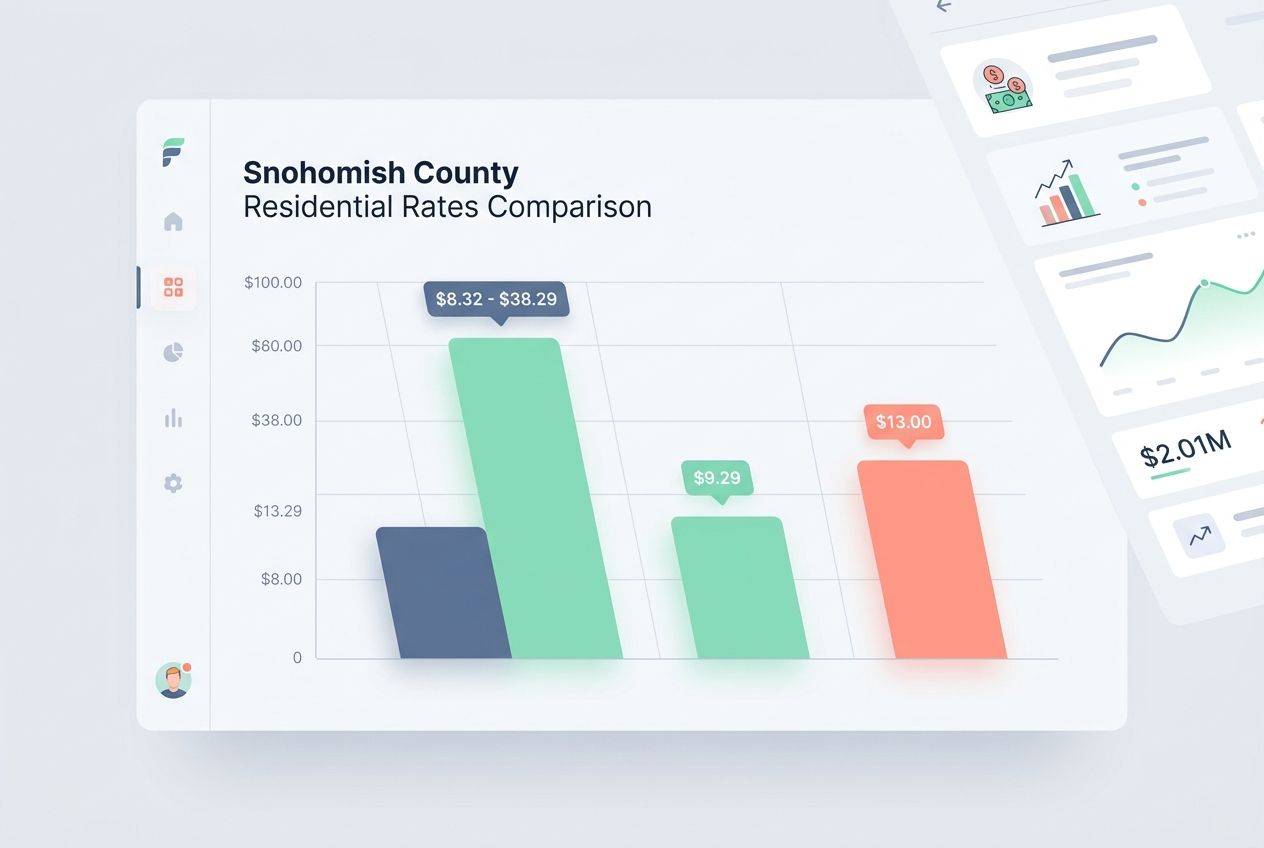
- Snohomish County curbside garbage rates range from $8.32 to $38.29 per month, depending on cart size and collection frequency.
- Recycling costs $9.29 per month with regular garbage service, while weekly yard and food waste collection costs $13.00 per month.
- Commercial WM service pricing depends on container capacity, collection frequency, material type, disposal charges, and any energy or regulatory charges shown on the invoice.
- WM offers 10-, 20-, 30-, and 40-yard temporary dumpsters in Snohomish, with a seven-day rental period included for these roll-off options.
- Extra rubbish, bulky items, wildlife-resistant containers, and contaminated recycling can all increase your WM bill.
Commercial Waste Management Pricing
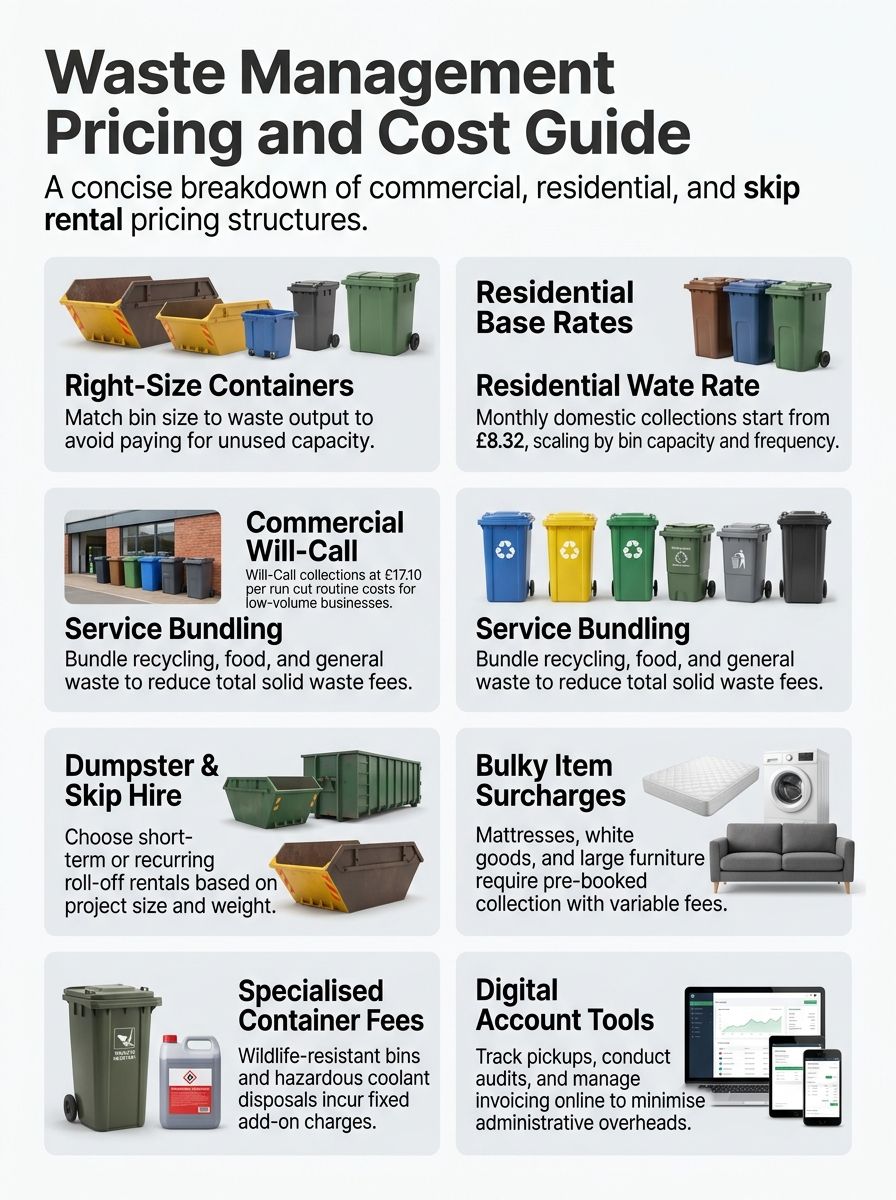
Commercial waste management pricing is quote-based because every site creates waste differently. A café with food waste, an office with paper recycling, and apartments/condos with shared bins need different container sizes, collection schedules, and contamination controls.
The useful question is not simply, “What does a bin cost?” It is, “How much capacity and collection do we actually use each week?” Getting that answer right can prevent repeated overflow fees without paying for an oversized container that sits half-empty.
Pricing factors for businesses
WM customer service will normally build a commercial quote around the service address, container type, collection frequency, and materials collected. Ask for each part of the quote separately so you can compare rates and billing from one proposal to another.
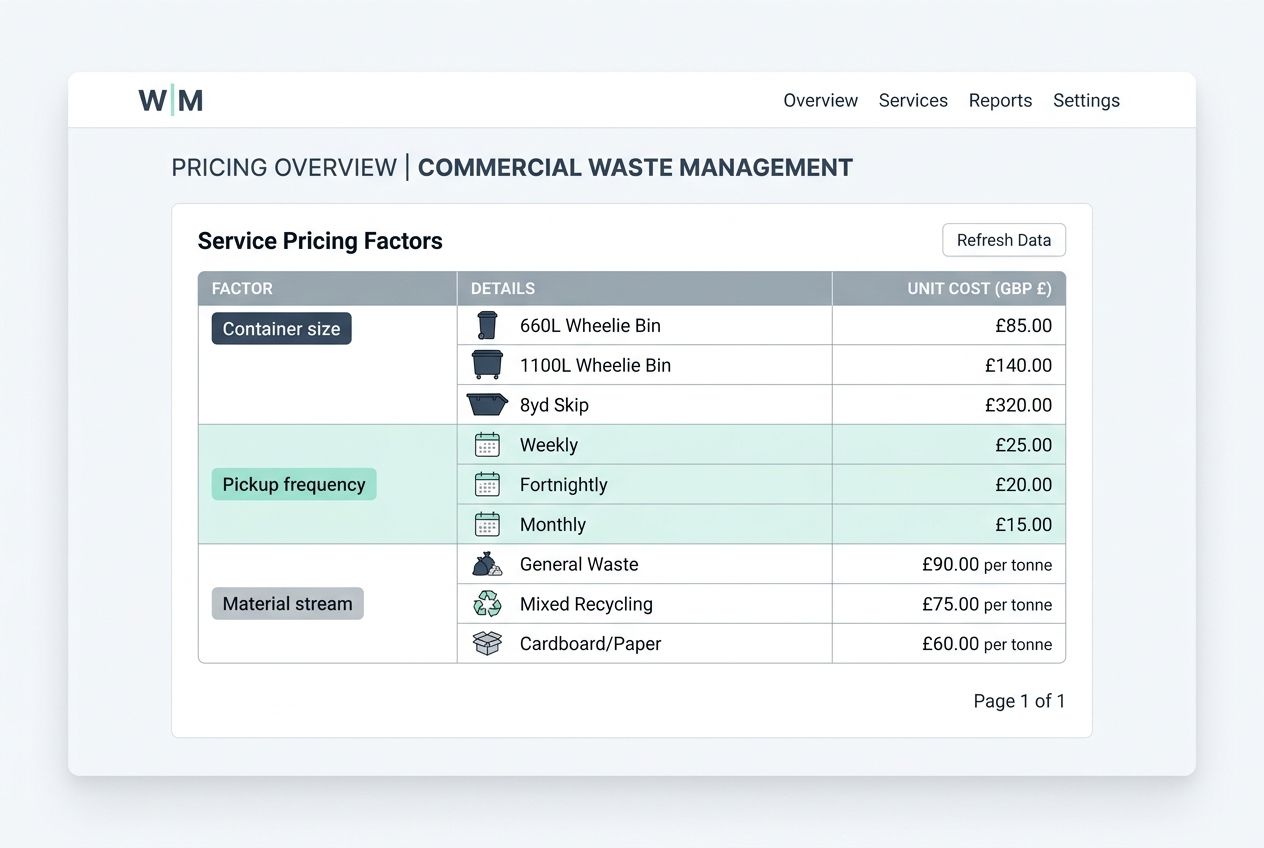
| Pricing factor | What changes the cost | What you should do |
|---|---|---|
| Container size | Commercial carts and bins cost more as capacity rises. A site using 20-, 32-, 60-, or 90-gallon carts should pay for the smallest size that consistently contains its waste. | Check bins just before collection for four weeks. If they are rarely more than three-quarters full, ask about downsizing. |
| Pickup frequency | More weekly lifts mean more collection and disposal activity. Infrequent service can cost less, but overflowing bins can trigger extra collection charges. | Match collection days to your busiest trading days, delivery days, or tenant move-out periods. |
| Material stream | Garbage, recycling, food waste, yard debris, cardboard, and bulky items may each have separate service rules. | Keep cardboard and clean recyclable material out of the rubbish bin to protect paid garbage capacity. |
| Energy and regulatory charges | WM may apply an Energy Surcharge tied to diesel and compressed natural gas costs. Some invoices can also show a Regulatory Cost Recovery Charge. | Review every invoice line, not just the service total, before approving a budget or disputing a bill. |
| Overflow and special collection | Extra rubbish, bulky waste collection, appliances, and restricted materials can create separate charges. | Arrange one-off collection before placing material beside a bin. Unapproved overflow can be rejected or billed separately. |
| Account changes | New containers, moves, service pauses, and route changes can affect the next invoice. | Confirm the effective date and any one-time charge whenever you request help from WM customer service. |
Cost-saving strategies for commercial clients
A short waste audit is the fastest way to control commercial charges. Have staff note which bins overflow, what material fills them, and when the problem occurs.
- Right-size the rubbish service: reduce capacity or collection frequency only after checking actual bin fill levels for several collection cycles.
- Separate cardboard and clean recycling: recyclable material takes up space quickly, especially in offices, retail sites, and apartments/condos.
- Control contamination: label bins clearly and keep food, liquids, and rubbish out of recycling. Contamination can turn a recycling load into paid solid waste.
- Plan bulky waste collection: schedule furniture, equipment, and move-out debris before it appears beside the container.
- Inspect invoice changes: compare the service charge, energy surcharge, taxes, and one-off fees with the prior bill before paying.
WM explains that its Energy Surcharge replaced the former fuel-only surcharge for many accounts, and it can vary with energy costs. That makes an itemised invoice review more useful than relying on last month's total.
For multi-tenant buildings, assign one person to monitor shared bins. A single overflowing enclosure can lead to avoidable extra pickups for every tenant.
Residential Waste Management Pricing
Residential garbage & recycling pickup in Snohomish County is based mainly on cart size and collection frequency. The lowest listed rubbish option is a 35-gallon cart collected monthly, while weekly 96-gallon service costs more because it provides far more capacity.
WM's Snohomish County rates and billing page lists the following monthly prices effective 1 January 2026. Applicable city, county, and state taxes are added separately.
Common residential service plans and their costs
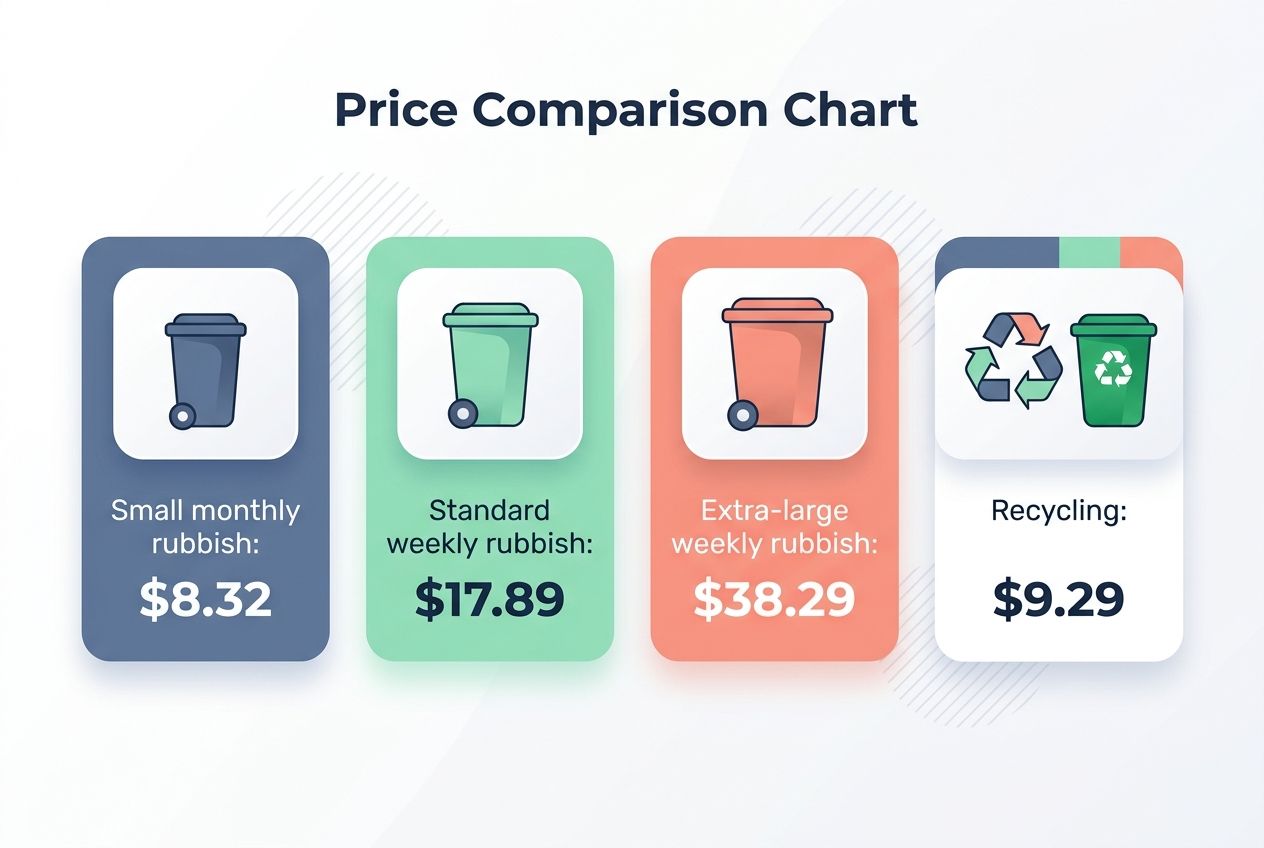
| Service plan | Collection details | Monthly price | Best fit |
|---|---|---|---|
| Small weekly rubbish | 20-gallon insert inside a 35-gallon cart, collected weekly | $11.45 | One- or two-person homes that produce little rubbish |
| Small monthly rubbish | 35-gallon cart, collected monthly | $8.32 | Very low-waste households with reliable recycling and food waste habits |
| Standard weekly rubbish | 35-gallon cart, collected weekly | $17.89 | Smaller households that need weekly collection |
| Large weekly rubbish | 64-gallon cart, collected weekly | $28.21 | Homes with regular household rubbish or nappies |
| Extra-large weekly rubbish | 96-gallon cart, collected weekly | $38.29 | Larger households or homes with limited recycling space |
| Recycling | Clean recyclables in a blue cart, collected every other week | $9.29 | Required with basic garbage service under county ordinance |
| Recycling-only | Clean recyclables in a blue cart, collected every other week | $10.43 | Homes without regular garbage service |
| Yard and food waste | One 96-gallon cart, collected weekly | $13.00 | Homes with garden trimmings, food scraps, or food-soiled paper |
| Yard and food waste only | One 96-gallon cart, collected weekly | $14.20 | Properties without garbage or recycling service |
| Yard plus recycling only | Yard and food waste weekly, recycling every other week | $24.63 | Homes using another approved rubbish option |
Extra rubbish costs $5.76 per bag or 32-gallon can. Extra clean recyclables cost $4.53 per 32-gallon box or bin, and extra yard waste costs $2.80 per 32 gallons.
A 64- or 96-gallon wildlife resistant container adds $12.57 per month. Choose it if animals regularly break into your cart, but do not add it automatically if a secure storage spot solves the problem.
Factors influencing residential pricing
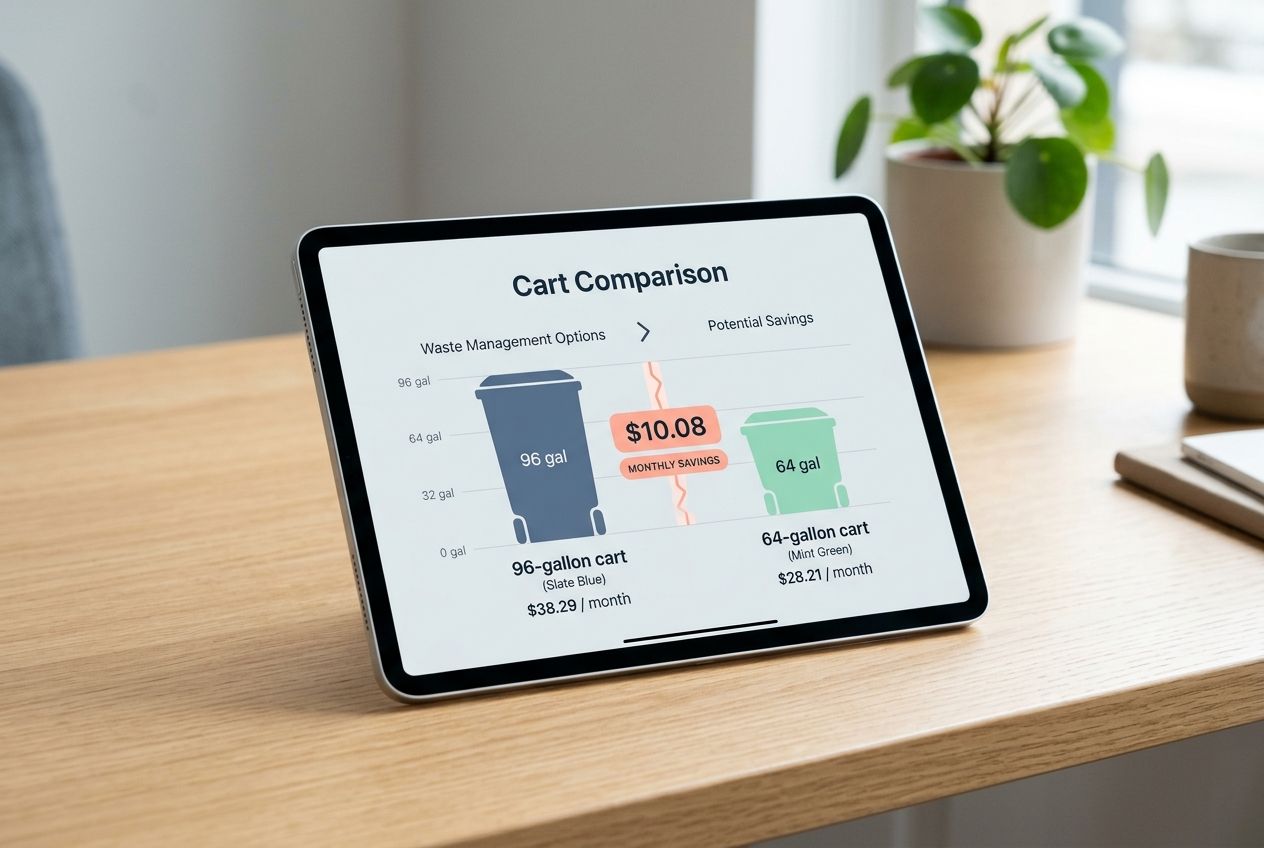
Your bin is often the biggest lever on your garbage bill. Moving from a 96-gallon weekly cart at $38.29 to a 64-gallon weekly cart at $28.21 reduces the base monthly charge by $10.08 before taxes.
Use the smallest cart that handles your normal week, then use recycling and food waste service to keep rubbish volume down.
Food scraps and food-soiled paper can go into the yard and food waste cart where accepted. This matters because food waste is heavy and can fill a rubbish cart faster than expected.
- Check your cart before collection: if it is consistently half-full, a smaller cart may save money.
- Avoid loose overflow: one extra bag costs $5.76, so frequent overflow may mean your service level no longer fits.
- Use yard waste capacity: rigid 32-gallon cans, heavy paper bags, and bundles are accepted as extra yard waste for the stated per-unit fee.
- Plan for quarterly invoices: a monthly rate of $38.29 produces a service charge of $114.87 for three months before taxes.
Snohomish County also offers free household hazardous waste disposal for residents. Keep oil-based paint, pesticides, batteries, solvents, gasoline, and similar hazardous household waste out of your rubbish cart so you avoid safety risks and disposal problems.
Waste Management Dumpster Rental Costs
Waste Management Dumpster Rental Costs depend on the container size, rental period, debris type, delivery conditions, included weight, and local disposal charges. The price you see for a temporary roll-off is useful only if you also understand what materials you plan to load.
WM offers 10-, 20-, 30-, and 40-yard dumpsters in Snohomish for renovation, demolition, clean-out, and construction projects. Each listed size includes a seven-day rental period, which gives you a practical starting point for comparing dumpster rentals with repeated bulky waste pickup.
Pricing structures for short-term and long-term rentals
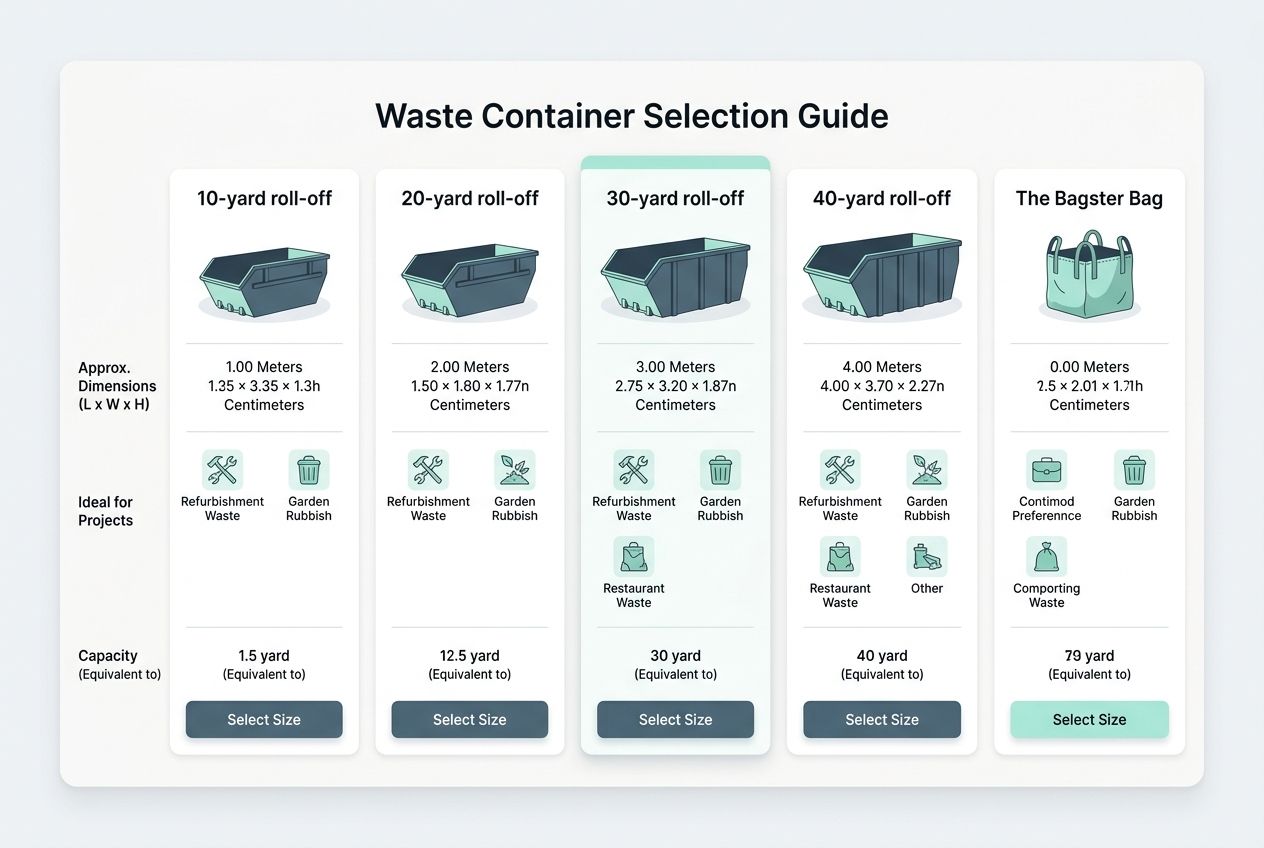
| Option | Typical project | Useful size or limit | Cost question to ask before booking |
|---|---|---|---|
| 10-yard roll-off dumpster | Heavy material, small demolition work, concrete, asphalt, or dirt | About four pickup-truck loads | What material limits and included weight apply to heavy debris? |
| 20-yard roll-off dumpster | Home clean-outs and medium renovation work | About eight pickup-truck loads | Does the quoted price include delivery, collection, disposal, and the seven-day rental? |
| 30-yard roll-off dumpster | Large home renovation, office clear-out, or junk removal | About 14 pickup-truck loads | What is the charge for extra rental days or weight over the allowance? |
| 40-yard roll-off dumpster | Large construction and major remodelling projects | About 16 pickup-truck loads | Can the delivery truck access the site safely without blocking traffic or damaging surfaces? |
| The Bagster® Bag | Small clear-outs and single-room projects | 3 cubic yards and up to 3,300 pounds | Is the bag available for collection at your address, and what is the collection fee? |
The Bagster® Bag is eight feet wide, four feet deep, and about two-and-a-half feet high. It can suit a small project, but it is not a substitute for a roll-off if you have bulky construction debris or enough material to exceed its volume or weight limit.
For a longer project, ask whether the quote covers a recurring service plan or a temporary rental extension. A low initial rate can become expensive if the project runs beyond the included collection date.
Additional fees to consider
The most expensive dumpster mistakes usually involve the load, not the container. Book the right size, place it where the truck can reach it, and confirm what can go inside before delivery.
- Weight overages: heavy materials such as concrete, soil, roofing, and demolition debris can exceed an included allowance quickly.
- Extra rental days: ask for the daily or weekly extension price before work begins, especially for weather-dependent projects.
- Restricted materials: liquids, batteries, paint, chemicals, asbestos, electronics, appliances, and hazardous waste may be prohibited or require separate disposal.
- Site access: tight driveways, low wires, parked vehicles, soft ground, or limited turning space can affect delivery and collection.
- Permits: a container placed on a public street may need local approval. Confirm this before delivery, not after the truck arrives.
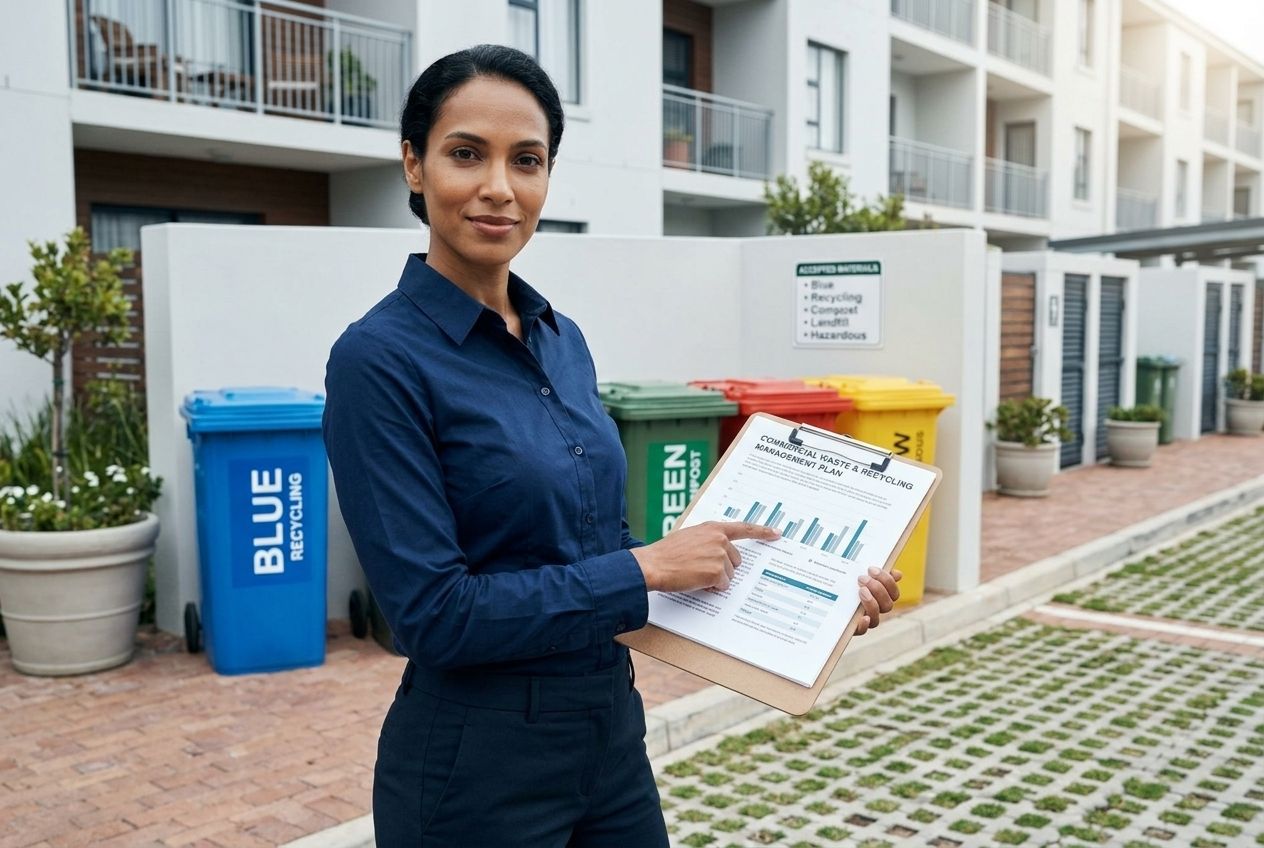
Snohomish County's 2026 self-haul fee is $30 for up to 360 pounds at a transfer station and $160 per ton above that threshold, plus applicable tax where required. This gives you a useful benchmark when comparing a self-haul trip with a dumpster quote, though a rental also covers equipment, transport, and collection.
Secure every self-haul load with a tarp or net. The county lists unsecured-load fees of $20 for vehicles under 8,000 pounds and $25 for heavier vehicles.
Conclusion
Waste Management Pricing is easiest to manage when you separate the base service from the extras. In Snohomish County, cart size, collection frequency, extra rubbish, and taxes can all change the amount on your WM bill.
Start with your actual waste volume, use recycling and food waste service well, and review each invoice for one-off fees or energy-related charges.
Use My WM to pay my bill, request help, check collection details, and arrange bulky waste collection. A right-sized curbside plan or dumpster rental can cut waste without paying for capacity you do not need.
FAQs
1. What affects waste management pricing for commercial and residential customers?
Waste management pricing changes with the waste type, weight, bin size and how often you need collection. For commercial clients, permits and hazardous waste raise costs, while household services depend on collection day and recycling levels.
2. How much do dumpster rental costs usually run?
Dumpster rental costs vary by skip size, hire length and region. In the UK, dumpster rental costs are often called skip hire fees, so get at least three local quotes to compare.
3. Can businesses lower commercial waste management pricing?
Yes, businesses can cut commercial waste management pricing. Consolidate bins, boost recycling, reduce collection frequency and negotiate contract terms to save money.
4. Are hidden fees common in waste management pricing, and how can I avoid them?
Hidden fees can appear for overweight loads, contaminated recycling and special items. Ask for an itemised quote, check what disposal fees cover, and confirm weight limits and banned items to avoid surprise charges.