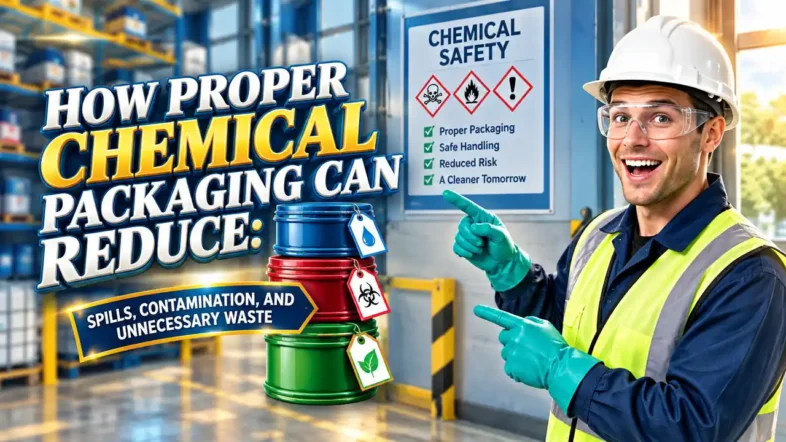
A leaking chemical drum can create more waste than the spilled chemical itself. Depending on the substance, cleanup may involve contaminated absorbents, damaged materials, and waste that requires special handling or disposal. Many of these problems can be prevented by selecting suitable packaging and maintaining it throughout storage and transportation.
The type of container, how it's sealed, and the way it's handled all affect the chances of a spill or contamination. Paying attention to these details can help businesses avoid unnecessary chemical waste and the costs that come with it.
Key Takeaways
- Chemical packaging failures—such as damaged containers, incompatible materials, and poorly secured lids—are major contributors to costly chemical spills, product degradation, and hazardous waste.
- Selecting chemical-compatible materials (like HDPE, lined steel, or specialized industrial drums) ensures containers can withstand specific chemical properties like acidity or solvent characteristics without deteriorating.
- Secure closures and regular inspections are essential for preventing leaks caused by vibration, handling stress, or changing internal pressure during transportation and storage.
- Adhering to GHS labeling standards and Safety Data Sheets (SDSs) prevents dangerous cross-contamination errors and ensures workers can properly identify chemical hazards.
- Implementing smart inventory practices, proper container sizing, and approved reuse or recycling programs helps organizations minimize packaging waste and environmental risk.
How Improper Chemical Packaging Contributes to Waste
Chemical waste can result from packaging failures at nearly any stage of storage or distribution. Damaged containers, incompatible materials, and poorly secured lids can allow chemicals to leak or come into contact with surrounding substances.
For example, a container that can’t withstand exposure to its contents may gradually weaken, crack, or corrode. Changes in temperature and pressure can also affect packaging performance, particularly when containers are improperly filled or sealed.
Exposure to moisture, light, or extreme temperatures can affect the quality of certain chemicals. If a product no longer meets its required specifications, it may need to be discarded even when no spill has occurred.
A chemical spill can also contaminate nearby soil or surfaces, creating additional cleanup and disposal requirements. These incidents can also increase operational costs through cleanup labor, replacement materials, and interruptions to normal activities.
Choosing Chemical-Compatible Packaging Materials
Containers must be able to withstand contact with their contents without deteriorating, reacting, or allowing chemicals to escape.
Common industrial chemical packaging options include plastic drums, steel drums, and intermediate bulk containers (IBCs). Each offers advantages for particular applications, but suitability depends on the chemical's properties and the conditions in which it will be handled.
For example, some corrosive chemicals require containers made from high-density polyethylene (HDPE) or lined steel, while certain solvents may be better suited to compatible metal containers.
Several factors should be evaluated when choosing a container:
- Chemical properties: Acidity, alkalinity, solvent characteristics, and other properties can affect packaging compatibility.
- Temperature conditions: Heat and cold can influence container strength, internal pressure, and material performance.
- Physical durability: Packaging must withstand expected handling, stacking, and transportation conditions.
- Container capacity: The selected size must accommodate the chemical while allowing for any necessary filling limits or expansion space.
- Safety Data Sheets (SDSs), manufacturer specifications, and compatibility information can help guide these decisions.
Packaging intended for certain hazardous materials may also need to meet specific performance standards. Depending on the material and transportation requirements, testing may include drop resistance, leakproofness, and pressure resistance. These tests help determine whether packaging can withstand expected handling and shipping conditions.
Organizations may also consult a chemical supply company when evaluating packaging options for particular products and applications.
Preventing Spills and Leaks With Secure Packaging
Even chemically compatible containers can fail when closures are damaged, incorrectly installed, or improperly maintained.
A loose fitting or damaged gasket may allow liquid to escape when a container is moved, tipped, or exposed to vibration. Packaging can also experience changes in internal pressure during transportation or storage.
For hazardous materials subject to U.S. Department of Transportation (DOT) regulations, packaging must meet applicable requirements designed to prevent releases under normal transportation conditions.
Following manufacturer closure instructions, including specified tightening procedures when applicable, helps maintain packaging integrity.
Handling and storage practices are equally important. Containers should be secured against tipping, protected against physical damage, and stacked within their approved limits. Secondary containment, such as spill pallets or containment trays, can help collect leaks before chemicals spread to surrounding surfaces or drainage systems.
Workers should look for:
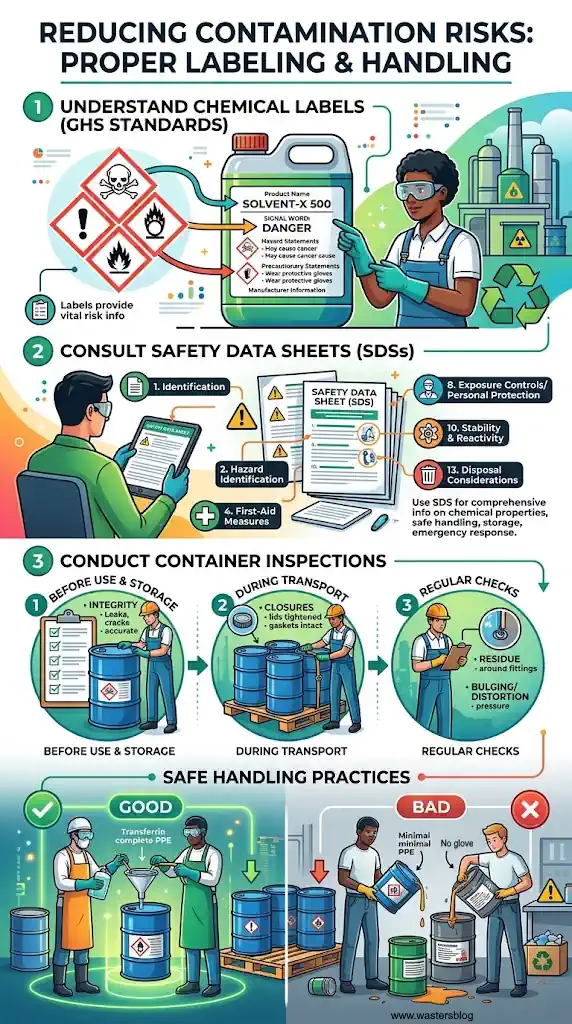
- Cracks, dents, corrosion, or visible container damage
- Leaking closures or deteriorating gaskets
- Bulging, distortion, or other signs of abnormal pressure
- Chemical residue around lids, fittings, or container surfaces
- Proper Labeling and Handling Reduce Contamination Risks
Proper Labeling and Handling Reduce Contamination Risks
Accurate labeling and handling procedures help workers identify materials, understand potential hazards, and avoid mistakes that could result in spills or contamination.
Chemical labeling requirements vary by location and application. The Globally Harmonized System (GHS) provides an international framework for communicating chemical hazards through labels and Safety Data Sheets (SDSs). Applicable workplace and transportation regulations establish additional requirements for labeling, documentation, and employee training.
Labels provide information that helps workers identify chemical contents and recognize hazards. When containers are incorrectly labeled or identification information becomes damaged or unreadable, the chances of handling errors go up.
For example, transferring a chemical into a container previously used for an incompatible material may cause contamination or a dangerous reaction if proper cleaning and compatibility procedures weren’t followed.
Safety Data Sheets provide additional information about chemical properties, handling precautions, storage conditions, and accidental release measures.
Chemical shipments may also require specific hazard markings, labels, and documentation under applicable transportation regulations.
Employees should receive training appropriate to their responsibilities, including how to inspect containers, follow handling instructions, and respond to damaged packaging.
Clear identification and established procedures help reduce preventable mistakes that could lead to product loss, hazardous waste, or environmental exposure.
Reducing Chemical Waste Through Better Packaging Practices
Packaging decisions can also help organizations reduce waste before spills or contamination occur. Container sizing, filling procedures, inspections, and inventory management all influence how efficiently chemicals are used.
Oversized containers may leave businesses with unused chemicals that eventually require disposal. Smaller packages can help match quantities to actual demand, although they may generate more packaging waste per unit of product.
Storage conditions also affect how long chemicals remain usable. Packaging that limits exposure to moisture, light, or temperature changes can help protect sensitive products against degradation. Maintaining suitable storage conditions reduces the risk of discarding chemicals that no longer meet quality requirements.
Packaging design can also improve storage and transportation efficiency. Containers that are appropriately sized and designed for stable handling can make better use of available storage space and reduce the risk of damage during movement. Tracking chemical quantities, monitoring shelf life where applicable, and using suitable stock rotation procedures can help prevent products from remaining in storage until they become unusable.
Organizations should also evaluate opportunities to reuse or recycle chemical packaging when appropriate.
Certain industrial drums and IBCs may be suitable for approved reconditioning or reuse programs. However, previous contents, chemical compatibility, container condition, and applicable regulations must be considered before packaging is reused.
Containers that can’t be safely reused may still have recycling options, depending on the material, residual contamination, and available recycling services. Packaging containing hazardous residues may require special management.
Routine inspections support these efforts by identifying damaged containers, deteriorating seals, and storage problems before they cause product losses.
Keeping records of packaging failures can help businesses identify recurring problems. If repeated leaks occur with a particular container or closure, the information may reveal a need to change packaging specifications or handling procedures.
Frequently Asked Questions (FAQs)
Q: What causes most chemical packaging failures in industrial settings?
A: Chemical packaging typically fails due to incompatible container materials, damaged or loose closures, physical wear from handling and stacking, and changes in internal pressure or temperature during storage and transport.
Q: How do I choose the right packaging material for industrial chemicals?
A: Selection should be based on the chemical's properties (such as acidity, alkalinity, or solvent reactivity), expected temperature conditions, physical durability requirements, and regulatory compliance standards like those found on the product's Safety Data Sheet (SDS).
Q: Why is proper chemical labeling important for waste reduction?
A: Accurate labeling under frameworks like the Globally Harmonized System (GHS) prevents workers from making handling errors or transferring chemicals into incompatible containers, which can cause dangerous reactions, contamination, and product loss.
Q: Can industrial chemical packaging be reused or recycled?
A: Yes, certain industrial drums and intermediate bulk containers (IBCs) can undergo approved reconditioning or reuse programs, provided their previous contents and material compatibility allow for it. Containers that cannot be safely reused may often be recycled depending on residual contamination.
Conclusion: Chemical Packaging as a Waste Prevention Strategy
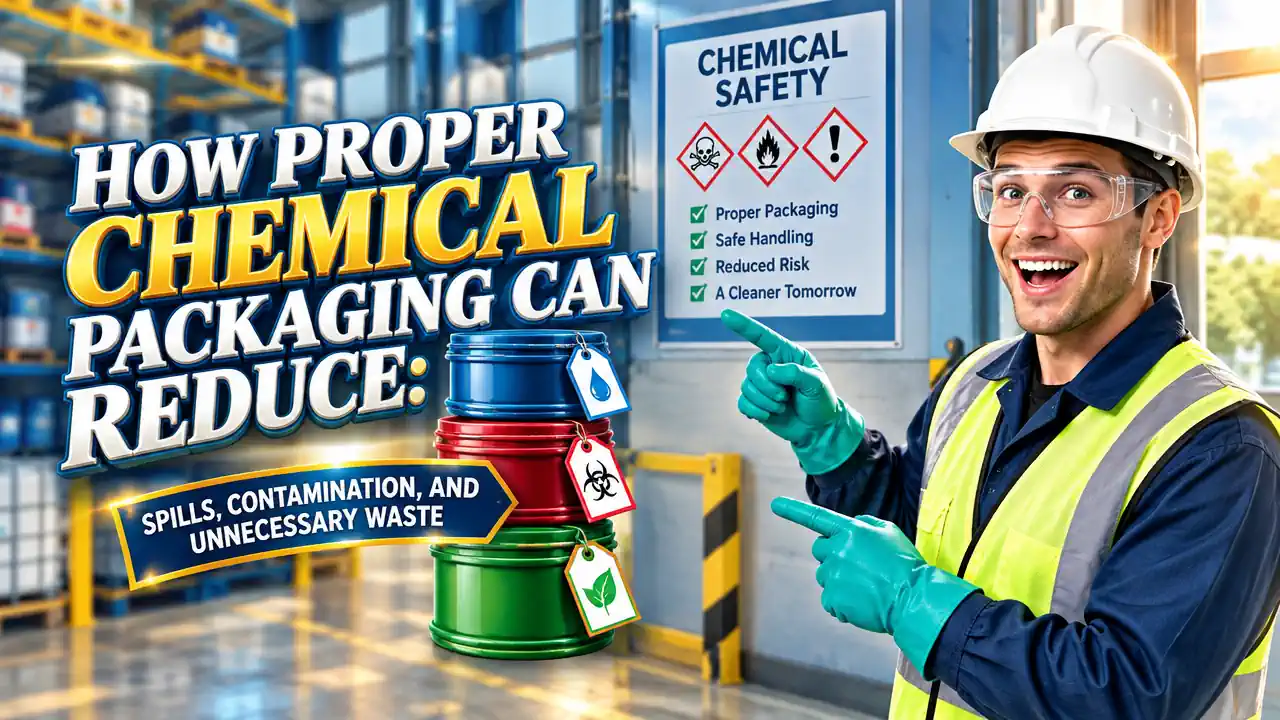
Proper chemical packaging helps reduce spills, contamination, and unnecessary waste. Compatible containers, secure closures, accurate labeling, and careful handling practices help protect chemical products throughout storage and transportation.
Regular inspections and inventory tracking can also help businesses catch problems before chemicals are wasted. Reusing or recycling containers, when safe and permitted, can reduce packaging waste.
For organizations that handle industrial chemicals, preventing waste starts with keeping products safely contained and usable. Careful packaging decisions can reduce environmental risks, conserve materials, and limit the need for costly cleanup and disposal.
Author Bio: Mike Lange is Vice President of Sales for SolvChem, a large independent chemical distributor. He has 25 years of commercial and executive leadership experience in the distribution industry. Lange is responsible for strategic direction and commercial execution of SolvChem’s account management team.