
Waste management professionals face a growing challenge with recyclable packaging and compostable packaging in commercial composting operations. Many facilities struggle to identify which materials truly break down in industrial composting conditions.
Some compostable materials leave behind plastic residues that contaminate finished compost. Others decompose too slowly or require specific temperature ranges that don't match standard composting processes.
Research shows that some compostable packaging contains PFAS chemicals that persist in soil long after the material appears to decompose. These substances raise serious concerns about the safety of finished compost for agricultural use.
Many composting facilities now reject certain compostable materials due to these unpredictable outcomes.
This guide examines the real challenges that recyclable packaging and compostable packaging create during commercial composting. You'll discover why certified materials sometimes fail in actual facility conditions.
We'll explore practical solutions that improve material breakdown and reduce contamination risks. You'll also learn about new depackaging technologies that solve common processing problems.
Ready to transform your composting operations?
Key Takeaways
- Compostable packaging takes 26 weeks to break down in commercial facilities, with some materials requiring reprocessing due to incomplete decomposition.
- PFAS chemicals in compostable packaging persist in soil after decomposition, creating safety concerns for agricultural use of finished compost products.
- Certification standards like EN 13432 assume perfect laboratory conditions that rarely exist in real-world commercial composting facilities operations.
- Consumer labelling confusion leads to contamination of recycling streams when compostable materials are incorrectly disposed of with conventional plastics.
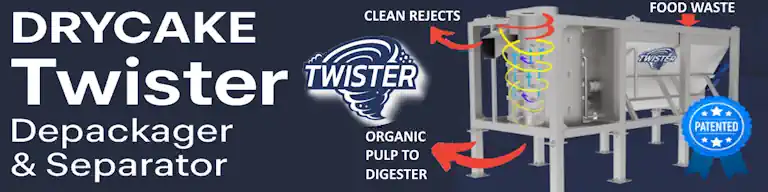
- The Drycake Twister depackaging machine reduces manual sorting costs and improves processing efficiency for compostable materials at industrial composting facilities.
Challenges for Composting Facilities with Compostable Packaging

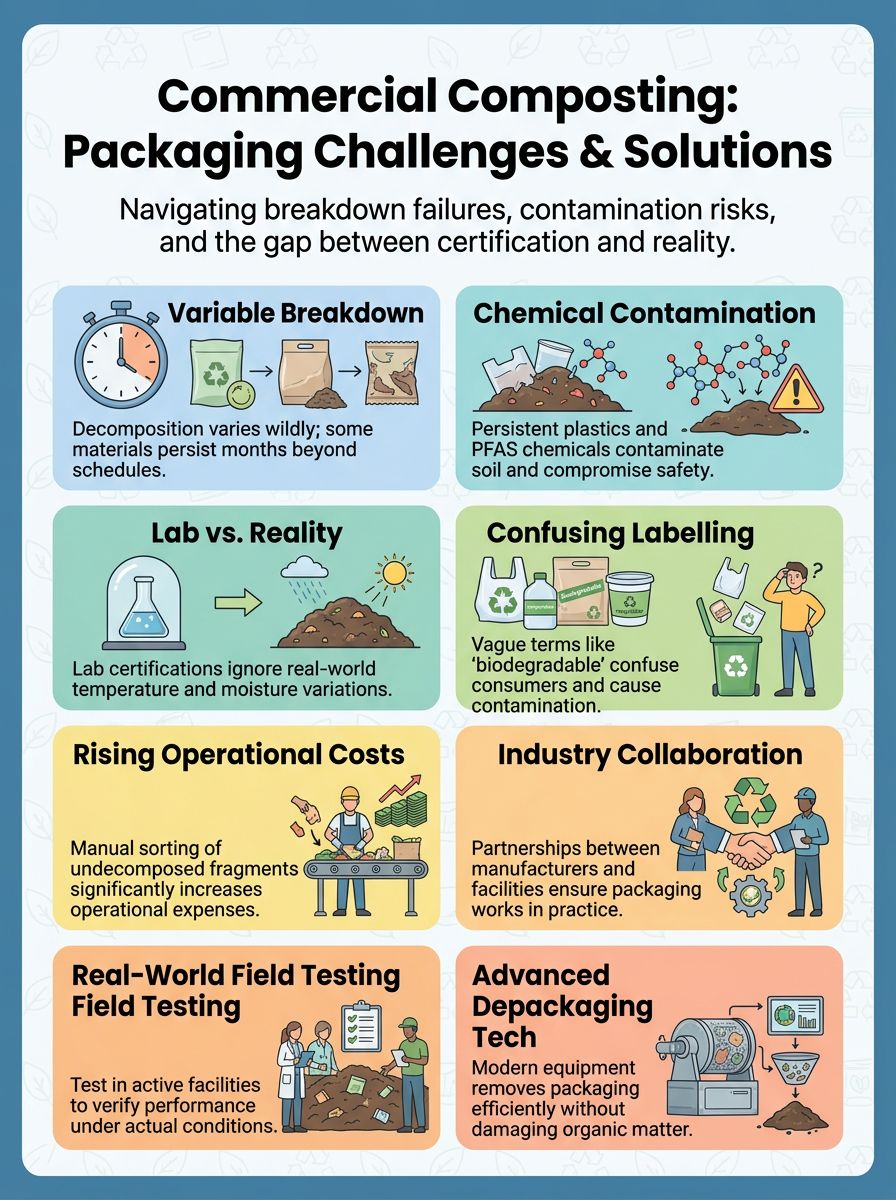
Commercial composting facilities face significant operational hurdles when processing compostable packaging materials that often fail to break down within standard timeframes.
These challenges create bottlenecks in waste management systems and force operators to implement costly additional screening processes to remove persistent packaging fragments from finished compost products.
What are the main challenges and complexities for composting facilities?
Compostable packaging introduces unpredictable variables into daily operations at industrial composting facilities. Many operators struggle to determine whether items are genuinely compostable or simply carry misleading labels.
This uncertainty forces staff to conduct manual sorting processes that increase operational costs significantly. Some facilities choose not to accept compostable materials entirely due to these integration challenges.
The decision stems from concerns about maintaining consistent compost quality while managing contamination risks.
Certification does not always guarantee material will break down as expected in all facilities.
Material breakdown rates vary dramatically across different compostable packaging types, creating operational headaches for waste management teams. Facilities face added expenses when undecomposed packaging requires reprocessing through screening equipment.
Potato starch containers may decompose within weeks, while certain biopolymer films persist for months beyond expected timelines. These inconsistencies disrupt production schedules and compromise the quality of finished organic matter.
Operators must balance accepting compostable waste against maintaining efficient processing workflows and meeting customer expectations for clean, contaminant-free compost products.
How does material breakdown vary in compostable packaging?
Material breakdown rates vary significantly across different types of compostable packaging within commercial composting facilities. PLA-based containers and starch-based films decompose at different speeds depending on their specific composition and thickness.
Bagasse food containers typically break down faster than PLA items (polylactic acid products) due to their fibrous structure. Processing time for compostable packaging averages approximately 26 weeks in commercial composting operations, though this varies considerably between materials.
Some items made from potato starch degrade within 12-16 weeks or even slightlyy less under optimal conditions, while thicker PLA packaging may require the full 26-week cycle.
Operational conditions directly influence how quickly organic materials break down during the composting process. Temperature variations across compost piles create uneven decomposition patterns, with items at cooler pile edges decomposing slowly compared to those in high-heat zones.
Commercial facilities maintain temperatures exceeding 60°C in their core areas, but peripheral zones often remain cooler. This temperature gradient means some compostable plastics achieve complete breakdown whilst others remain partially intact.
Aeration levels and moisture content also affect decomposition rates, leading to variable compost quality. Facilities sometimes need to reprocess slow-degrading materials, which increases operational complexity and extends processing cycles beyond the standard timeframe.
Why are Plastics in Compost an Environmental Danger
Non-recoverable plastic waste creates serious problems for the composting industry. These plastics fail to break down during the composting process, leaving harmful fragments in the finished product.
Contaminated compost loses its nutrient value and poses safety risks to soil health. Plastic particles (microplastics and nanoplastics) accumulate in agricultural systems, disrupting natural ecosystems over extended periods.
Plastic contamination may force composting facilities to invest in expensive sorting equipment beyond maceration and manual labour. Without equipment to remove plastic films, composting site operators rely on workers to remove plastic debris before processing organic waste, increasing operational costs significantly.
Manually pulling out the plastic relies on the attentiveness of the sorting staff, and is fallable.
Quality assurance becomes complex as uncertainties over plastic contamination affect product standards. Non-compostable materials that enter organic waste streams cannot be recovered, leading to soil accumulation or permanent soil contamination that undermines sustainable waste management goals and threatens the environment.
Why are residues and PFAS a concern in composting?
Residues left by compostable packaging create significant challenges for commercial composting facilities. These chemical remnants affect nutrient value and soil health in finished compost products. In extreme circumstances, they risk human health.
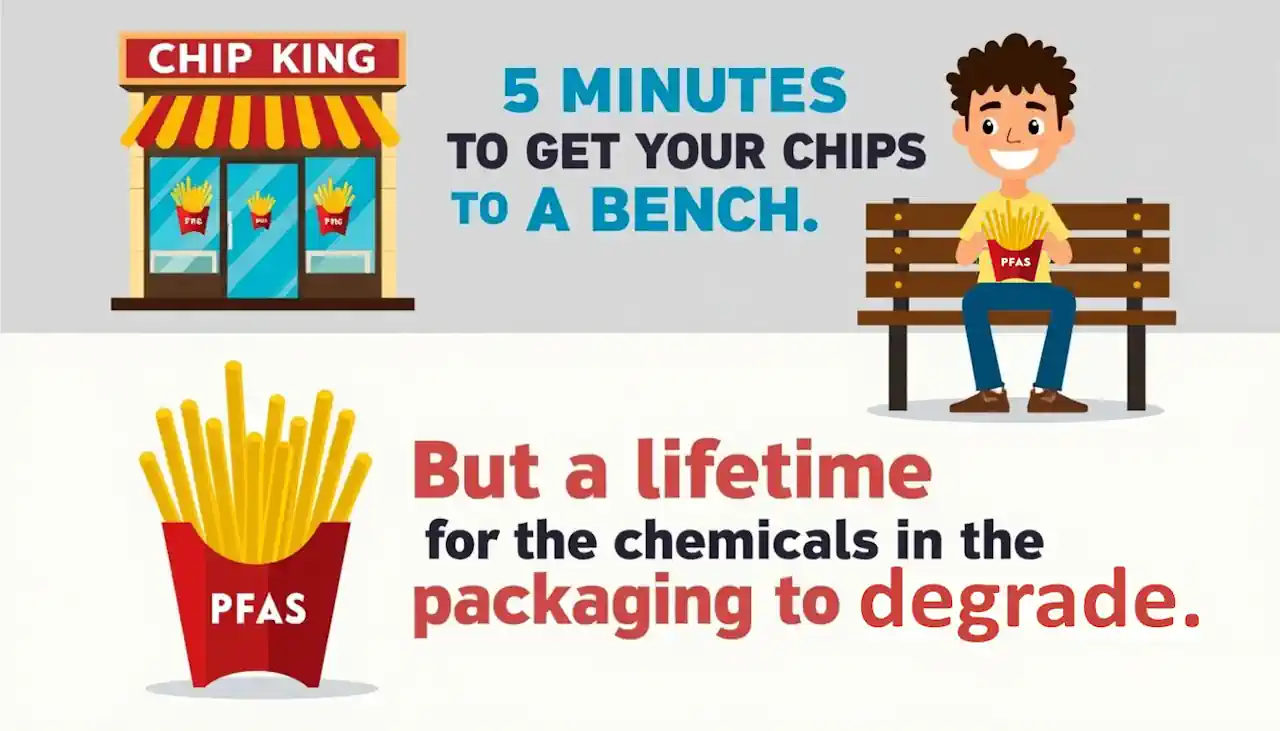
PFAS (Per- and polyfluoroalkyl substances) pose particular risks as some manufacturers have unknowingly been using these chemicals for grease and water resistance in food packaging. Some compostable packaging products avoid PFAS, but not all packaging manufacture follows this approach.
Chemical residues complicate the use of finished compost in agriculture due to uncertainty about long-term effects. Monitoring and limiting PFAS in biodegradable packaging remains a recognised industry challenge for waste management professionals.
Long-term impacts of residues and PFAS on compost quality require further research to establish safe application standards. Industrial composting facilities must address these contamination concerns to maintain product quality and protect soil ecosystems.
How Does Compostable Packaging Perform in Real-World Conditions?
Real-world commercial composting conditions often differ dramatically from laboratory testing standards, creating significant gaps between certified performance claims and actual facility outcomes that waste management professionals encounter daily.
How do certifications compare with real-world composting conditions?
Certification standards for compostable packaging materials like EN 13432 (Europe) and ASTM D6400 (USA) assume optimal, high-temperature commercial composting environments that rarely exist in practice. These tests occur in controlled laboratory settings with perfect moisture levels, precise temperature controls, and ideal oxygen flow.
Most industrial composting facilities face daily variations in temperature, moisture content, and processing times that differ significantly from certification conditions. Materials may not achieve certified breakdown times in all commercial settings, creating operational headaches for facility managers.
Facilities often encounter certified materials that fail to degrade as expected, despite carrying official compostability marks. The discrepancies between certification tests and actual facility processes can impact compost quality and create contamination issues.
Certified compostable packaging might break down perfectly in laboratory tests, but leave visible residues in commercial operations. This gap between laboratory performance and field results forces waste management professionals to implement additional screening processes, increasing operational costs and reducing efficiency across their composting systems.

Why is consumer labelling of compostable packaging confusing?
Consumer labelling creates significant confusion because packaging often uses misleading terms like “biodegradable” or “plant-based” without guaranteeing actual compostability. These vague descriptions fail to specify whether materials require industrial composting facilities or can break down in home compost bins.
Manufacturers frequently use green-washing language that suggests environmental benefits while providing no clear disposal guidance for waste management professionals.
Misleading language results in contamination of both recycling and compost streams as consumers wrongly assume all plant-based packaging suits home composting conditions. The lack of standardised labelling across different biodegradable products means workers at materials recovery facilities face constant sorting challenges.
Clear disposal instructions remain absent from most compostable packaging, forcing waste management teams to educate consumers about proper separation methods for organic waste streams.
The Role of Collaboration in the Composting System
Effective composting systems depend on strong partnerships between packaging manufacturers, commercial composting facilities, and waste management professionals to address the real challenges that arise when compostable materials enter industrial processing streams.
Continue reading to discover how these partnerships can transform current composting operations and solve persistent contamination issues.

Why is collaboration important in composting systems?
Collaboration forms the backbone of successful commercial composting operations. Effective composting outcomes rely on collaboration between compost producers and users, creating a shared understanding that benefits all parties involved.
Shared understanding of packaging capabilities and facility limitations is crucial for preventing contamination and optimising material processing. This partnership approach helps industrial composting facilities manage compostable packaging more efficiently while reducing operational challenges.
Manufacturers and composters must communicate to optimise material integration within existing waste management systems. Collaboration can help align stakeholder interests across the composting system, ensuring that compostable packaging performs as intended in real-world conditions.
Joint efforts can reduce contamination and improve compost quality, while funding and equipment support from manufacturers can enhance facility operations. This cooperative framework enables better handling of organic waste streams and supports the circular economy by creating sustainable products that truly biodegrade in commercial composting environments.
What feedback do composters provide on compostable packaging?
Composters across commercial composting facilities and community-run facilities report significant operational challenges with compostable packaging materials. Their feedback reveals serious concerns about material unpredictability and increased processing costs.
- Facilities report increased manual labour requirements for sorting and reprocessing compostable packaging that fails to decompose properly during standard composting cycles.
- Operators express frustration with contamination risks from packaging that appears compostable but contains non-biodegradable components or harmful residues.
- Commercial composting managers highlight unpredictability issues with new packaging materials that lack proven performance data in real-world conditions.
- Composters stress concerns over PFAS contamination and chemical residues that compromise final compost quality and marketability.
- Facility operators demand clearer certification standards that reflect actual industrial composting conditions rather than laboratory test results.
- Processing teams report extended breakdown times for certain compostable materials that disrupt normal composting schedules and reduce facility efficiency.
- Quality control staff identify visual contamination problems where partially decomposed packaging creates consumer confidence issues with finished compost products.
- Composters emphasise the need for ongoing dialogue with manufacturers to address material performance gaps and operational challenges.
- Facility managers request better labelling systems that distinguish between home composting and commercial composting requirements for different packaging types.
How should manufacturers be involved in composting processes?
Manufacturers must actively participate in commercial composting operations to create packaging that works in real-world conditions. This collaboration between packaging producers and industrial composting facilities ensures compostable packaging performs as intended.
- Establish direct communication channels with commercial composting facilities to understand their operational challenges and material breakdown requirements for compostable packaging.
- Provide financial support and equipment contributions to composting facilities to help them process new packaging materials more effectively.
- Conduct field testing at actual industrial composting facilities rather than relying solely on laboratory certifications like DIN CERTCO standards.
- Design packaging that aligns with existing facility capabilities, considering temperature ranges, processing times, and screening equipment limitations.
- Share technical data about packaging materials, including wood pulp content, potato starch composition, and expected decomposition rates under specific conditions.
- Fund research into long-term soil health effects of packaging residues and PFAS contamination from compostable materials.
- Collaborate on developing clearer labelling systems that distinguish between home composting and commercial composting requirements for consumers.
- Support waste management professionals by providing training materials about new packaging technologies and their processing requirements.
- Participate in circular economy initiatives that connect packaging design with actual composting outcomes and organic waste processing capabilities.
How Can the Composting System Be Improved?
The composting industry needs major improvements to handle both traditional plastics that get into both yard waste and food waste, and compostable packaging more effectively. Better systems will reduce contamination and create higher-quality compost for soil health.
Why is clearer labelling necessary for compostable packaging?
Current labelling systems create widespread confusion among consumers who struggle to distinguish between compostable packaging and recyclable materials. Waste management professionals face daily challenges when misplaced compostables contaminate recycling streams, while standard plastic bags end up in organic waste bins.
Standardised labels can guide correct disposal practices and prevent costly sorting errors at materials recovery facilities.
Clear labelling reduces contamination in both recycling and composting streams, protecting the quality of final products. Accurate information aids waste collectors and composting facilities by indicating whether packaging designed for commercial composting requires industrial composting facilities rather than home composting systems.
Improved labels support public education on sustainable packaging disposal, helping consumers understand that potato starch containers need different treatment than traditional recyclable materials.
How can comprehensive field testing enhance composting?
Field testing under real facility conditions ensures compostable packaging materials perform as intended within commercial composting operations. These comprehensive trials identify operational challenges before widespread adoption occurs across industrial composting facilities.
Testing protocols reveal whether materials degrade within standard processing times, typically within 26 weeks for most commercial composting cycles. Real-world conditions at composting facilities often differ significantly from laboratory environments where initial certifications take place.
Results from extensive field testing inform certification updates to reflect actual operating conditions at waste management facilities. Data-driven approaches help facilities integrate new compostable packaging materials into existing organic waste processing systems.
Ongoing field testing supports continuous improvement in packaging design, ensuring materials work effectively with in-vessel composting systems and other commercial composting methods.
This testing process benefits the entire circular economy by reducing contamination risks and improving the quality of finished compost products used as fertilisers.
What research is needed on long-term soil health effects?
Research must focus on how residues and additives affect soil nutrient value across multiple growing seasons. Current studies examine short-term decomposition rates, but scientists need comprehensive data on how compostable packaging components alter soil chemistry over time.
Long-term monitoring can track changes in soil health from repeated compost application, revealing whether materials from biodegradable packaging create cumulative effects that standard testing misses.
Studies are needed to assess impact of PFAS and other chemicals in compostable packaging on agricultural systems. Investigations should go beyond material disintegration to include ecosystem effects on beneficial microorganisms and earthworms that maintain healthy soil structure.
Research outcomes support the safe, sustainable use of compost in agriculture by establishing clear guidelines for organic waste processing facilities and manufacturers designing renewable materials for the circular economy.
Act Now: Replace Maceration and Screening with A Low-Impact Dapackaging Machine
Traditional maceration and screening methods create significant problems for commercial composting facilities. These processes often damage compostable packaging materials, smashing and tearing whole bags and brittle containers into tiny pieces during processing, threatening a plastic content exceeding UK PAS110 limits, even before new, tighter limits arrive in 2027.
The Anaerobic Digestate Resource Framework (ADRF) is the new End-of-Waste framework for digestate in England, replacing the AD Quality Protocol (ADQP).
Under the updated UK Anaerobic Digestate Resource Framework (ADRF) and BCS scheme, the limit for plastic contamination in digestate is 8% of the total physical contaminants (excluding stones) limit specified in PAS 110. This new, stricter requirement applies to plastic, with a two-year transition period (RPS 317) allowing compliance by October 2027.
The present generation of depackaging machines offers waste management professionals a superior alternative that minimises damage to biodegradable packaging whilst maintaining operational efficiency. These innovative systems reduce manual labour requirements and cut operational costs at industrial composting facilities.
Modern depackaging equipment transforms how composting operations handle packaging waste. The technology improves processing efficiency without compromising the integrity of compostable materials.
Benefits of the Drycake Twister Depackaging Machine at Commercial Composting Facilities
The Drycake Twister transforms how commercial composting facilities handle compostable packaging materials. This equipment integrates compostables more effectively into standard facility workflows, reducing the burden on existing processing systems.
Facilities experience reduced contamination levels when processing organic waste mixed with certified compostable materials. The technology supports adaptation to new packaging types entering waste streams, making operations more flexible.
Staff spend less time on manual sorting tasks, which previously consumed significant labour hours. Processing efficiency improves as the Twister handles various compostable materials, including potato starch films and wood pulp containers.
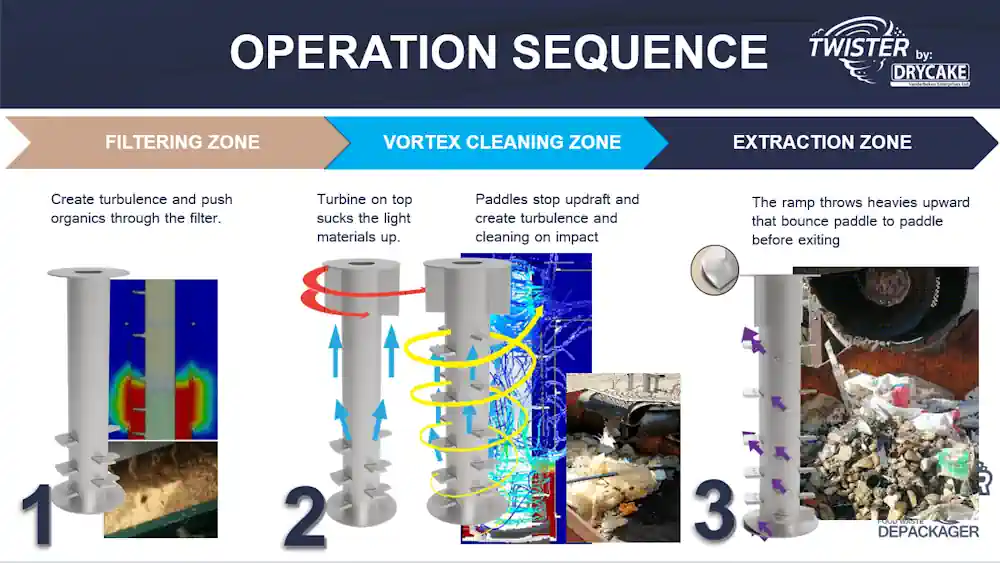
Cost reductions become apparent through lower expenses associated with manual sorting and reprocessing activities. The equipment helps facilities achieve improved compost quality by better separating compostable packaging from general waste contaminants.
Industrial composting tests completed by Drycake report smoother operations when handling food waste packaged in certified compostable materials. The Twister also reduces wear on downstream equipment by removing problematic items before they reach sensitive machinery.
Facilities can process larger volumes of organic matter without compromising final compost standards. This technology enables waste management operations to meet growing demands for processing so-called “compostable” or “recyclable” packaging while maintaining operational efficiency and product quality standards.
Contact Drycake to discuss the use of their depackaging system here.
Key Distinctions and Details about Composting and Packaging
Understanding the technical differences between various packaging types and composting methods helps waste management professionals make informed decisions about processing organic waste streams.
These distinctions directly affect how materials break down in industrial composting facilities and determine whether packaging ends up as quality compost or contaminated waste.
What defines compostable packaging?
Compostable packaging consists of plant-based materials such as PLA, bagasse, potato starch, and wood pulp. These materials break down completely in industrial composting facilities within approximately 26 weeks under controlled conditions.
Manufacturers design this packaging to convert into nutrient-rich soil rather than leaving harmful residues behind.
This packaging cannot enter standard recycling streams and requires specific disposal through commercial composting systems. The materials come from renewable sources, reducing dependence on fossil fuels compared to traditional plastic alternatives.
Proper composting transforms this organic matter into valuable compost that enriches soil quality for agricultural and landscaping applications.
What does commercial composting involve?
Commercial composting transforms organic waste through controlled biological processes. Industrial composting facilities use high heat, moisture, and microbes to break down materials efficiently.
Temperatures in these facilities often exceed 60°C, creating optimal conditions for decomposition. This controlled environment differs significantly from home composting methods.
The process handles large volumes of organic matter and food waste through systematic management. In-vessel composting systems maintain precise temperature and oxygen levels throughout the breakdown cycle.
These facilities can process bioplastics and plant-based packaging materials that would struggle to decompose in typical garden waste conditions. The controlled processing enables efficient transformation of organic waste into valuable compost for agricultural and landscaping applications.
What are common disposal misconceptions?
Consumers often misunderstand how to dispose of compostable packaging correctly. These misconceptions create significant problems for waste management professionals and contaminate processing streams.
- Many people place compostable packaging in recycling bins alongside conventional plastics, which contaminates the entire recycling stream and makes materials recovery facility operations more difficult.
- Consumers assume biodegradable packaging breaks down quickly in general waste bins, but landfilled compostable materials actually increase breakdown time and reduce environmental benefits.
- People think all compostable items work in home composting systems, yet most require industrial composting facilities with controlled temperatures and specific conditions to decompose properly.
- Households believe compostable packaging belongs with kerbside collection for recyclables, creating sorting challenges and contamination issues at materials recovery facilities.
- Consumers mistakenly dispose of compostables with regular plastics because packaging looks similar, undermining the circular economy benefits these materials should provide.
- People assume coffee cups marked as compostable can go in any organic waste bin, but many require specialised collection systems for proper processing.
- Consumers think biodegradable packaging decomposes in anaerobic digestion facilities at the same rate as food waste, causing operational problems for waste management systems.
- Many believe compostable packaging works in worm farms or small compost heaps, but these materials need industrial-scale processing to break down effectively within acceptable timeframes.
What certifications apply to compostable packaging?
Recognised certifications include EN 13432 and BPI for compostable packaging in commercial composting facilities. These certifications verify breakdown in industrial composting settings through rigorous testing protocols.
EN 13432 serves as the European standard, while BPI provides certification for North American markets. Both standards require materials to pass comprehensive evaluations covering disintegration, biodegradation, and eco-toxicity assessments.
Certified materials undergo testing to ensure they decompose properly without leaving harmful residues in the final compost product. Certification helps facilities identify materials compatible with their waste management processes and equipment.
Standards guarantee that compostable packaging will not contaminate organic waste streams or damage soil health. Waste management professionals can rely on these certifications to distinguish genuine compostable materials from conventional plastics that may cause contamination in their composting operations.
What is the environmental impact of compostable packaging?
Compostable packaging delivers significant environmental benefits compared to conventional plastic alternatives. These materials reduce reliance on fossil fuels during production and convert into carbon dioxide, water, and biomass through proper commercial composting processes.
This transformation supports the circular economy by returning valuable organic matter to soil systems. Facilities using in-vessel composting can process these materials effectively, creating nutrient-rich compost that enhances soil health.
The carbon footprint remains lower than traditional packaging throughout the lifecycle, from production to disposal.
Disposal methods critically affect environmental outcomes for compostable packaging materials. Proper processing at industrial composting facilities maximises environmental benefits and prevents plastic pollution in natural ecosystems.
Materials sent to landfill sites break down more slowly and generate fewer positive impacts for waste management systems. Incorrect disposal in general waste streams can compromise the intended environmental advantages.
Extended producer responsibility frameworks help ensure manufacturers design packaging that performs well in real-world composting conditions, supporting broader sustainability targets across the waste management sector.

Conclusion
Commercial composting faces real challenges with compostable packaging that waste management professionals must address today. Better collaboration between manufacturers, composters, and regulators will create clearer standards for organic waste processing.
Advanced equipment like the Drycake Twister offers practical solutions that reduce contamination while improving efficiency at industrial composting facilities. Success requires immediate action on clearer labelling, comprehensive testing, and research into long-term soil health effects from these materials.
FAQs
1. What problems occur when compostable packaging enters commercial composting facilities?
Compostable packaging often fails to break down properly in industrial composting facilities because processing times are too short. Many items made from potato starch or wood pulp need longer periods than commercial operations allow. This creates contamination issues that affect the quality of finished compost used for organic matter enrichment.
2. Why doesn't biodegradable packaging always work in waste management systems?
Biodegradable packaging requires specific conditions that many waste management facilities cannot provide consistently. Items often get mixed with general waste or recycled materials, preventing proper decomposition. Without proper sorting, these materials may end up being incinerated rather than composted.
3. Can home composting handle all types of compostable packaging effectively?
Most compostable packaging cannot break down in home composting systems. These materials need the high temperatures found in industrial composting facilities to decompose properly.
4. How does faulty packaging disposal affect the circular economy?
When compostable packaging contaminates recycling streams or fails to decompose in commercial composting, it disrupts circular economy principles. Poor disposal practices mean materials cannot return as useful organic waste or biofuel. This forces reliance on new raw materials rather than creating sustainable cycles.
5. What certification standards help identify proper compostable packaging?
DIN CERTCO provides certification that confirms packaging will break down in industrial composting facilities alongside food waste and green waste. Extended Producer Responsibility (EPR) schemes also encourage manufacturers to create packaging that works within existing waste management systems. Products like KeepCup demonstrate how proper design supports both reusability and end-of-life processing through in-vessel composting methods.