If you look in any public trash can, you’ll notice a variety of waste packaging. You sigh and wish that more companies would consider packaging that is easier to compost or recycle. But it isn’t that simple.
Designing packaging for a circular economy can be a delicate balance. It requires consideration of the best materials for the application, recycling or composting facilities available to the people using it, and some respect for human nature. With this guide, you can see what goes into packaging design that truly minimizes waste.
Understanding the Circular Economy
Remember “Reduce, Reuse, Recycle”? It’s the circular economy in a nutshell. Too many people forgot the first two and focused excessively on the latter, which is why we have compostable materials taking years to break down in the landfill.
The circular economy involves maximizing the lifespan of produced materials. Take electronics, for example. Once you toss that old printer, the cables can be used for other printers. If they sustain damage and are no good for repurposing, electronics recycling allows the recapture of many of those valuable metals and plastics.

Factors Affecting Material Recycling and Composting
You might automatically think that compostable materials are better than any other packaging, but the truth is more complicated. These factors can affect what happens to the packaging throughout its life cycle.
Material Composition
The material used for the packaging is the lead factor in determining whether or not it can be recycled or composted at all. Generally, waste-conscious packaging will be made from plant fibers or bioplastics. Aluminum is a great one for recycling, but if it’s made from a composite or contains aerosols, it may have to go to the landfill.
Remember that coatings, stickers, and other add-ons can affect whether the package is recyclable or compostable. Using compostable stickers and water-soluble coatings can improve the recycling pathways for otherwise recyclable materials.
Waste System Compatibility
In theory, plastic can be recycled. In practice, it’s hard to find a facility that can process all types of recyclable plastics. You can have the most recyclable or compostable material available for your packaging, but if it’s not compatible with the consumers’ municipal waste systems, it’s going to end up in the landfill.
Compatibility requires an evaluation of which materials can be easily recycled or composted and how available it is to the typical user of the product. If the package truly is single-use, simplifying the route to recycling or composting will ensure higher utilization of these pathways.
Closed-loop collection programs can provide an additional recycling pathway for packaging materials when local options are limited. By collecting used packaging for reprocessing, these programs can help keep materials in circulation rather than relying solely on municipal recycling systems.
End-Of-Life Pathways
Each type of packaging has an end-of-life pathway, depending on the material, construction, and other factors. The end-of-life pathway follows what happens to the package once it can no longer be reused. Common pathways include:
- Repurposing the packaging for other uses different from the original intent
- Recycling the package into new material
- Composting the package along with other nutrients to enrich soil
- Extracting useful materials from the package
- Disposing of the package
- Using the packaging to produce energy for other applications
Some packaging designs may have fewer pathways, due to the complexity of the design or the use of materials that aren’t compatible with waste systems.
How to Improve Packaging Design for the Circular Economy
Now that you know how design can affect how recyclable or compostable a package can be, it’s time to put a plan into practice. Here are a few ways organizations can improve packaging design to suit the circular economy, from corrugated plastic produce boxes to aluminum cans.
Consider the Packaging Life Cycle
Before you get stuck on a particular material for packaging, think about its realistic life cycle. You may live in a big city with lots of recycling facilities nearby, but do you know how they recycle materials? Can they even recycle the package?
Then you have to think about how the typical consumer of the packaging is going to deal with it once they’re done. Do they have easy access to proper recycling facilities that will actually recycle or compost it? Does the package design make it simple for them to prepare it for home composting?
Take a Comprehensive View of Waste
While you’re thinking about reducing waste, you need to make sure you’re not losing sight of the main goal. Switching packaging from single-use plastic to compostable materials can be a great choice for sustainability, but it’s not a silver bullet.
The primary aim of packaging design should be to maximize use. Switching to compostable materials can make consumers feel more comfortable about throwing away packaging instead of reusing it. This pathway could lead to generating more waste, not less.
Don’t Overestimate Human Behaviors
Life cycle assessments sometimes take an excessively sunny view of human nature. Humans are primed largely by convenience and won’t always go out of their way to recycle or compost trash.
To determine what actually happens to the packaging after its initial use – not just what could happen – evaluate compatibility with the average recycling or composting facility, especially those connected to municipal waste management. Then think about the path to recycling or composting. If consumers have to prepare the package or take it to a special facility, many probably won’t.
Design Packaging for Maximum Use and Reuse
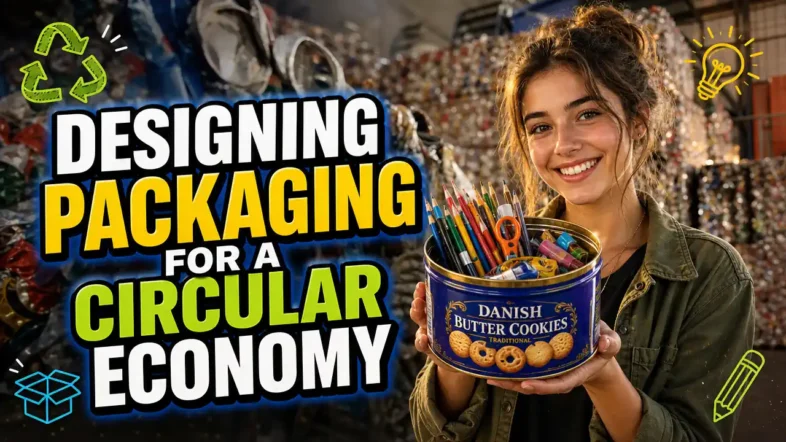
Reinventing the wheel to make a package slightly more compostable isn’t the best use of sustainability advocacy, when use and reuse are right there. There’s a reason you open a can of Danish butter cookies and often find craft supplies, small tools, or anything else but cookies. Those tins are supremely reusable, even though they are theoretically intended for single-use. Maximizing the durability of a product that could easily be reused can increase reuse, instead of forcing consumers to quibble over how best to dispose of it.
Look at Recycling as an End-Of-Life Option, Not the Default
The conversation surrounding single-use packaging often focuses on the packaging, not the single-use aspect. Making a package easier to recycle or compost could keep it out of the landfill, but it still generates a lot of waste in the process.
A better approach involves focusing on the single-use nature of the package, not just how easy it is to throw away. Taking a long view of recycling encourages you to think more creatively about the stages in between first use and end-of-life.
Improving the recyclability and compostability of packaging starts with certain material choices, but also the right mindset. By designing packaging to maximize use, reuse, and recycling, the businesses and consumers using the packaging can contribute to a stronger circular economy.