
You know how a waste container can look right on paper yet fail the moment the collection vehicle arrives? That is the key distinction in the front-load vs. rear-load dumpster decision: capacity matters, but vehicle compatibility, clearance and waste streams matter just as much.
In the UK, these are more often called front end loader, or FEL, and rear end loader, or REL, containers. Both are permanent commercial dumpsters for regular waste collection, but they use different lifting systems and suit different site layouts.
This guide explains how front load dumpsters and rear load dumpsters work, what sizes are common, and how to choose a container that supports safe, reliable waste disposal.
Key Takeaways
- Front-load dumpsters, usually called FEL containers in the UK, suit sites with regular high waste volume and clear access for a front-loading collection vehicle.
- Rear-load dumpsters, or REL containers, use rear-loading vehicles and can suit sites that need a long, low-profile container with easy access doors.
- Do not choose on cubic-yard capacity alone. Your hauler must confirm that its collection vehicles can lift the container safely.
- Measure the full collection route, including gates, turning space, overhead clearance and the distance from the bin store to the vehicle.
- Separate recycling, food waste and residual waste before selecting container sizes, especially for commercial properties in England.
Key Features of Front-Load Dumpsters
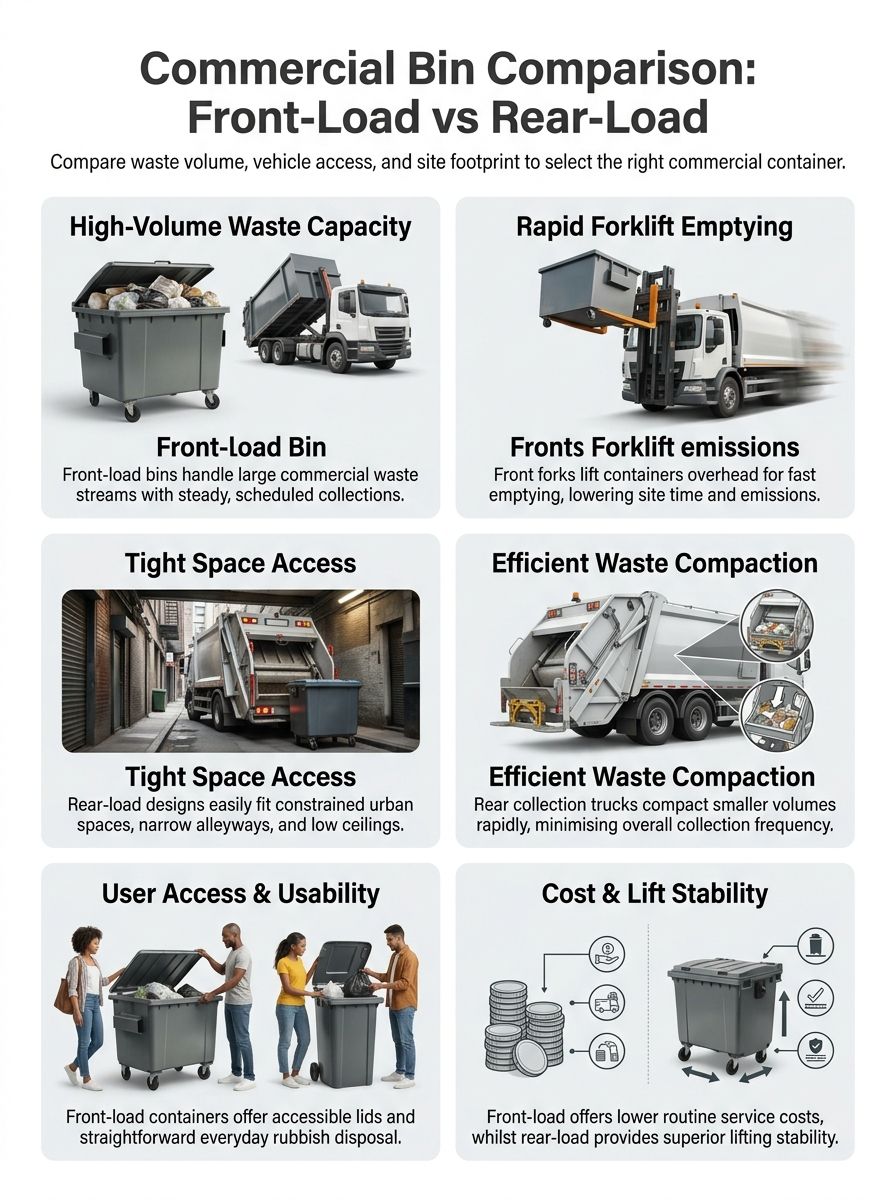
Front load dumpsters are static commercial containers lifted from the front by forks on a dedicated collection vehicle. In UK waste management, you will usually hear them called front end loaders or FELs.
They work best where a business creates steady volumes of bagged general waste or dry mixed recycling and can give the vehicle a clear, repeatable stopping position.
Larger capacity for regular commercial waste
Choose the container around the waste stream and collection vehicle, not around the label on the side of the bin.
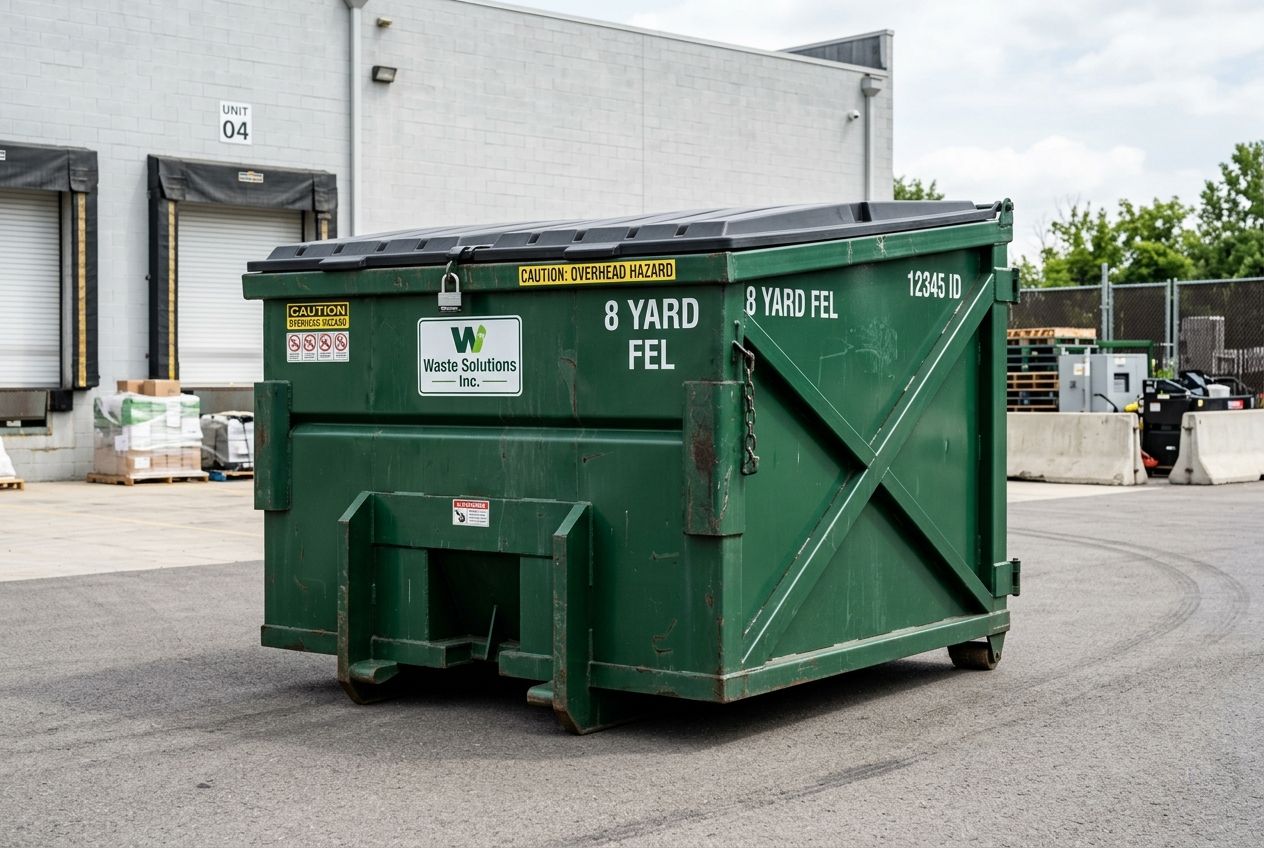
FEL containers commonly appear in 6-yard, 8-yard and 10-yard formats, though container sizes vary by hauler and manufacturer. An 8-yard unit holds about 6.1 cubic metres, which makes it a practical option for warehouses, supermarkets, hospitality venues and multi-unit commercial sites with consistent waste volume.
A front-load dumpster is usually a stronger fit than a wheelie bin once staff are filling several 1,100-litre bins between collections. It gives you a fixed waste disposal point and reduces the time spent moving multiple smaller containers around a service yard.
- 6-yard container: Often suitable for moderate commercial waste from offices, shops and smaller food-led businesses.
- 8-yard container: A common choice for larger retail, hospitality and warehouse sites with regular bagged waste.
- 10-yard container: Better for high-volume commercial collection where the site has room for the container and vehicle operation.
- Lockable lids: Help control fly-tipping, windblown litter and unauthorised use of your permanent commercial dumpster.
Front-load containers can handle general waste and certain recycling streams, but the permitted materials depend on your service agreement. Do not use them for hazardous waste, liquids or heavy rubble unless your hauler has specifically approved that waste type.
Efficient collection with front-loading vehicles
Front loaders use hydraulic arms and fork pockets to lift the container over the cab and empty it into the truck. This creates a quick, repeatable collection method when the vehicle can approach the bin squarely and safely.
The practical benefit is consistency. Keep cars, pallets, cages and loose stock out of the collection area so the driver does not need to reposition the vehicle or abandon the lift.
Access is the deciding factor. Planning guidance used by UK authorities commonly expects collection vehicles to get within 10 metres of the bin store, with a hard, level route for crews and containers where movement is required.
Key Features of Rear-Load Dumpsters
Rear load dumpsters, known in the UK as rear end loaders or REL containers, are tipped into a rear-loading waste collection vehicle. They are static commercial containers, not small wheeled bins, and they are often used for bagged general waste and dry recycling.
They can be a good answer for properties that need a large container but have a site layout that suits rear loading better than overhead front-fork lifting.
Container shape and site access
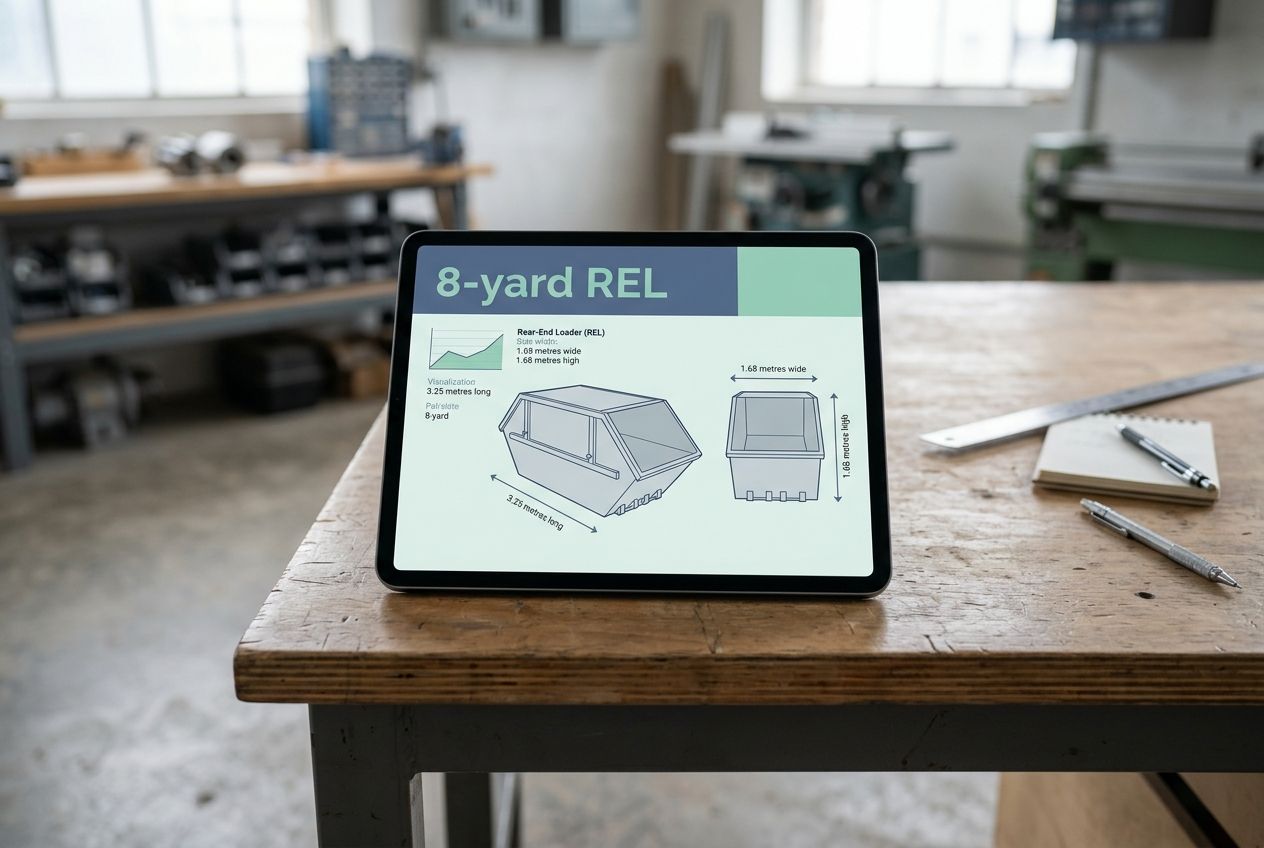
REL containers are often supplied in 8-yard and 10-yard sizes. A typical 8-yard REL can be roughly 3.25 metres long, 1.68 metres wide and 1.68 metres high, so it needs a planned bay rather than an improvised space behind the building.
The long body and access doors can make rear load containers convenient for staff handling bagged waste. They are useful where a low loading point matters, but the collection vehicle still needs enough room to reverse, align and operate safely.
- Use an REL where your hauler confirms rear-loader compatibility.
- Allow enough room for doors and lids to open without blocking walkways or loading bays.
- Keep the collection point well lit and secured outside operating hours.
- Check for tree branches, canopies, signage and cables before arranging service.
The Health and Safety Executive advises businesses managing large commercial bins to reduce unauthorised access. A secure bin store, lockable lids and sensible placement matter most where the area is isolated, dark or easy for the public to enter.
Useful for planned waste streams, not automatic savings
A rear-load dumpster does not automatically cost less or more than a front-load dumpster. Your total charge will depend on container size, collection frequency, waste type, contamination, access time and the local hauler's vehicle fleet.
The better way to control cost is to audit what you throw away for two to four weeks. Count bags by stream, record overflow days and identify bulky items that should go into a roll-off or temporary construction dumpster instead of a regular commercial container.
More capacity is not always better. An oversized bin that collects mostly air can cost more than a smaller container collected at the right frequency.
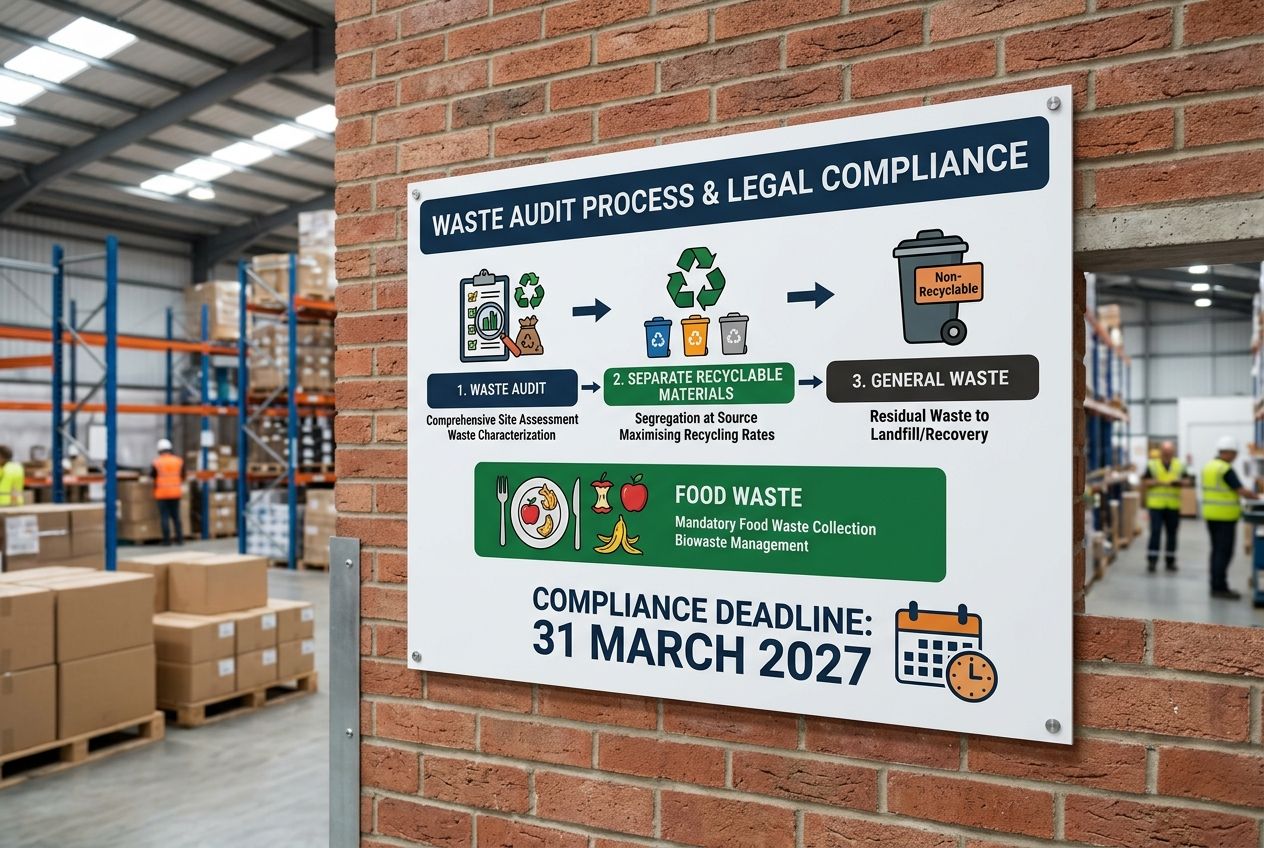
For sites in England, container planning now needs to account for separate recycling. Government guidance states that workplaces must separate dry recyclable materials, food waste and non-recyclable waste before collection, while micro-firms with fewer than 10 full-time equivalent employees have until 31 March 2027 to comply.
Front-Load vs. Rear-Load: A Side-by-Side Comparison
Use this comparison as a starting point, then ask your hauler to confirm the exact container, vehicle type and collection route. The term “dumpster” can be misleading because a container with the same yard rating may use a different lifting system.
Differences in size, functionality and accessibility
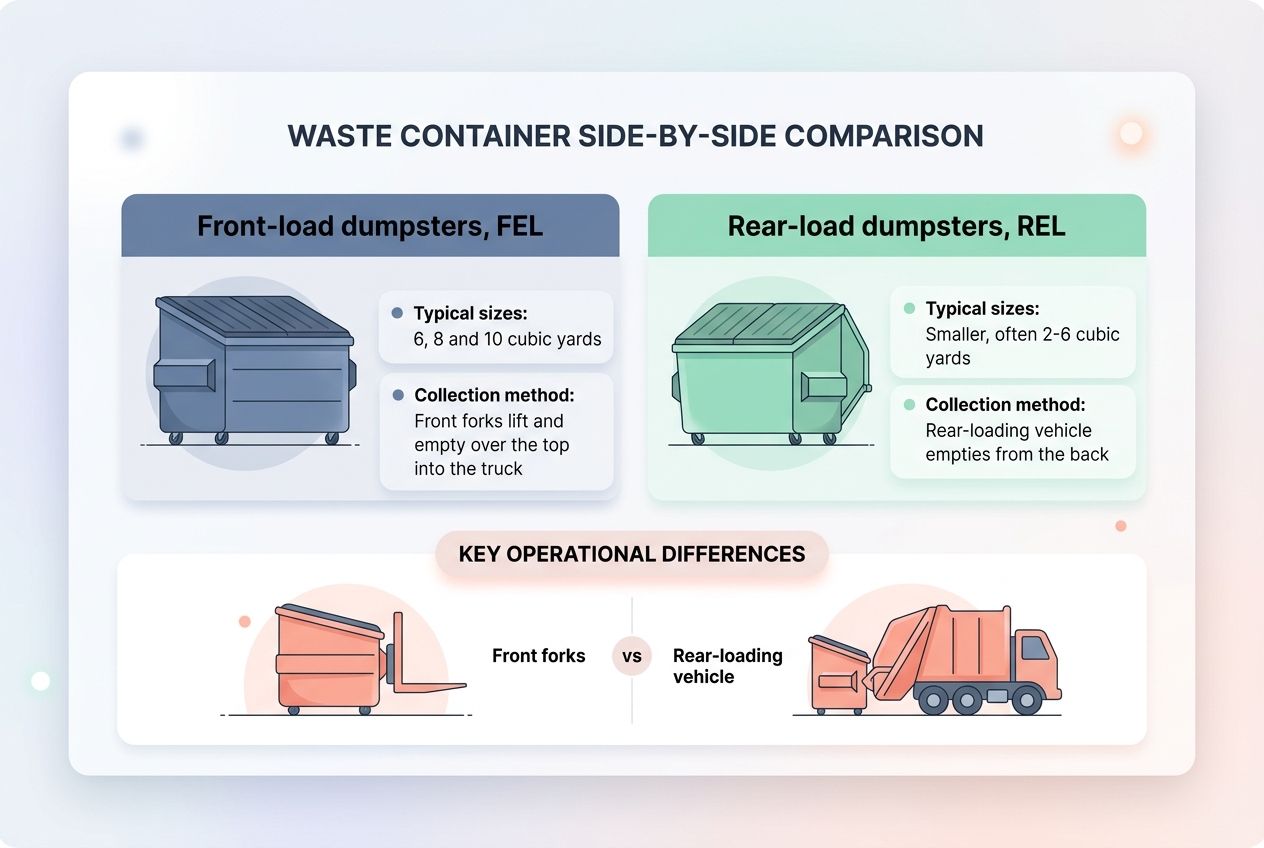
| Aspect | Front-load dumpsters, FEL | Rear-load dumpsters, REL |
|---|---|---|
| How the bin is emptied | Front forks and hydraulic arms lift the container over the front of the vehicle. | A rear-loading vehicle tips the container through its rear loading system. |
| Common UK container sizes | Often 6, 8 and 10 cubic yards. | Often 8 and 10 cubic yards. |
| Best fit | Sites with regular commercial waste, clear vehicle approach and repeat collections. | Sites with a suitable rear-loader service bay and a need for accessible container doors. |
| Access priority | Clear overhead operating space and a direct approach for front loaders. | Safe reversing, vehicle alignment and clear rear-loading operating space. |
| Waste streams | Bagged general waste and approved recycling streams. | Bagged general waste and approved recycling streams. |
| Not suitable for | Hazardous waste, liquids and dense building rubble without written hauler approval. | Hazardous waste, liquids and dense building rubble without written hauler approval. |
Run a site check before you arrange dumpster rental
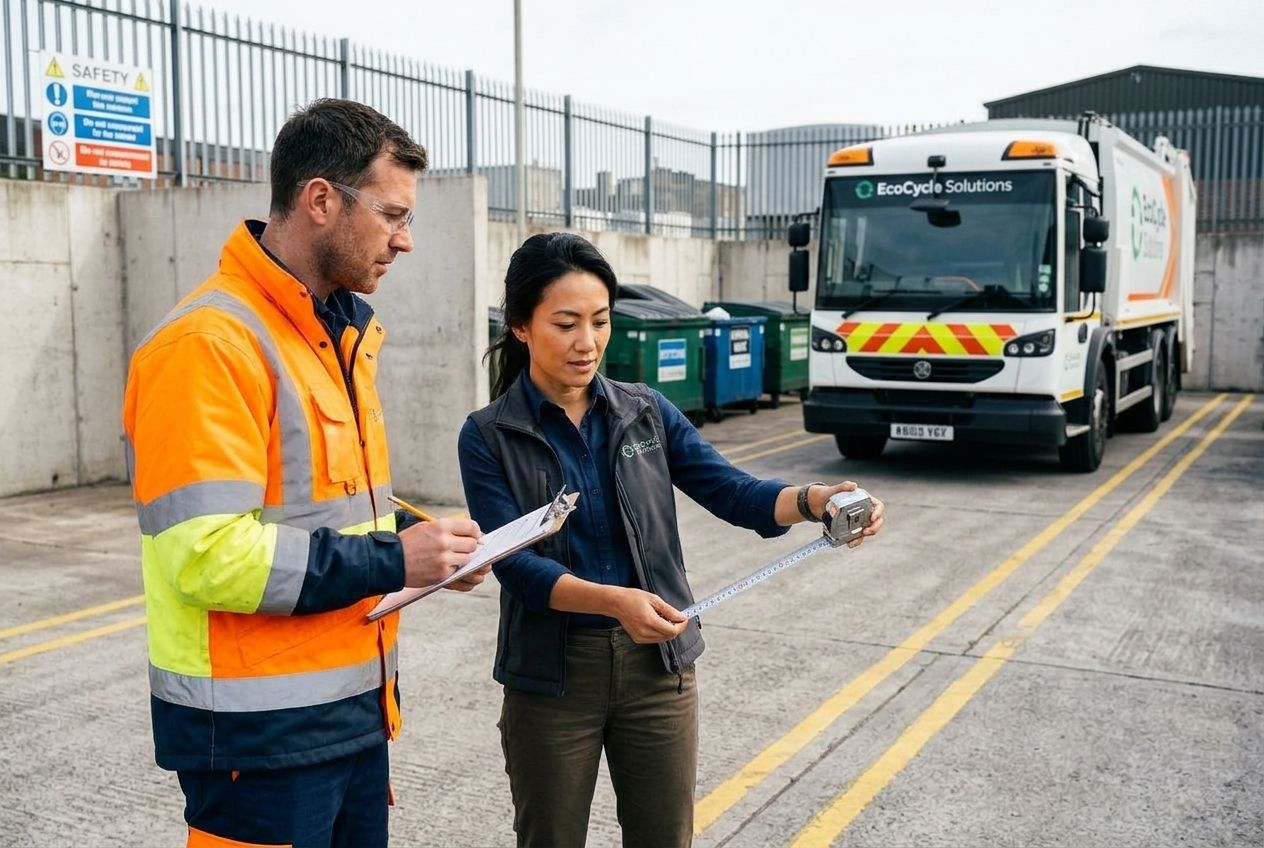
A good site assessment prevents missed waste collection, damaged property and avoidable call-out charges. Start with the route the commercial garbage truck will actually drive, not just the space where you would like the bin to sit.
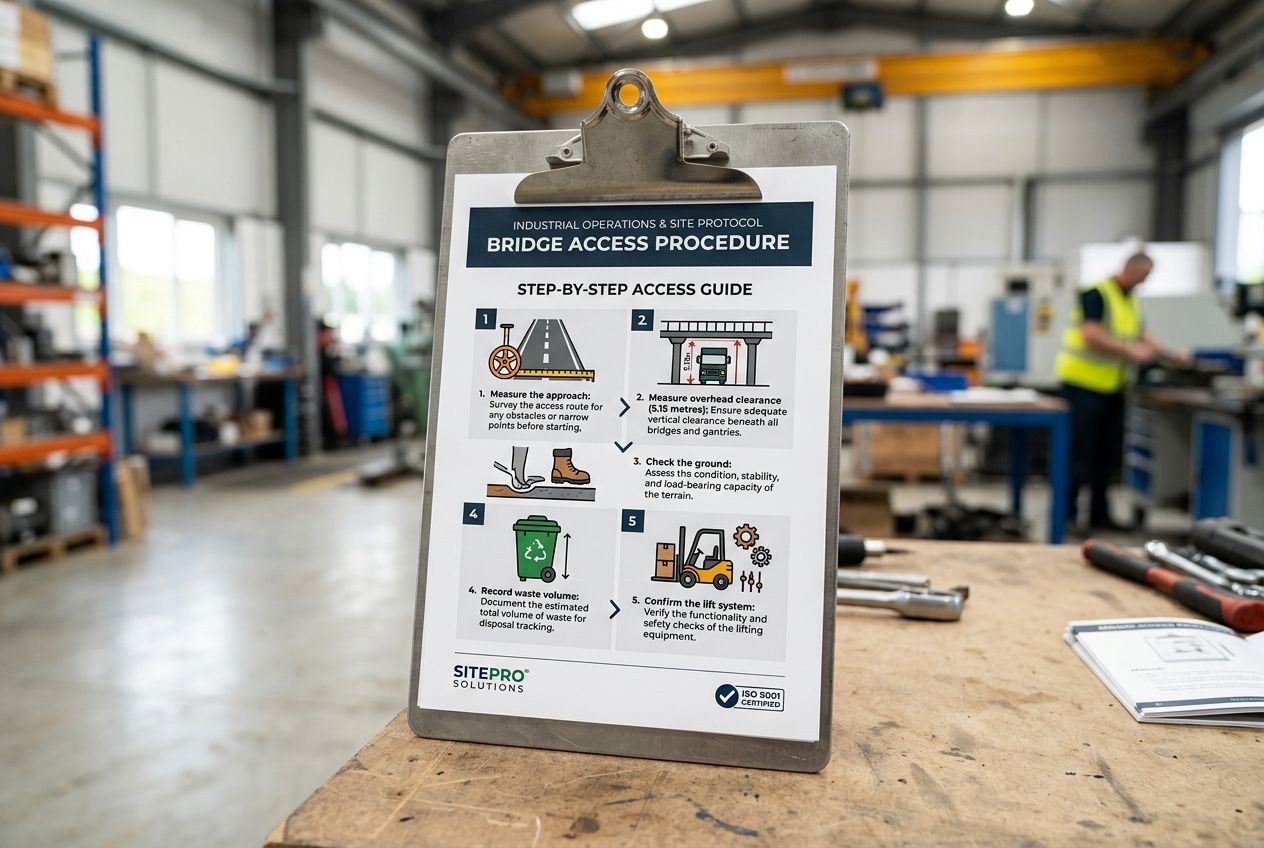
- Measure the approach: Check gate widths, corners, parked vehicles and the vehicle turning area.
- Measure overhead clearance: Guidance for collection operations can require about 5.15 metres of clear height where containers are lifted.
- Check the ground: Use firm, level hardstanding that can carry a full container and collection vehicle.
- Record waste volume: Track general waste, cardboard, food waste and other recycling separately for at least two weeks.
- Confirm the lift system: Ask whether your hauler will use front loaders, rear loaders or another collection vehicle before ordering the container.
If your waste is bulky, loose or generated only during a refurbishment, a roll-off or roll off construction dumpster may be more suitable than either static container. Hook-lift containers can also suit sites that need a removable container rather than a permanent commercial dumpster.
Homewood Disposal can use this information to match your commercial dumpsters to the property, waste volume and collection schedule, rather than forcing your site to fit a standard bin.
Conclusion
The front-load vs. rear-load dumpster choice comes down to access, lifting compatibility and the type of commercial waste you create.
Choose front load dumpsters for predictable high-volume waste where a front-loading vehicle has a clear approach and safe overhead working space. Choose rear load dumpsters where an REL vehicle and the container layout better suit your service yard.
Before arranging waste collection, measure the route, separate each waste stream and confirm the lift type with your hauler. That short check protects your budget, supports safer waste management and keeps waste disposal running without disruption.
FAQs
1. What is the difference between front-load and rear-load dumpsters for commercial properties?
Front-load dumpsters sit at the kerb, they lift from the front and fit small to medium waste volumes. Rear-load dumpsters open at the back, handle larger or bulk waste and need a rear-lift truck. The main difference is access style and how much waste each can carry.
2. Which dumpster suits my commercial property best?
If your site has tight access and steady, small loads, choose a front-load dumpster. For high volume, bulky waste, pick a rear-load dumpster, and check truck access first.
3. Are rear-load dumpsters always messier than front-load ones?
No, that is a common myth, good lids and regular emptying keep both front-load and rear-load dumpsters tidy.
4. What quick steps help me choose the right dumpster?
Measure your service area, note vehicle access and estimate weekly waste volume. Ask the hauler about truck type, collection frequency and any site rules, then match those answers to a front-load or rear-load dumpster.