

Article-At-A-Glance: Cut Building Costs by Recycling Construction Waste
- Nearly all common construction materials — concrete, steel, wood, masonry, asphalt, glass, and plastic — can be recycled or reused, dramatically cutting disposal and material costs.
- On-site concrete crushing using mobile equipment can eliminate hauling fees entirely, turning demolition debris into usable sub-base material on the same project.
- Source reduction at the planning stage — before a single material is ordered — is the most overlooked cost-saving strategy in construction waste management.
- Properly sorted, site-separated recycling recovers significantly more material value than mixed-load recycling, which often ends up partially landfilled anyway.
- Recycling construction waste can contribute directly to LEED certification credits — something worth knowing if you're bidding on commercial or government projects.
Construction waste is one of the most expensive line items most project managers never think to challenge — and that's exactly where the savings hide.
The construction and demolition (C&D) sector generates enormous volumes of waste on every project, from leftover concrete and structural steel to scrap wood and broken masonry. Most of it gets loaded into a dumpster and hauled to a landfill, which costs money twice: once to dispose of it, and again when you buy replacement materials. The good news is that nearly all of it can be recycled or reused.
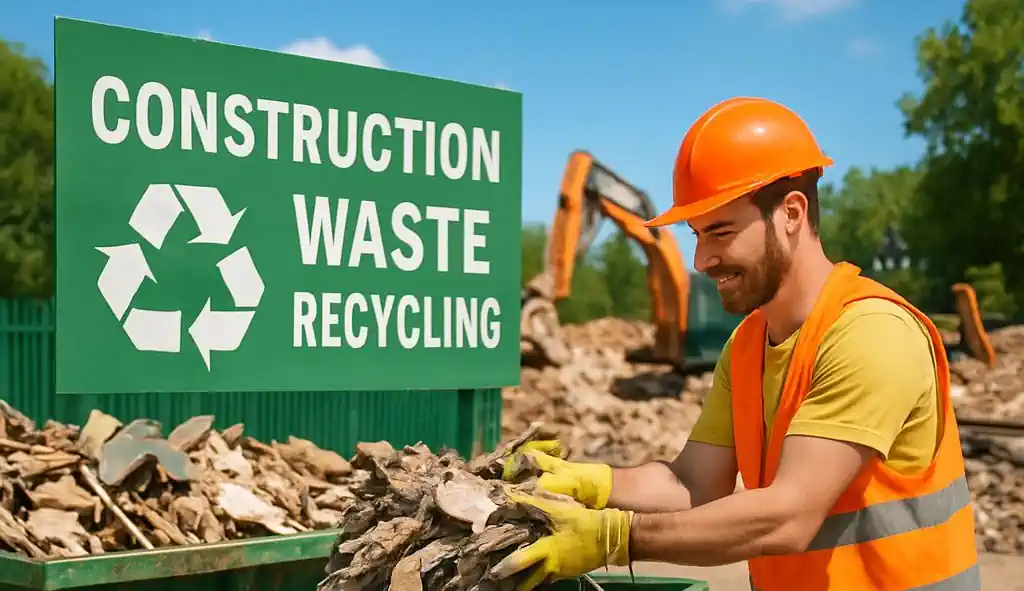 A labourer throwing segregated demolition waste into a skip for construction waste recycling.
Most Construction Waste Can Be Recycled — Here's What That Saves You
The range of recyclable construction materials is broader than most people expect. Concrete, masonry, wood, asphalt, shingles, metal, glass, plastics, carpet, and insulation can all be diverted from landfill — either through on-site reuse, sale to recycling facilities, or donation to qualifying organisations, which can also generate tax deductions under 501(c)(3) rules.
Every ton of material recycled instead of landfilled eliminates a tipping fee. Every ton of recycled aggregate used instead of virgin material eliminates a purchase. Those two savings stack on every single project, and they scale fast on large commercial or civil jobs.
Quick Reference: Common Recyclable C&D Materials
Material Recyclable Form Common Reuse Concrete Crushed aggregate Road sub-base, new concrete mix Masonry (brick/block) Crushed fill / whole units Sub-base, landscaping, resale Steel & Metal Scrap / sorted stock Scrap sale, structural reuse Wood Dimensional lumber / chips Engineered wood, mulch, biomass Asphalt Reclaimed asphalt pavement (RAP) New asphalt mix, sub-base Glass Cullet New glass products, aggregate Plastic Sorted resin types Recycled plastic lumber, packaging Insulation Loose fill recovery Re-installation or manufacturer return
1. Concrete Recycling
Concrete is the single most abundant waste material on demolition and heavy civil construction sites. It's also one of the easiest to recycle at scale — and one of the most valuable when processed correctly.
- Concrete rubble is crushed into recycled concrete aggregate (RCA) in various size grades
- RCA can substitute for virgin crushed stone in road sub-bases, backfill, and drainage layers
- Reinforced concrete is processed to separate embedded steel rebar before crushing
- Some facilities blend RCA into new concrete mixes for non-structural applications
- Mobile on-site crushers allow processing without hauling, cutting transportation costs entirely
Facilities like Green Waste process upwards of 50,000 tons of concrete annually into graded aggregate, which then feeds directly into road construction and new building foundations. That volume illustrates exactly how mature and reliable the recycled concrete supply chain has become — this isn't a niche practice anymore.
How Crushed Concrete Becomes Usable Aggregate
When concrete is demolished, the rubble goes through a jaw crusher or impact crusher that reduces it to specific size fractions — typically ranging from fine material under 4mm up to coarse aggregate around 40mm. The crushed output is then screened, and any remaining rebar or wire mesh is pulled out using magnetic separation. What comes out the other end is recycled concrete aggregate ready for grading and use.
Quality control is the critical step that separates usable RCA from landfill filler. Reputable recycling facilities test RCA for contamination, compressive strength characteristics, and particle size consistency. When those standards are met, the material performs comparably to virgin aggregate in many applications — particularly sub-base and fill work where structural load demands are lower.
We made the following video, which is based on this article; watch it now, but do please return for the additional details in our article!

On-Site Mobile Crushing vs. Off-Site Processing
Mobile crushing is the option that changes the economics most dramatically. Instead of loading demolished concrete into trucks and paying haulage to an off-site recycling facility, a mobile jaw crusher — brought directly to the job site — processes the material in place. The resulting aggregate stays on site and gets used immediately as sub-base, backfill, or temporary haul road material. On large civil projects, this can eliminate both the disposal cost and the incoming material purchase in a single operation. For more insights, check out these construction recycling tips.
Where Recycled Concrete Aggregate Gets Used
RCA has proven reliable in road construction sub-bases, parking lot base layers, trench backfill, pipe bedding, and foundation drainage. It's also used as granular fill under slabs and in retaining wall drainage zones. Some state DOTs now explicitly permit RCA in road base specifications, which has opened up large-scale civil project demand.
For smaller contractors, even partial use of RCA — say, as temporary site access road material — eliminates the need to purchase and haul in virgin crushed stone, which adds up across a project's timeline.
2. Masonry Recycling
Brick, concrete block, and other masonry materials behave similarly to concrete in recycling terms — they can be crushed into fill and aggregate, or in many cases, salvaged whole for direct reuse. Whole salvaged bricks, in particular, carry resale value in renovation and heritage construction markets where reclaimed materials are actively sought.
How Bricks and Blocks Get Processed Into Fill Material
Masonry that can't be salvaged whole goes through crushing, just like concrete. The resulting material — sometimes called recycled masonry aggregate or “brick chippings” — is used as sub-base fill, drainage aggregate, or decorative landscaping material. The processing is straightforward, and many concrete recycling facilities accept mixed masonry alongside concrete rubble.
Cost Savings From Using Recycled Masonry as Sub-Base
Using crushed masonry as sub-base eliminates both the disposal tipping fee for the masonry and the purchase cost of virgin fill material. On demolition projects where large volumes of brick or block are removed, this double saving can represent a meaningful reduction in total project cost — particularly on urban redevelopment sites where tipping fees tend to be higher and virgin material haulage distances are longer.
3. Steel and Metal Recycling
Steel is the most financially rewarding material to recycle on a construction site. Unlike concrete or masonry, scrap steel has active commodity market value — meaning you're not just avoiding a disposal cost; you're generating revenue. For more insights, check out these construction recycling tips.
Structural steel sections, rebar, steel decking, and miscellaneous metal components all carry scrap value. Prices fluctuate with commodity markets, but even at low points, scrap metal income offsets project costs in a way no other recycled material category consistently does.
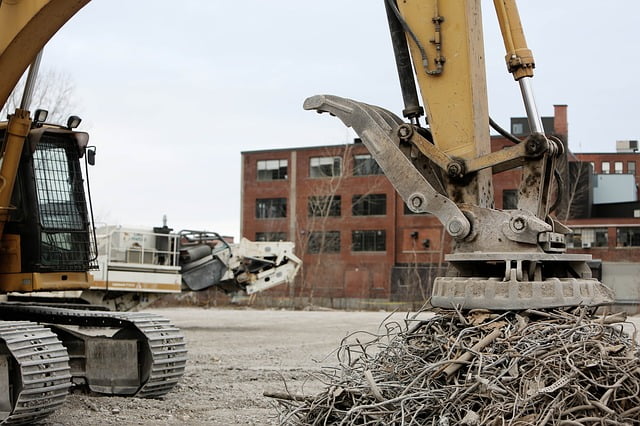
Reinforced concrete demolition creates a specific opportunity: once the concrete is crushed, magnetic separation pulls out the embedded rebar. That steel is then baled or bundled and sold to scrap dealers. It's a two-for-one — you recover aggregate from the concrete and saleable scrap from the steel in a single processing pass.
Separating Steel From Reinforced Concrete
Reinforced concrete demolition produces two recoverable materials simultaneously — crushed aggregate from the concrete matrix and steel from the embedded rebar network. Once the concrete is crushed down through a jaw or impact crusher, magnetic overhead drums or belt-mounted magnetic separators pull ferrous metal out of the material stream automatically. The rebar comes out in recognisable lengths and coils, ready for baling.
How Automated Sorting Systems Recover Metal From Mixed Waste
On sites where metals enter a mixed waste stream — common on renovation projects where selective demolition isn't always practical — automated sorting technology does the separation work downstream. Eddy current separators handle non-ferrous metals like aluminium, copper, and brass, using a rapidly rotating magnetic field to eject those materials from a conveyor line. Ferrous metals are handled upstream by magnetic separation before the eddy current stage runs.
The practical implication for site managers is that even imperfectly sorted loads can recover meaningful metal content at the processing facility. That said, cleaner source separation at the job site — keeping metals in a dedicated skip or bin — maximises recovery rates and often results in better pricing from scrap dealers who prefer clean, uncontaminated loads.
Revenue Potential From Scrap Metal Sales
Scrap steel prices are commodity-driven and fluctuate, but structural steel sections, clean rebar bundles, and copper wire consistently attract buyers. On a mid-size commercial demolition project, scrap metal revenue can offset a significant portion of overall waste disposal costs. Copper and aluminium, even in smaller quantities, return higher per-ton rates than ferrous steel — making electrical and HVAC demolition particularly worth sorting carefully.
4. Wood Waste Recycling
Wood is the most varied category of construction waste, and that variety determines how it gets recycled. Clean dimensional lumber from framing is worth far more than mixed scrap wood contaminated with adhesives, paint, or fasteners. Getting the most value out of wood waste comes down to how early and how carefully you separate it on site. For more insights on waste management, you might want to explore the differences between roll-off dumpsters and bagsters.
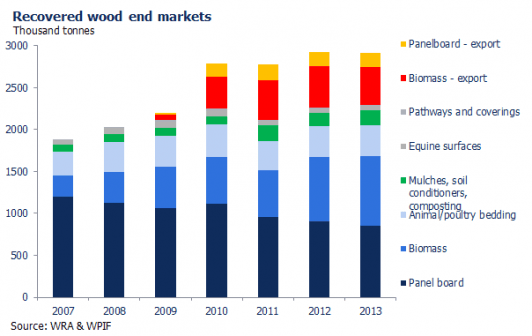
Untreated, unpainted dimensional lumber can go back into active use — either on the same project or sold to salvage dealers who supply the renovation market. Treated timber, plywood offcuts, and OSB scraps move into a different stream: chipping and grinding for engineered wood products, animal bedding, or biomass fuel. Even waste wood that can't be cleanly reused rarely needs to go to landfill when the right processing route is identified early.
Which Timber Grades Can Be Salvaged and Reused
Structural lumber in good condition — particularly larger sections like 2x10s, 2x12s, LVL beams, and glulam members — has genuine resale value in the salvage market. Habitat for Humanity ReStores actively accept donated dimensional lumber and building materials, which also provides the donating contractor with a potential tax deduction against the fair market value of the donated goods. Smaller framing offcuts below 18 inches are generally too short for structural reuse but can go into the chipping stream.
Processing Waste Wood Into Engineered Products and Biomass Fuel
Wood chips and coarse grindings from clean untreated timber feed into particleboard, MDF, and oriented strand board manufacturing — closing the loop back into construction products. Finer wood waste, including sawdust and shavings from site cutting operations, goes into animal bedding and compost applications. Biomass energy facilities accept a wide range of wood waste grades that don't qualify for material recycling, diverting them from landfill while generating energy. For more information on waste management, you can read about Veolia's waste solutions.
Treated wood — including CCA-treated lumber, painted timber, and composite materials — requires careful handling. Many standard wood recycling facilities won't accept it due to chemical contamination concerns. Treated timber needs to be segregated on site and directed to facilities equipped to handle hazardous or contaminated wood waste. Mixing treated and untreated timber on site is one of the fastest ways to downgrade an entire wood waste load from high-value to landfill-bound. For more information on sustainable management, visit the EPA's guide on construction and demolition materials.
5. Source Reduction at the Planning Stage
Every recycling method discussed so far deals with waste after it's already been generated. Source reduction is different — it's about preventing the waste from existing in the first place, which is always cheaper than processing it after the fact. This is the most underused cost-saving strategy in construction waste management, and it starts at the estimating and design phase, not on the job site.
How Batch Planning Prevents Material Overbuying
Overordering is the primary driver of avoidable construction waste. When materials arrive on site in quantities that exceed what the current work phase actually requires, the excess either gets damaged in storage, expires if it has a shelf life, or gets cut into unusable offcuts when the next phase demands different dimensions. Batch planning — ordering materials in smaller, work-phase-specific quantities rather than in one large upfront delivery — keeps inventory matched to actual demand. For more information on managing construction waste effectively, check out these commercial waste compliance red flags.
The upfront logistics cost of batch ordering is real: more delivery coordination, tighter scheduling, and less buffer against unexpected scope changes. But those costs are almost always smaller than the combined disposal and replacement cost of wasted materials, particularly on projects running over several months where storage conditions are variable, and theft is a factor.
Why Ordering by Section Reduces Short Shelf-Life Waste
Certain construction materials have practical shelf lives that are easy to underestimate. Bagged cement and mortar mix absorb atmospheric moisture and harden in the bag within weeks of opening. Adhesives, caulks, and sealants have manufacturer-stated shelf lives that affect bond performance. Ordering these materials by section — only what's needed for the current pour, the current floor, or the current facade zone — keeps inventory fresh and eliminates the waste that comes from discovering hardened or expired stock mid-project.
The same logic applies to materials that degrade under site storage conditions. Plasterboard stored flat on an uneven surface warps. Timber stored without proper stacking and covering absorbs moisture and twists. Ordering tighter to the work schedule reduces the time materials spend exposed to site conditions — and the proportion that arrives at the point of installation in a damaged, unusable state.
- Cement and mortar mix: Order per pour or per floor — not per project
- Adhesives and sealants: Check manufacturer shelf life before bulk ordering
- Plasterboard: Store vertically or flat on level bearers; order by room zone
- Structural timber: Cover and stack on bearers immediately on delivery; order by frame section
- Insulation batts: Keep in original packaging until installation; order by floor or zone
Tightening the ordering schedule takes discipline and good communication between site managers and procurement, but the savings in avoided waste disposal alone typically justify the extra coordination effort within the first few projects where the approach is applied consistently. For more tips on managing construction waste, check out these construction recycling tips.

Design Choices That Eliminate Waste Before Work Begins
Design decisions made months before groundbreaking determine how much waste a project generates. Specifying standard module dimensions that align with stock material sizes — designing wall lengths in 600mm or 1200mm increments that match plasterboard sheet dimensions, for example — eliminates the cutting waste that accumulates when architects specify dimensions without regard to material sheet sizes. Similarly, designing concrete pours to use standard formwork panel dimensions reduces both formwork waste and pour waste from non-standard edge conditions.
On-Site Sorting vs. Mixed Load Recycling
There are two ways construction waste gets recycled: you sort it on site before it leaves, or you throw everything into a mixed load and let a processing facility sort it downstream. Both work — but they don't return the same value, and the difference in recovery rates is significant enough to affect your project's bottom line.
Mixed load recycling is convenient. One skip, one collection, one invoice. But mixed loads often contain contaminated material — concrete dust coating timber, paint on metal, wet plasterboard mixed with clean aggregate — and that contamination forces processing facilities to downgrade or landfill portions of the load that would have had value if they'd arrived clean and separated. You pay the same collection fee either way, but you recover less material value and sometimes still pay a residual disposal fee on the contaminated fraction.
Why Site-Separated Recycling Recovers More Material Value
When materials are sorted at the point of generation — concrete in one skip, timber in another, metals in a dedicated collection bin — each stream arrives at a recycling facility clean and processable. Clean streams attract better pricing from scrap dealers, qualify for higher-grade recycled product manufacturing, and avoid the rejection fees that contaminated mixed loads can trigger. On a project generating significant volumes of any single material, the difference in recovered value between a clean separated stream and a mixed load is measurable in hundreds to thousands of dollars per skip load.
How to Set Up Designated Collection Zones on a Jobsite
Setting up site separation doesn't require elaborate infrastructure. The practical approach is to designate clearly marked collection zones during the site establishment phase — before demolition or construction waste starts accumulating. Color-coded skips or clearly labelled bays work well. Assign concrete and masonry to one zone, timber to another, metals to a dedicated bin, and general mixed waste to a separate skip for materials that genuinely can't be sorted. Brief the entire site crew at the start, not just supervisors — the people generating the waste need to know where it goes.
Keep the collection zones positioned close to the work areas generating the most waste. A concrete skip that's a five-minute walk from the demolition face will get ignored in favour of the nearest general waste bin. Proximity drives compliance far more reliably than signage alone. Revisit zone placement as the project progresses and waste generation patterns shift between trades. For more insights on maintaining compliance, be aware of commercial waste compliance red flags.
The Real Cost Savings From Construction Recycling
The savings from construction waste recycling come from three directions simultaneously: avoided tipping fees on material you don't landfill, avoided purchase costs on material you recover and reuse, and in the case of scrap metal, active revenue from commodity sales. On a mid-size commercial project, those three streams combined can represent a meaningful reduction in total waste management costs compared to a landfill-everything approach — and on large civil or demolition projects, the numbers scale considerably.
The contractors who treat waste as a recoverable resource from the planning stage consistently outperform those who treat it as an unavoidable disposal cost.
Frequently Asked Questions
Construction waste recycling raises a lot of practical questions, especially for site managers implementing it for the first time. The answers below cut straight to what matters operationally.
What construction materials can be recycled on a jobsite?
Nearly all common construction materials can be recycled. Concrete and masonry are crushed into aggregate. Steel and metals are sorted and sold as scrap or reused structurally. Timber — particularly clean dimensional lumber — is salvaged for reuse or chipped into engineered wood products and biomass fuel. Asphalt is reclaimed and reprocessed into new asphalt mix. Glass, plastics, carpet, and insulation all have established recycling streams, though the accessibility of those streams varies by region and facility availability. For more information on waste management practices, you can explore roll-off dumpsters vs bagsters as a solution for construction sites.
Does on-site concrete crushing save money compared to hauling it away?
Yes — on projects with sufficient concrete volume, on-site mobile crushing almost always saves money compared to haul-away disposal. The savings come from two directions: eliminating haulage costs and tipping fees for demolished concrete, and eliminating the purchase and delivery cost of virgin aggregate that would otherwise be brought in for sub-base and fill applications.
The break-even point depends on project scale. Mobile crusher hire has a day-rate cost, and that cost only makes sense when the volume of concrete being processed is large enough to offset it. As a rough guide, on-site crushing typically becomes economical on projects generating several hundred tons of concrete rubble or more. Below that threshold, hauling to an off-site recycling facility — rather than a landfill — is still the right call; you just won't recover as much value.
The location of the project also matters. Urban sites where tipping fees are high and haulage distances are long push the economics further in favor of on-site crushing. Remote sites where landfill tipping fees are lower, and aggregate is cheap may see a smaller financial advantage.
On-Site Crushing vs. Off-Site Recycling: Cost Comparison Overview
Factor On-Site Mobile Crushing Off-Site Recycling Facility Haulage cost Eliminated Full haulage cost applies Tipping fee Eliminated Reduced or waived at recycling facilities Aggregate purchase Eliminated (reused on site) Still required for site use Equipment cost Mobile crusher hire day rate None Best suited for Large volume projects (hundreds of tons+) Smaller projects or limited site space Revenue potential Aggregate reuse value (avoided cost) Low — facility keeps material value
How does source reduction differ from recycling in construction waste management?
Source reduction happens before waste exists. It means making design, planning, and procurement decisions that reduce the volume of material entering and leaving the site in the first place — ordering in smaller batches matched to work phases, specifying standard module dimensions that minimise offcuts, and designing concrete pours around standard formwork sizes. No processing required because there's no waste to process.
Recycling handles waste that's already been generated. It's essential, but it's always the second-best option compared to not generating the waste in the first place. The most cost-effective construction waste strategy combines both: source reduction at the planning stage to minimise waste volume, followed by disciplined recycling of whatever waste is unavoidable.
Can recycling construction waste help with LEED certification?
Yes. Under the LEED v4 rating system, the Materials and Resources category includes credits for Construction and Demolition Waste Management. Projects can earn points by diverting C&D waste from landfill through reuse, recycling, or salvage — and the threshold requirements specify minimum diversion percentages by weight or volume. Documenting your recycling program with material-specific tracking data, facility receipts, and diversion calculations is essential for claiming those credits. If you're bidding on projects where LEED certification is a client requirement or a competitive differentiator, a structured on-site recycling program isn't optional — it's part of the deliverable.
What is the easiest way to start a recycling program on a construction site?
Start with the highest-volume material on your specific project — usually concrete on demolition jobs or timber on new builds. Identify a local recycling facility that accepts that material, confirm their intake requirements and whether they charge a tipping fee or offer free drop-off, and set up a dedicated skip or collection zone on site for that single stream. Don't try to separate every material category simultaneously on your first project — pick one, get it working consistently, then add streams as your crew builds the habit.
Assign one person on site — ideally the site manager or a designated waste coordinator — with direct responsibility for waste stream compliance. When no one owns it, the separation discipline degrades quickly as project pressure builds. When someone is accountable, separation rates stay high throughout the project lifecycle.
Construction waste recycling is an essential process in the building industry, aiming to reduce the environmental impact of construction projects. By implementing effective waste management strategies, companies can minimise landfill usage and promote sustainability. One crucial aspect of this process is understanding the cost of dumpster rental, which can significantly affect overall project expenses. By choosing the right waste disposal methods, construction companies can not only save on costs but also contribute to a greener future.
Don't forget to watch our “5 Construction Waste Recycling Methods” video. If you have not seen it yet, watch it here.
[Published 9 May 2019. Updated and rewritten August 2026.]




I prefer to do my own project concerning waste I am sure. I know recycling construction waste recycling can be a money saver. It can help me a lot.