
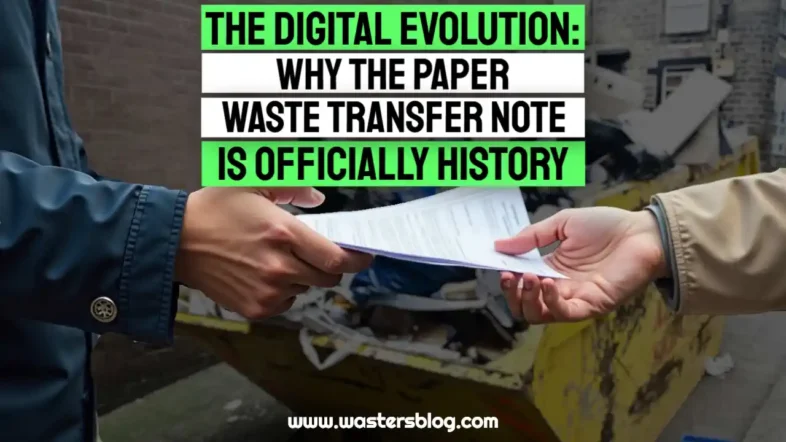
For decades, the UK waste industry was held together by a literal paper trail. If you’ve spent any time on a weighbridge or in a transport office, you know exactly what that looked like: crumpled Waste Transfer Notes (WTNs) stuffed into gloveboxes, rain-smudged signatures, and endless filing cabinets full of yellowing carbon copies.
It was a system built for a different century. While the rest of the world moved to real-time data and instant cloud syncs, the waste sector—one of the most vital parts of our national infrastructure—remained stuck in a manual loop. But as we move through 2026 and beyond, the paper trail hasn’t just slowed down; it has officially reached a dead end.
The introduction of Mandatory Digital Waste Tracking (DWT) has permanently shifted the landscape. This isn't just a minor update to the rules; it is a fundamental rewiring of how every tonne of waste is recorded, moved, and valued across England, Scotland, Wales, and Northern Ireland.
The Problem With the Old Way
To understand why the digital shift is so permanent, we have to look at what it replaced. The old paper-based system was, frankly, an invitation for chaos. It created a massive information gap that allowed waste crime to flourish, costing the UK economy an estimated £1 billion every year.
When records are fragmented and manual, it’s easy for rogue operators to hide. Fly-tipping, illegal exports, and the operation of unauthorized sites often relied on the anonymity of a paper note that could be easily falsified or lost. This wasn't just an administrative headache—it was an environmental catastrophe. Illegal dumping sites became toxic time bombs, risking leachate runoff into our soil and rivers.
By digitizing the industry, the government didn't just add a new layer of tech; they built a digital fortress. For the first time, we have a cradle-to-grave view of our resources. We know where waste begins, who carries it, and exactly where it ends up.
The New Reality: Life After the Digital Rollout
In this new era, the industry operates on a single, real-time national digital record. Whether you are a national waste conglomerate or a local man and van service, the standards are now the same.
1. The Death of the Anonymized Load
Every movement of waste now carries a Unique Tracking ID. This digital fingerprint follows the material from the moment it’s collected to the moment it’s processed. This transparency has leveled the playing field. Legitimate businesses—those who invest in staff training, proper licensing, and environmental safeguards—are no longer being undercut by cowboys who disappear into the shadows.
2. The 48-Hour Standard
One of the biggest culture shocks of the digital transition was the speed of reporting. In the paper days, you might file your notes at the end of the week—or the end of the month. Today, the standard is near-real-time. Receiving sites are generally expected to confirm the arrival and classification of waste within a 48-to-72-hour window. This ensures the national database is always live, allowing regulators to spot discrepancies or illegal activity before the trail goes cold.
3. Data as the New Currency
We’ve moved into an age of data hygiene. You can no longer get away with vague descriptions like general muck or construction debris. The digital system requires precision:
- EWC (European Waste Catalogue) Codes: Precise material classification is mandatory.
- SIC (Standard Industrial Classification) Codes: Identifying the exact activity that generated the waste.
- POPs (Persistent Organic Pollutants): Identifying high-risk materials, such as upholstered furniture, is now a critical safety and compliance requirement.
Who Carries the Weight of Compliance?
While the digital mandate covers the entire chain, the practical responsibilities are distributed across three main groups.
The Gatekeepers: Receiving Sites
Licensed waste sites—landfills, transfer stations, and Materials Recovery Facilities (MRFs)—are the hubs of the system. They are legally required to log every incoming load. If the data doesn't match or the carrier isn't registered, the system flags it instantly. For these operators, digital tracking isn't an option; it’s their license to operate.
The Movers: Carriers and Brokers
Even if you aren't the one processing the waste, you are the link in the chain. Modern carriers must ensure they are providing accurate digital data at the weighbridge. If a carrier shows up without the necessary digital pre-filing, they risk being turned away, leading to wasted fuel, lost time, and unhappy clients.
The Originators: Waste Producers
Whether you are a construction firm or a retailer, you are responsible for the waste you produce. The polluter pays principle is now digitally enforceable. Producers must ensure their waste is handed to a legitimate carrier who can provide a Unique Transaction ID.
The Man and Van Revolution
Perhaps the most visible change has been in the domestic sector. Historically, a householder could pay someone cash to take away an old sofa and wash their hands of it. If that sofa ended up in a country lane, tracing it back was nearly impossible.
Now, every private waste contractor must generate a digital record. As a consumer, you should expect a unique reference number. This isn't just paperwork—it’s your insurance policy. If a contractor refuses to provide a digital confirmation, it’s a massive red flag that they aren't a licensed operator.
Embracing the Tools of the Trade
The shift to digital doesn't have to be an administrative nightmare. The industry has split into two main ways of handling this new workload:
- API-First Integration: Most large-scale operators use waste management software (like Weighsoft or Hub360) that talks directly to the government's API. When a truck hits the weighbridge, the data syncs automatically. No double entry, no human error.
- The Mobile Edge: For smaller operators or those working in the field, mobile-first tools have become the gold standard. This is where services like waste-verified.co.uk come into play. By allowing users to capture info on-site and import it directly into the national portal, these tools bridge the gap between physical labor and digital compliance.

Why This Matters for the Future (The Circular Economy)
Beyond catching the bad guys, digital waste tracking is the linchpin of the UK’s Circular Economy goals. For a system to work where materials are reused and recycled indefinitely, we have to know where those resources are.
By closing the information gap, high-value materials are now being redirected into recycling and recovery streams rather than being lost to the black market. We are finally treating waste as a resource to be managed rather than a liability to be hidden.
Conclusion: Don't Just Comply—Compete
The digital revolution in waste management is no longer a future project—it is here. The businesses that have thrived in this new environment are the ones that didn't just look for the bare minimum way to comply, but those that embraced transparency as a competitive advantage.
Being Digital First tells your clients that you are professional, traceable, and trustworthy. It protects you from fines, streamlines your back office, and contributes to a cleaner, fairer industry.
The paper trail is dead. The digital footprint is here to stay. The only question left is: how efficient is your footprint?