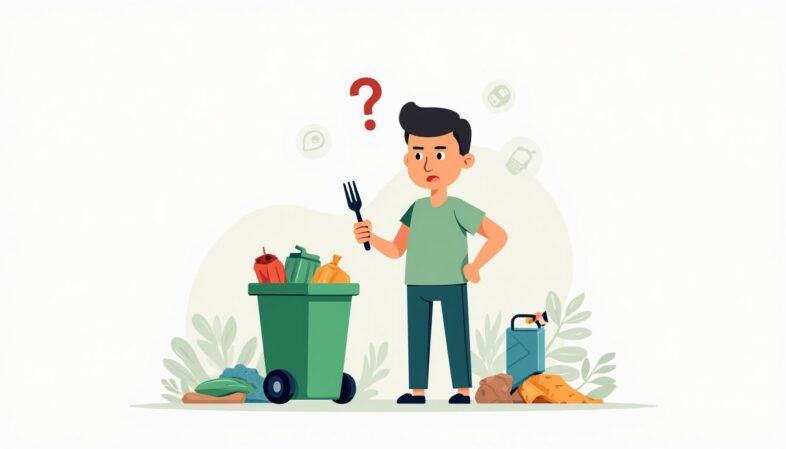
You want to help the planet – then consider Compostable Plastics. You carefully choose the fork labelled “compostable” instead of conventional plastic.
You drop it into your green bin with your food scraps, confident you've made the right choice.
Then you discover the truth. That fork won't be composted at all. It will likely end up in landfill or incineration, just like ordinary plastic. This frustrating reality affects millions of UK households trying to do the right thing.
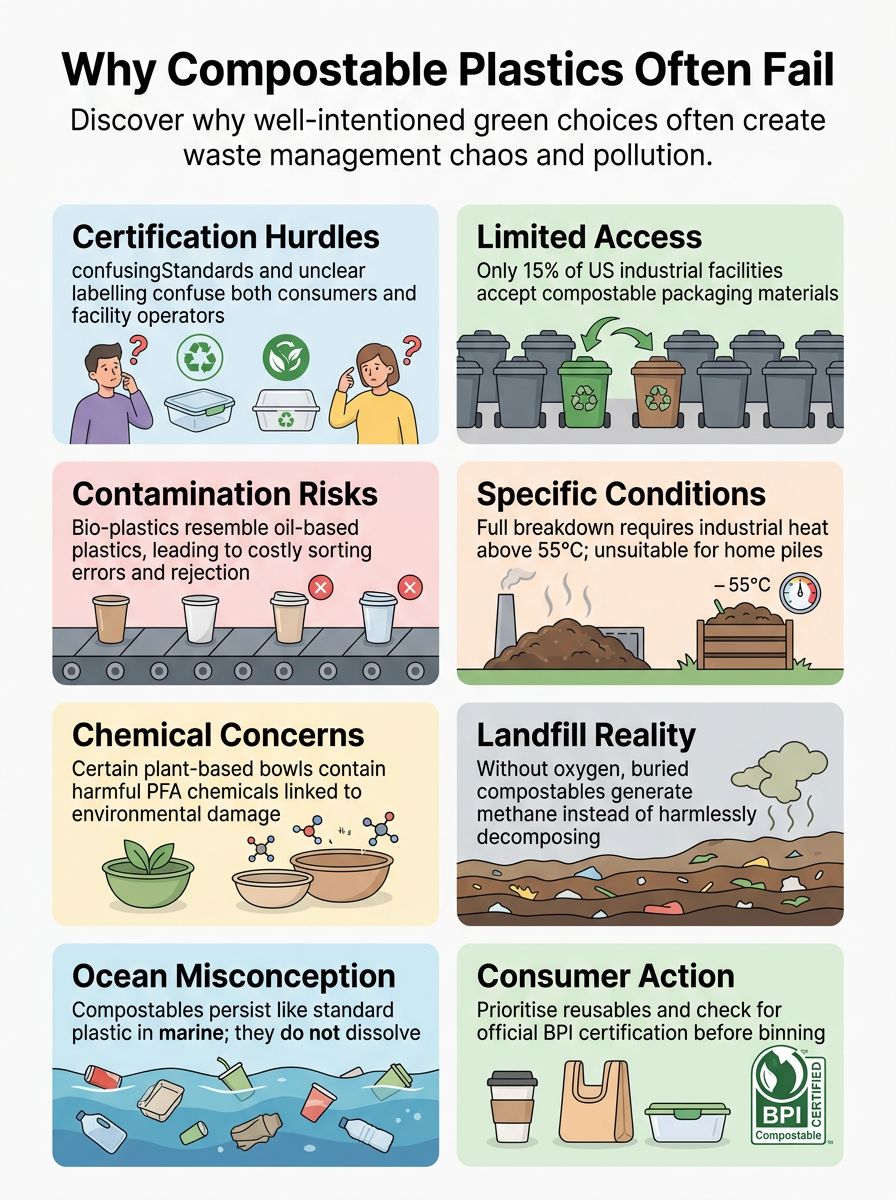
The problem runs deeper than you might think. A 2026 survey by BB-REG-NET found that 51% of UK adults remain unsure whether compostable packaging actually breaks down when collected with food waste. Confusion is compounded by inconsistent local authority policies where some councils accept compostables in food waste bins whilst others explicitly exclude them.
This guide reveals exactly why UK composting sites struggle with compostable plastics. You'll discover the infrastructure gaps that prevent proper disposal, the certification challenges that confuse consumers, and the practical steps you can take to reduce waste effectively in the UK system as it stands today.
Compostable Plastics – Key Takeaways
- Only around 27 UK composting plants accept compostable plastics, despite 272 permitted sites operating across England. At present, there is no UK-wide system for the collection and processing of these materials.
- Compostable plastic packaging must be certified to BS EN 13432 or BS EN 14995 standards to break down properly in industrial conditions. These standards require 90% degradation within six months at temperatures above 55°C.
- A 2026 survey revealed that whilst 40% of UK consumers believe compostable packaging breaks down properly with food waste, 51% remain unsure. Inconsistent council policies across the UK make disposal guidance unclear.
- Research from Fidra found high levels of harmful PFA chemicals in moulded fibre compostable packaging sold across UK high streets, contradicting environmental claims and potentially contaminating compost.
- When compostable plastics end up in landfill, they can release methane, a greenhouse gas roughly 30 times more potent than carbon dioxide, creating climate impacts rather than reducing them.
Issues Surrounding Compostable Plastics
Compostable plastics face serious barriers in the UK system. Most struggle to break down outside special industrial facilities.
Their disposal confuses consumers. This leads to more contamination in both green bins and recycling streams.
What are the certification and testing challenges for compostable plastics?
Certifying compostable plastics in the UK presents major hurdles. Products must meet strict BS EN 13432 standards for packaging or BS EN 14995 for non-packaging items such as bin liners.
These standards demand rigorous proof.
Materials must achieve 90% degradation within six months when exposed to carbon dioxide-rich environments. After 12 weeks, no more than 10% of fragments can exceed 2mm in size. Testing also screens for heavy metals and ecotoxic effects on plant growth.
In the UK, the Association for Organics Recycling operates a certification scheme in partnership with German body Din Certco. Products that pass receive a unique 7P certification number and can display the European Bioplastics' “compostable seedling logo.”
Certificates remain valid for only three years.
The certification body conducts market surveillance throughout this period, testing samples from shops to verify products still match their approved specifications. This process ensures accountability but adds cost and complexity for manufacturers.
Hard PLA bioplastics require even more extensive tests. These materials must prove they will fully biodegrade in industrial composting without harming food waste streams or producing toxic residues. Hidden additives in some biodegradable polymers can hinder decomposition or release greenhouse gases during breakdown.
Labelling confusion makes matters worse. There is no harmonised system across UK regions. The distinction between items suitable for home composting versus those requiring industrial facilities is lost on many consumers.
Why is access to industrial composting limited in the UK?
The UK infrastructure cannot handle compostable plastics at scale. University College London research confirms that currently, no UK-wide system exists for collecting, sorting or processing these materials.
The numbers tell a stark story.
According to City to Sea, only around 27 plants in the UK accept compostable plastics. These facilities use In-Vessel Composting (IVC) technology that can maintain the high temperatures these materials need to break down properly.
England has an estimated 272 permitted composting sites. The majority focus on green waste such as garden clippings. Most use simpler windrow composting methods that cannot reach the sustained temperatures above 55°C required for certified compostable plastics.
Anaerobic Digestion plants present a further challenge. Whilst England has seen growth in AD capacity for food waste, many of these facilities use screening systems to remove potential contaminants. This includes biodegradable plastics, which get filtered out before processing begins.
Around 51% of UK councils offer food waste collections. Of these, only 17% offer co-mingled food and garden waste collection. Even where collection exists, many councils explicitly exclude compostable packaging due to contamination concerns.
Composters face a difficult choice. Accepting compostable plastics risks preventing them from labelling their finished product as organic. This certification matters for their business, as PAS 100 certified compost commands higher prices in agriculture and horticulture markets.
WRAP research shows that less than 1% of UK plastic packaging is compostable today, yet proper processing facilities remain scarce.

How does consumer confusion affect compostable plastic use?
Consumer confusion drives serious problems with compostable plastics in the UK. A 2026 BB-REG-NET survey found that whilst 40% believe compostable packaging breaks down properly when collected with food waste, 51% remain unsure.
This uncertainty leads to mistakes.
UCL citizen science research revealed that 14% of sampled items tested were certified for industrial composting only. Another 46% had no compostable certification at all. People cannot distinguish between bio-based plastics, biodegradable plastics or standard packaging because colours and textures look similar.
The result is widespread contamination. Compostable plastics end up in the wrong bins. Some consumers place them in recycling, contaminating plastic waste streams. Others put non-compostable items in food waste bins, creating problems for composting facilities.
Confusion around flexible plastics is particularly acute. A survey found 29% dispose of films as general waste, whilst 28% take them to supermarket drop-off points. One in four mistakenly believe their household plastic collection will accept these items, even though very few councils provide such services.
When asked how they would dispose of items labelled “compostable,” responses varied widely. Only 42% indicated they would use garden waste bins. The rest were uncertain or chose incorrect disposal routes.
Inconsistent local authority policies compound the problem. Some councils accept compostables in food waste bins. Others explicitly exclude them. Without standardised national guidance, consumers face a postcode lottery for disposal options.
What are the environmental impacts of compostable plastics?
Compostable plastics create unexpected environmental problems. A 2018 Oregon Department of Environmental Quality report found compostable food service packaging had higher environmental impact than non-compostable options in 76% of cases.
The production process drives much of this impact.
Manufacturing bioplastics from crops requires significant land, water and agricultural chemicals. Growing corn, sugarcane or potato for plastics needs fertilisers and pesticides. This leads to soil acidification, water pollution and harmful algae blooms.
A 2026 survey identified that bio-based raw materials cost two to three times more than fossil-based equivalents. Yet they still contribute carbon dioxide emissions across their full life cycle. Whilst they reduce dependence on petroleum, the environmental benefit is smaller than many assume.
Toxic chemical contamination presents a serious concern. Research from Scottish organisation Fidra found high levels of harmful PFA chemicals in moulded fibre compostable takeaway containers sold across UK high streets. These “forever chemicals” contaminate compost and contradict environmental claims.
PFA chemicals require temperatures over 900°C to destroy. Even in industrial composting facilities, they remain in the final product. This contaminated compost gets applied directly to UK soils and crops, potentially entering food chains.
Disposal outcomes often disappoint. Life cycle assessment shows that the current UK system, with no dedicated collection and processing facilities, is not environmentally favourable. Most compostable plastics require strict industrial conditions to biodegrade properly.
When sent to landfill, they break down slowly or not at all. Worse, under anaerobic conditions they can release methane, a greenhouse gas roughly 30 times more potent than carbon dioxide. This creates climate impacts rather than reducing them.
How Composting Sites Are Affected
UK composting facilities struggle with compostable plastics in their daily operations. Discover the specific challenges they face.
Why do composting sites reject compostable plastics?
Many UK composting sites refuse compostable plastics because they cannot tell them apart from conventional plastic. Staff struggle to distinguish between standard plastic and certified compostable items such as bio-based bags or potato starch cutlery during processing.
Visual inspection alone fails.
According to Recycling Waste World, facilities cite contamination risks as the primary reason for rejection. Even BPI-certified products look identical to oil-based plastics. This creates sorting errors, increases labour costs and risks damaging equipment.
Industrial-scale composting systems demand precise conditions. Materials need sustained temperatures above 55°C for at least five days during the sanitisation phase. Many UK sites use windrow composting, which suits food scraps and yard debris but cannot maintain these elevated temperatures consistently.
In-Vessel Composting (IVC) facilities can handle compostable plastics, but England has only around 27 such plants. The majority of UK composting sites lack the equipment needed.
Time constraints pose another barrier. Commercial composters typically operate on 60 to 90-day cycles to produce finished compost efficiently. Much compostable packaging, particularly hard bioplastics, requires longer to break down completely, even when certified to standards.
Operators worry about additives. Some biodegradable packaging contains substances that could produce ecotoxic byproducts. This threatens their ability to sell compost as organic under PAS 100 standards.
Quality certification matters financially. Sites producing PAS 100 certified compost access higher-value markets in agriculture and horticulture. In 2019, England had 137 PAS 100 certified composting processes producing 1.6 million tonnes of certified compost. These facilities cannot risk contamination that would jeopardise their certification.
The Institute for Local Self-Reliance reports that the presence of mislabelled plastics jeopardises the quality of finished compost.
Many local authorities avoid accepting disposable products labelled as compostable. The operational costs remain high. Testing requirements add complexity. Concerns about fossil fuel residues in mixed batches persist.
What contamination concerns do composting sites face?
Composting sites face serious contamination from materials that look compostable but aren't. Food scraps mixed with non-compostable or non-certified bio-based plastics create major sorting difficulties for operators.
Visual similarity drives the problem. Compostable plastics, biodegradable plastics and conventional plastic items often appear identical to processing staff. This makes manual sorting nearly impossible at the speeds required for commercial operations.
UCL research shows there is currently no working technical solution for automatic separation and sorting of compostable plastics. Existing infrared systems at recycling facilities can identify some rigid bioplastics, but windrow composting sites lack this technology entirely.
Insufficient labelling worsens confusion. Products enter facilities with unclear or misleading claims. Some carry home-compostable logos without proper certification numbers. Others display biodegradable labels that mean nothing in practical terms.
The consequences are severe. Even small amounts of persistent conventional plastic spoil large batches of finished compost. This prevents facilities from earning organic certification for their product.
A 2023 study from Imperial College London examined microplastic emissions from an industrial green waste composting facility in southern England. Researchers found microplastics in compost from all processing stages at levels comparable to marine sediments. Screening stages showed mean concentrations of 9.0 particles per sample.
PVA plastics, often perceived as biodegradable, comprised 20% and 7% of detected microplastic in the final screening stages. This demonstrates that materials marketed as suitable for composting can persist in the end product.
Misplaced items create problems beyond composting. Compostable products that end up in recycling bins disrupt plastic recycling streams. They introduce materials that won't behave like conventional plastics during reprocessing, lowering the quality of recycled output.
Clear separation of food waste from packaging remains essential. Current UK practices fall short. This increases costs and creates processing challenges for operators at companies like Veolia and Biffa committed to diverting food waste responsibly.
Common Misunderstandings About Compostable Plastics
Many people hold mistaken beliefs about where compostable plastics can break down. Their actual behaviour in landfills, oceans and recycling plants tells a very different story.

Do compostable plastics contribute to ocean plastic pollution?
Compostable plastics can still pollute oceans. These materials are designed to break down in industrial composting sites, not in water or marine environments.
They need specific conditions to biodegrade.
Products labelled as compostable require high temperatures and particular bacteria only found in managed facilities. These conditions never exist in seawater. Laboratory tests sometimes overstate breakdown speed by using ideal temperatures and humidity levels that don't match reality outside controlled settings.
The Sustainable Packaging Coalition has made it clear that such materials persist like standard plastics if left in nature. This includes rivers, lakes and oceans. Compostable packaging will not disappear simply because it ends up in the sea.
Confusion between terms worsens the problem. People mix up “biodegradable,” “bio-based,” and “compostable.” Some assume these items will degrade everywhere. This mistaken belief leads them to throw packaging into regular bins or even litter it outdoors.
UCL research confirms there is a growing risk that mistaken beliefs about breakdown in any conditions may lead to increased littering. When compostable packaging enters the natural environment, it behaves much like conventional plastic.
The UK has introduced bans on certain single-use plastics to reduce marine litter. Compostable alternatives may introduce different problems if consumers misunderstand their limits or disposal requirements.
How do compostable plastics affect landfill conditions?
Compostable plastics behave very differently in landfills than most people expect. These materials require high temperatures, oxygen and microbial activity to break down properly. Landfills provide none of these conditions.
Research shows they often remain intact underground.
Biodegradable and compostable plastics don't break down well in landfill conditions. They need sustained temperatures above 55°C and aerobic environments. Landfills lack both. Instead of turning into carbon dioxide and water as they would in a composting facility, they persist much like traditional plastic waste.
When breakdown does occur, the process creates problems. Landfills typically operate under anaerobic conditions with low oxygen. This encourages decomposition that generates methane rather than just carbon dioxide.
Methane is a greenhouse gas roughly 30 times more potent than carbon dioxide over a century. One study estimated that 1 tonne of compostable plastics in landfill with 65% humidity generates about 0.094kg of methane annually. This has a global warming potential 28 times greater than carbon dioxide, resulting in 2.632kg CO2 equivalent emissions per year.
Some UK landfill sites capture this methane for energy recovery. England has 414 sites turning landfill biogas into electricity, with total capacity of 900MW producing about 3.04TWh of green electricity annually. Capturing this gas offers some benefit.
Many landfills still let methane escape into the atmosphere. About 60% of UK landfill sites handle biodegradable materials such as newspaper, card packaging and textiles. When compostable plastics join this waste, they contribute to emissions rather than reducing them.
The Ellen MacArthur Foundation notes that once in landfill, compostable packaging can take years to biodegrade. It releases the same harmful methane emissions as food waste during this process.
Advice for Consumers
You hold power to reduce plastic contamination through informed choices. Learn practical steps that work within the current UK system.
How can consumers reduce their use of compostable plastics?
Reducing compostable plastics use requires practical changes to daily habits. These steps lower negative environmental impacts more effectively than substitution alone.
- Choose products with minimal or no plastic packaging. Select loose fruit and vegetables whenever shops offer this option.
- Read labels carefully. Distinguish between genuinely compostable, biodegradable and recyclable plastics before purchasing.
- Invest in reusable containers, shopping bags and water bottles. These eliminate single-use alternatives entirely, whether bio-based or conventional.
- Avoid items marked “compostable” unless certified for home composting with the OK Compost Home logo. Many require industrial conditions your council may not provide.
- Check certification carefully. Look for BS EN 13432 or BS EN 14995 standards and the 7P number. Items without these may not break down as claimed.
- Sort food scraps separately from all packaging at home. This prevents plastic contamination in your green bin regardless of what labels claim.
- Research your local council's specific rules. Visit your authority's website or contact them directly. Policies vary significantly across the UK.
- Verify if your area has In-Vessel Composting facilities. Only around 27 plants in the UK can process compostable plastics properly.
- Limit use of biodegradable plastics. The Big Compost Experiment found that 60% of items certified as home compostable failed to fully disintegrate in UK home composters.
- Support businesses with sustainable practices. Give direct feedback to shops about reducing unnecessary food packaging.
- Consider post-back schemes. Companies like Vegware offer Composting Collective services, though these cost around £20 per box and only accept their certified products.
- Prioritise waste prevention over substitution. WRAP research confirms that 77% of UK citizens believe compostable plastic is better for the environment, yet infrastructure cannot support this at scale.
What is the proper way to dispose of and compost these plastics?
Proper disposal of compostable plastics depends on certification and local infrastructure. Follow these specific steps to ensure materials break down as intended.
- Check for certification marks before disposal. Look for the BPI logo, BS EN 13432 standard or the seedling logo with a 7P number. Only certified items will biodegrade properly in industrial facilities.
- Contact your local council first. Policies vary significantly across the UK. Around 51% of councils offer food waste collections, but only 17% accept compostable packaging.
- Place certified items in your food or garden waste bin only if your council explicitly permits this. Check your authority's website or phone them to confirm.
- Keep compostable plastics out of standard recycling bins. These items contaminate recycling loads even though they look like conventional plastic. Food residue on packaging makes contamination worse.
- Avoid disposing of non-certified items labelled “biodegradable” with properly certified compostables. Misleading labels cause sorting problems and disrupt facility operations.
- Note the new government guidance from May 2025. Under UK Simpler Recycling rules, councils do not need to collect plastic packaging or items labelled as “compostable” or “biodegradable,” including coffee pods.
- Use only home-compostable certified items in residential compost heaps. Look for the OK Compost Home certification from TÜV Austria. Standard BS EN 13432 items require industrial temperatures.
- Understand that most PLA plastics cannot break down at home. These materials need sustained temperatures of 55-60°C found only in In-Vessel Composting facilities.
- Separate packaging components before disposal. Remove non-compostable labels, sleeves or liners from compostable containers where possible.
- Place items in general waste if your council does not accept compostables. This prevents contamination of both composting and recycling streams.
- Remove visible contaminants from food scraps before adding to green bins. Better sorting improves compost quality and reduces facility costs.
- Report incorrectly labelled packaging to your council. Clear feedback helps authorities address consumer confusion more effectively.
Conclusion
UK composting sites face serious challenges with compostable plastics. Only around 27 facilities can process these materials properly.
Mislabelling and visual similarity make sorting nearly impossible. This creates plastic contamination in finished compost and threatens organic certification.
Consumer confusion runs deep. A 2026 survey found 51% of UK adults remain unsure whether compostable packaging actually breaks down. Inconsistent council policies across the country make proper disposal a postcode lottery.
Environmental concerns extend beyond infrastructure. Research from Fidra reveals harmful PFA chemicals in moulded fibre packaging sold on UK high streets. When these items reach landfills, they release methane, a greenhouse gas 30 times more potent than carbon dioxide.
The path forward requires careful choices. Check for BS EN 13432 certification and your council's specific policies. Prioritise reusable alternatives over any single-use option, whether compostable or conventional.
Real sustainability needs proper infrastructure, clear labelling and informed consumers working together.
FAQs
1. What makes compostable plastics difficult to process at composting facilities?
Compostable plastics are difficult to process because most UK facilities lack the specific high temperatures and 12-week processing times required by BS EN13432 standards to break them down. Facility operators cannot easily distinguish these items from conventional materials, meaning they frequently remove them to prevent plastic contamination in the final compost.
2. How do compostable plastics differ from biodegradable plastics and bio-based plastics?
Compostable plastics fully break down into carbon dioxide, water, and biomass within a strict timeframe under industrial conditions, whereas biodegradable plastics decompose over an unspecified period and often leave microplastics behind. Bio-based plastics are simply manufactured from renewable plant sources rather than fossil fuels, meaning they are not always designed to be biodegraded at all.
3. Can compostable plastics be processed alongside food scraps and food waste?
Although they seem ideal for collecting food scraps, compostable packaging is widely rejected by UK anaerobic digestion facilities because it requires oxygen and months to decompose, unlike soft food waste which breaks down rapidly.
4. Why do composting facilities worry about plastic contamination from compostable products?
Visual sorting machinery cannot reliably separate compostable items from regular fossil-based materials, creating a severe risk of plastic contamination. UK facility operators prioritise producing clean agricultural soil, so they routinely reject anything resembling plastic to ensure entire batches are not ruined and sent to landfill.
References
- ^ https://www.researchgate.net/publication/387525530_Certifications_and_testing_methods_for_biodegradable_plastics
- ^ https://sustainablepackaging.org/wp-content/uploads/2023/07/UnderstandingCompostablePackagingGuide.pdf
- ^ https://www.plasticstoday.com/packaging/the-us-composting-industry-has-a-plastics-problem (2024-03-11)
- ^ https://www.sciencedirect.com/science/article/pii/S0959652623014695
- ^ https://pmc.ncbi.nlm.nih.gov/articles/PMC2873018/
- ^ https://www.sciencedirect.com/science/article/pii/S2666086522000157
- ^ https://pmc.ncbi.nlm.nih.gov/articles/PMC8160376/
- ^ https://www.eea.europa.eu/en/analysis/publications/biodegradable-and-compostable-plastics-challenges-and-opportunities (2020-08-27)
- ^ https://pmc.ncbi.nlm.nih.gov/articles/PMC6946947/
- ^ https://pmc.ncbi.nlm.nih.gov/articles/PMC11373150/
- ^ https://www.sciencedirect.com/science/article/pii/S0956053X23005184