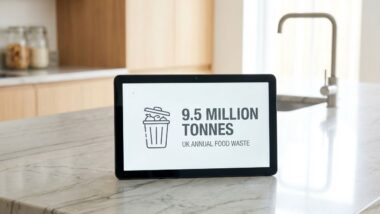

Every year, the UK makes hundreds of millions of tonnes of waste. This waste is then treated, recycled, and turned into energy. This is now a huge business worth billions of pounds.
This list shows the biggest waste management companies in the UK in 2025. It looks at their size, reach, and the services they offer. Millions of tonnes of waste go through their systems every year.
Since 2000, the industry has changed a lot. Big companies have grown by merging and changing their names. Now, they do more than just clean up. They also recycle, use energy recovery facilities, and manage waste under strict rules.
What makes a company big has changed too. The best ones have both local and national services. They also focus on making waste management more sustainable. This means using less landfill and finding new uses for materials.
Key takeaways
- This ranking is based on our “guestimated” turnover and looks at the size and reach of waste management companies in the UK in 2025, generally based on 2023 data. It provides readers with a “feel” for the comparative importance of each company, and should only be used for general company comparisons.
- The top companies handle millions of tonnes of waste every year through their full range of services.
- The market has been shaped by many major mergers and rebrandings since 2000. Mergers in recent years have been fewer. Probably the most important in recent years has been the sale of Viridor.
- Today's leaders offer recycling, treatment, and energy recovery, not just disposal.
- Many companies also manage regulated and hazardous waste under strict rules.
- Investing in sustainable waste solutions is key to their growth, resilience, and following the rules.

UK waste management market snapshot for 2025
In 2025, the UK's waste system is key to daily life. It keeps places clean and safe. Waste management companies in the UK work hard to keep things running smoothly.
The market meets local needs. Many companies focus on reliable service. Others work on reducing landfill use.
Why turnover matters in waste management services
Turnover shows how big a company is. In waste management, size means more resources. This is important for keeping services going.
It also shows how well a company handles different types of waste. Companies need to keep things running smoothly. This includes training staff and following rules.
Market leaders and combined revenue context
The 5 top companies in the market are big. They have a lot of money to invest. This sets the standard for others in the industry.
| Operator group (UK) | Turnover (£Billion) estimated based on latest 2023 data)* | Market share | What the scale often supports |
|---|---|---|---|
| Veolia | About 3Bn | Highest by a big margin | Large treatment networks, recycling capacity, and compliance-led operations |
| Biffa | About 1.5Bn | 50% or less than Veolia | National collections footprint and integrated processing routes |
| SUEZ | About 3/4Bn | Around 10% | Resource recovery focus with established infrastructure and reporting |
| Viridor | Between 1/2Bn & 3/4Bn | Slightly less than 10% | Energy recovery assets and diversion from landfill across regions |
| FCC Environment | About 1/2Bn | Over 5% | Energy-from-waste capacity alongside local authority partnerships |
| Others | About 11/2Bn | Between 15% and 20% estimated | Specialist and regional providers serving councils, commerce, and industry |
Note: We are not financial experts, so don't rely on our figures.
Key policy pressures shaping revenues in 2025
Policy changes will affect waste management in 2025. Landfill tax will increase, making recycling more attractive. This will change how waste is handled.
Carbon policy is also important. The UK Emissions Trading Scheme will cover waste incinerators. This will add costs and encourage companies to reduce emissions.
Reducing landfill is good for the climate. Waste is a big source of methane. By using energy recovery, companies can help the environment and manage risks.
Methodology: how this turnover-based listicle is ranked
This list ranks waste management companies in the UK by their very approximate turnover. It's a clear way to compare their size. It also shows which companies rank for the most coverage and assets.
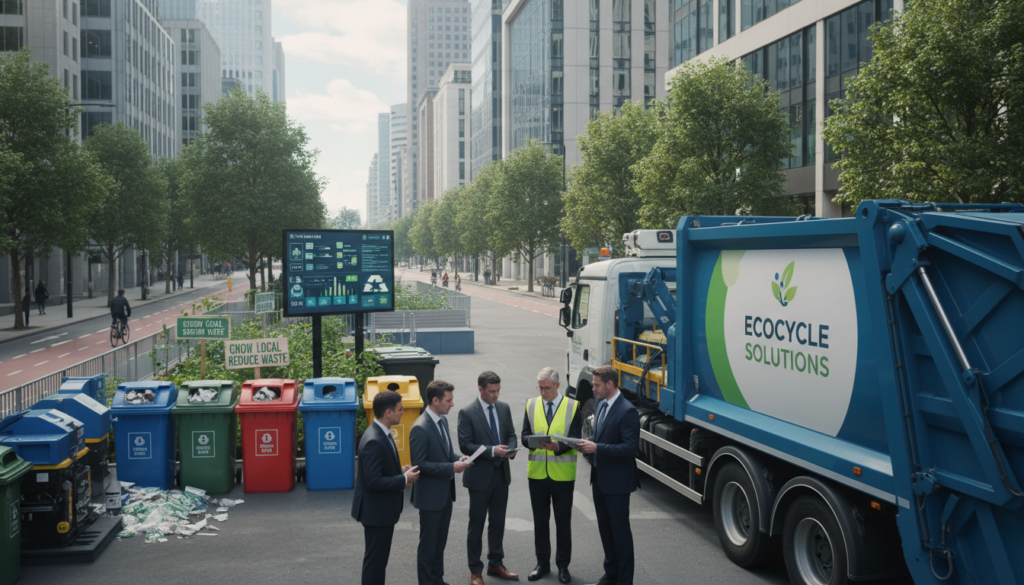
AI images are shown throughout for illustrative purposes only. They do not show real scenes or real people.
Turnover doesn't measure quality. It shows how much work a company does, how many sites they have, and if they are larger and more profitable, the more they can invest in new technology.
Turnover figures used and what they represent
The list uses estimated turnover figures extrapolated from 2023 figures*.
Even smaller companies are active in the UK. Mick George Ltd has a turnover which is most likely to be between £250m and £300m, and DS Smith Recycling UK probably has a similar, somewhat lower turnover. We think that Reconomy and Renewi have a slightly lower current turnover than that, based on past years' data.
Turnover shows how much a company can do. It shows their approximate comparable fleet size, sorting capacity, and, if profitable, the relative potential they are likely to have to invest in green technology. The more their shareholders give them investment, the better they can keep up with increasingly stringent environmental rules and fund the introduction of new producer responsibilities.
For example, investment must now go into EPR. Under EPR, producers must accept and pay for recycling things like drink cans. That means consumers must start paying a deposit on items they buy with the empties they return to the shop, placed in a reverse vending machine that will credit them for each bottle or can returned.
Scope: UK operations vs global parent companies
The list focuses on UK operations. Even big companies like Veolia, which operates in at least 35 countries, are ranked by their UK turnover. Veolia's global turnover is something like €25bn in round figures, but the UK figure is less than a fifth of that.
SUEZ, which operates in about 70 countries, is ranked by its UK turnover of somewhere near 3/4Bn is a small proportion. This helps focus on what UK customers can expect from these companies.
How multi-service operators are compared fairly
Many companies offer a range of services. They collect waste from local authorities, businesses, and more. The list ranks them by turnover, but also notes their differences.
Industrial buyers look at a company's ability to handle waste and meet regulations. They also look at the quality of materials they can recycle. This is different from just looking at revenue.
The list reflects years of changes in the industry. Companies have merged and rebranded. For example, SITA UK became SUEZ in 2015, and FCC Environment was formed in 2012.
| Company (UK-focused) | Probable ranking | How the figure is treated in this list | What turnover can indicate for sustainable waste solutions |
|---|---|---|---|
| Veolia Environmental Services UK | 1st – Top | UK revenue used, not global | Capacity to fund compliance upgrades and large facility networks |
| Biffa | 2nd | Turnover-led placement within UK market | Scale of collections and ability to invest in sorting and treatment |
| SUEZ Recycling and Recovery UK | 3rd | UK revenue used, not worldwide footprint across ~70 countries | Resource recovery infrastructure funding and reporting capability |
| Viridor (Pennon Group) subject to revision due to sale and sale of parts of the business in 2020** | 4th? | Turnover compared on the same UK basis but pre the sale of parts of the business | Strength to support energy recovery assets and decarbonisation readiness |
| FCC Environment | 5th | UK turnover used post-2012 formation history | Investment capacity for EfW operations and emissions controls |
| Mick George Ltd | 6th | Included as mid-tier UK operator | Regional network scale and construction-linked throughput signals |
| DS Smith Recycling UK | 7th | UK unit turnover used for comparability | Closed-loop material recovery support and stable end-market links |
| Reconomy | 8th | Turnover used alongside service-model context | Compliance-led services and data-driven routing for waste streams |
| Renewi | 9th | UK turnover used for list placement | Waste-to-product focus and measurable recycling outcomes |
| Tradebe Environmental Services | 10th | Specialist turnover compared within UK scope | Regulated treatment capacity and controlled handling standards |
| Cory Riverside Energy | 11th | Specialist operator ranked on turnover basis | Energy recovery model scale and long-term infrastructure funding |
| SRCL (Stericycle) | 12th | Clinical stream specialist included by turnover | Investment headroom for traceability, safe handling, and compliance |
Note: Rankings are indicative only and approximate, and when figures are published for 2025, they may be shown to be incorrect.

Veolia Environmental Services UK turnover and footprint
Veolia Environmental Services UK is a big name in waste management. It has a large presence in the UK. The company is part of a global group that works in 35 countries, employs in the region of 80,000 people, and reportedly makes about €5bn in turnover worldwide. But our ranking is based on its UK sales turnover alone.
Reported turnover: leading market share
Veolia's UK has the biggest share of the market. This makes its services a potential leader in pricing, capacity, and investment for big contracts, due to economies of scale.
| UK indicator | Assumed figure | What it signals in day-to-day operations |
|---|---|---|
| Turnover (UK) | About 3Bn | High volume across collections, processing, and treatment, with resilience across mixed waste streams |
| Market share (UK) | Say between 35% & 45% approx. | Strong presence across local authority and commercial routes, influencing capacity planning and standards |
| Countries of operation (group) | 35 approx. | Transfer of proven methods, compliance practice, and technology into UK delivery where suitable |
| Workforce (group) | 80,000 people approx. reported | Specialist skills across engineering, operations, and environmental compliance, supporting complex sites |
| Revenue (group) | About €25bn approx. | Access to capital and long-term programmes that support upgrades in UK infrastructure |
Service range: recycling facilities, treatment and environmental management companies' capabilities
Veolia works as an integrated operator, not just a single provider. This means household waste can go to recycling facilities. Residual waste goes to treatment for safety and compliance.
This structure helps track materials better. It supports circular economy goals and reduces landfill. Waste management works best when all steps are planned together, not separately.
Energy recovery and sustainability initiatives (including carbon capture trials)
Veolia focuses on renewable energy from waste. London's SELCHP is a good example, providing electricity and heat. This keeps value in the system when recycling isn't possible.
Veolia has also tested carbon capture on ERFs. This is for a future where UK ETS carbon pricing applies to energy-from-waste. The goal is to reach net zero by 2050, with tighter emissions and investments in the circular economy.
Biffa Group turnover and national rubbish collection services scale
Biffa is a top waste management company in the UK. It makes sure weekly rubbish collections are sorted and treated. This approach is key for reliable waste services in the UK.
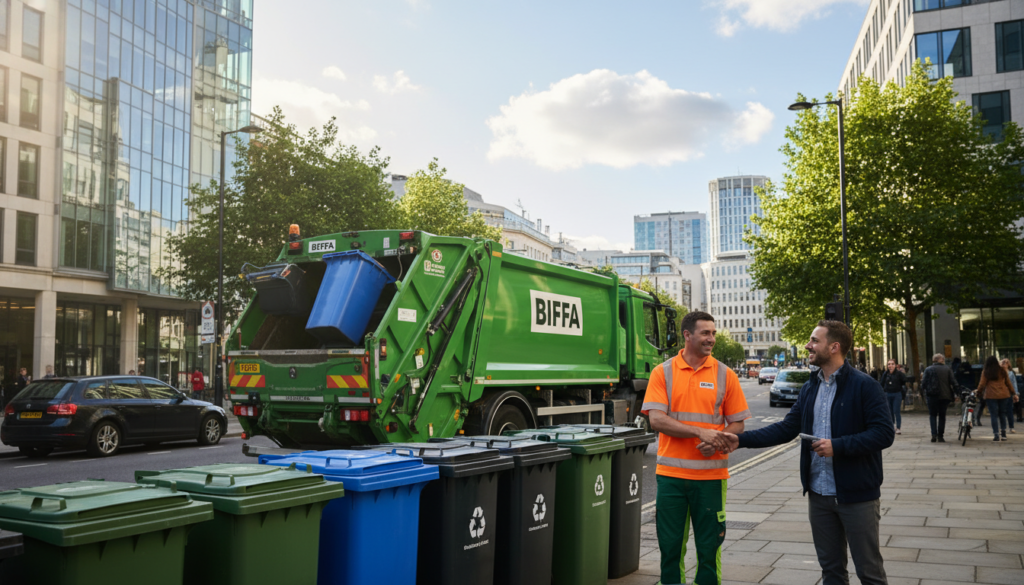
Reported turnover: about 1.5Bn
Biffa's revenue is around 1.5Bn, making it the second largest in the UK. Its success comes from efficient rubbish collection services. This is thanks to good planning and teamwork.
Operational scale: 2.5 million households approximately served weekly, and 4 million+ bins emptied
Biffa collects from about 2.5 million households every week. It empties more than 4 million bins across Britain. This consistent service is crucial for the UK's waste management.
Household waste goes to various facilities for processing. This helps reduce contamination and increase recycling rates. It's a key step in waste management.
Role in integrated waste disposal companies' networks
Biffa's national network helps manage waste peaks and dips. This makes it easier for facilities to plan and maintain services. Stable waste flow is essential for quality and efficiency.
In June 2024, Biffa bought Hazrem Environmental. This added hazardous waste services in South Wales and South West England. It's great for businesses needing a single waste management partner.
| Operational signal | What it indicates for service delivery | Where it tends to land in the system |
|---|---|---|
| About 2.5 million households are served each week | High route density and predictable weekly volumes | Supports planning for uk municipal waste companies and their collection calendars |
| More than 4 million bins emptied | Large-scale round completion and frontline service capacity | Feeds downstream sites used by waste management companies uk for sorting and treatment |
| National haulage and depot coverage | More consistent inputs and fewer missed handovers | Helps rubbish collection services deliver steadier loads to MRF, AD, and ERF infrastructure |
| Hazrem Environmental acquisition (June 2024) | Broader hazardous and liquid collection capability for industry | Strengthens compliance-focused routes alongside other waste disposal companies |
| Contract pricing and cost controls | Greater sensitivity to policy-driven cost changes | Matters as landfill tax and UK ETS pressures shift residual economics across the UK |
SUEZ Recycling and Recovery UK turnover and resource recovery focus
SUEZ Recycling and Recovery UK is a top name in waste management in the UK. It focuses on resource recovery. Since 2015, it has been known as SUEZ Environnement UK, showing its commitment to better sorting and reuse.

All images in this article are AI-generated! Some are more “real” than others…
Reported turnover: about £0.75Bn
The company's turnover is about £0.75Bn. This makes it one of the biggest in the UK by revenue. The SUEZ group works in 70 countries with over 40 brands, but its UK turnover is key.
From collections to recycling facilities and recovery infrastructure
SUEZ Recycling and Recovery UK offers a full service. It starts with collections and ends with recycling facilities. This helps reduce waste sent to landfills.
It focuses on recycling dry waste and organics. Food waste is turned into biogas. Recycled materials are used again in supply chains.
Data-led reporting, diversion from landfill and sustainable waste solutions
The company tracks waste closely. It looks at tonnages, biogas, and emissions. This helps show how much waste is diverted from landfills, and digital waste tracking is being made a legal requirement, but probably not until 2027.
In April 2026, the landfill tax will rise. The UK ETS will also increase costs for carbon-emissions-heavy waste if implemented during the latter part of 2026.
The Simpler Waste rules will be implemented for the first time in all household collections in England. This makes better sorting and more source-separated organics treatment important.
| Operational focus | What SUEZ typically tracks | Why it matters in 2025 |
|---|---|---|
| Collections and transfer | Tonnages by stream and route, contamination notes, service reliability | Cleaner inputs improve output quality and cut reprocessing costs at recycling facilities |
| Recycling and sorting | Capture rates, residue levels, bale quality, reject trends | Supports stronger material recovery and reduces landfill exposure for waste management companies uk |
| Organics and recovery | Biogas volumes, biomethane potential, digestate handling, emissions measures | Helps quantify diversion benefits and strengthens the business case for sustainable waste solutions |
Viridor (Pennon Group) turnover and energy recovery performance – Sold & Rank is Now Subject to Alteration Awaiting Post 2020 Sales Data**
In 2020, shareholders approved the sale of Viridor, Pennon’s recycling and residual waste business, to Planets UK Bidco Limited (Funded by KKR.).
Viridor has been a top waste management company in the UK. It focuses on treating waste, recycling, and making energy. This has been a great for businesses looking for reliable waste services.
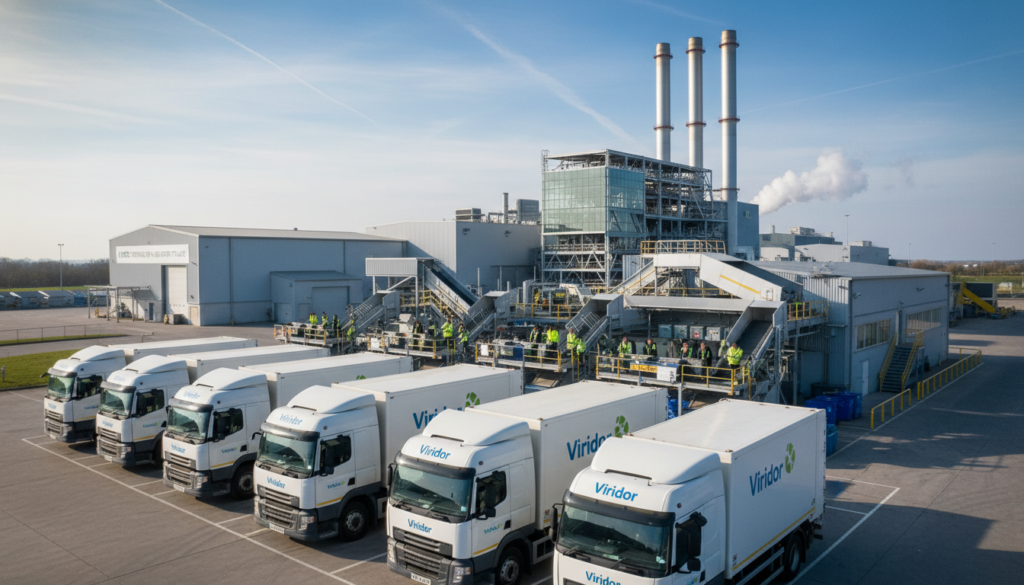
This facility does not exist. It is simply an AI image concept.
Reported turnover: between 1/2Bn & 3/4Bn
Viridor's turnover is most likely between 1/2Bn & 3/4Bn but we don't have any current data. This makes it a big player in the UK's waste sector. It's part of Pennon Group, which invests in infrastructure for local and commercial needs.
Viridor joined Pennon Group in 1993 for £1.5bn. It grew by buying Churngold’s waste business in 2003, Thames Waste Management in 2004, and Somerset LAWDC Wyvern Waste in 2006. This increased its capacity and services across the UK.
Energy recovery scale signals: 2,100 GWh exported and 3.5 million tonnes diverted from landfill (FY2024)
In FY2024, Viridor sent over 2,100 GWh of power. It also kept 3.5 million tonnes of waste out of landfills. This shows its energy recovery work is big and effective.
These numbers help buyers see how well waste companies do. They show if a company can handle waste well and keep plants running smoothly.
Decarbonisation readiness: carbon capture development at Runcorn
Viridor is working on making its energy recovery cleaner. It's developing carbon capture at Runcorn. This is important as the UK gets stricter on carbon emissions.
Keeping operations running smoothly is also key. Waste companies can face problems like fires. These can cut their capacity and disrupt services.
| Operational lens | What it shows in practice | Why it matters to waste management services |
|---|---|---|
| Turnover (about £648 million) | Scale of contracted work and infrastructure-backed delivery | Helps benchmark waste disposal companies on financial weight and service reach |
| More than 2,100 GWh exported (FY2024) | Power output linked to energy recovery utilisation | Signals steady treatment performance for residual streams |
| 3.5 million tonnes diverted from landfill (FY2024) | Throughput indicator for treatment capacity and routing | Supports sustainable waste solutions targets and landfill reduction plans |
| Carbon capture development at Runcorn | Preparation for stricter emissions expectations | Shows decarbonisation readiness, a growing differentiator among waste management companies uk |
| Fire events risk at processing sites | Potential capacity loss and re-routing pressure | Highlights resilience planning needs for waste management services continuity |
FCC Environment turnover and energy-from-waste capacity
FCC Environment is a top waste management company in the UK. It offers daily collections and big treatment plants. This way, waste moves smoothly through the system.
This approach is great for clients looking at waste disposal companies. It means steady booking slots and clear haulage plans. It also helps recyclables go to recycling facilities and keeps waste on track.
Reported turnover: about 1/2Bn
In the UK, FCC Environment has reported revenue of About 1/2Bn in the UK. It shows a wide reach in municipal and commercial contracts. Prices and performance are linked to service levels.
The company was formed in 2012 from the merger of FOCSA SERVICES and Waste Recycling Group. Before that, FCC bought Waste Recycling Group for £1.4bn in 2006.
Operational throughput: 6.9 million tonnes managed (2024)
FCC Environment managed 6.9 million tonnes in 2024. This shows it covers a lot of ground in waste management.
For those buying waste services, this volume is important. It provides economies of scale that can help an operator handle different waste types and peaks. It may also enable investment in the latest recycling facilities for sorting waste.
Energy-from-waste scale: around 330 MWe capacity in the UK
FCC Environment is big in energy recovery in the UK. This makes it a key player in waste management.
In London, the Jenkins Lane ERF (Newham) is an example. It's part of a network that includes collections, MRFs, and ERFs. This supports recycling and reduces landfill.
For customers, reliability is key when choosing waste disposal companies. Downtime or maintenance can be risky. So, many keep backup options for waste services.
waste management companies uk mid-tier by turnover: key challengers
This tier is just below the big names. They keeps waste moving for builders and local businesses. In 2025, landfill tax and UK ETS will push for better sorting and recycling.
Customers like it for its strong local service and focus on specific materials. It also helps councils and contractors use recycling better.
Mick George Ltd provides regional construction-led waste management services
Mick George Ltd has a substantial revenue and over 40 years of experience. It offers skip hire, demolition, and aggregate supply with collection and processing.
This mix is great for fast projects. It keeps materials moving and paperwork in order.
DS Smith Recycling UK – closed-loop paper/card recycling facilities
DS Smith Recycling UK has a substantial revenue and focuses on recycling paper and cardboard. It sorts fibre for reuse, helping businesses save money and meet circular economy goals.
Their method cuts down on contamination and improves bale quality. It keeps fibre in a loop, not mixed with other waste.
Reconomy turnover and compliance-led, tech-enabled environmental management
Reconomy has a substantial revenue and uses technology for compliance. It helps construction, commercial, and industrial clients with smart tracking systems.
Its digital platform tracks waste, flags issues, and optimises disposal. This makes environmental management more valuable, with clearer audit trails and reporting.
Renewi turnover and “waste-to-product” sustainable waste solutions
Renewi has a substantial revenue in the UK mid-tier list. Renewi was formed in 2017 through the merger of UK-based Shanks Group plc and Dutch recycling company Van Gansewinkel Groep. It increasingly plans to turn waste into raw materials, reducing virgin input use and waste disposal.
Its performance has been strong with steady investment in sorting and end markets.
Specialist waste disposal companies – the lower-ranked tier: hazardous, clinical and energy recovery
Specialist operators handle the tough jobs you don't see. They deal with risky waste that can ruin recycling or harm workers. For waste management companies in the UK, this work keeps things running smoothly and keeps us safe.
In 2026, things will get tighter. Higher landfill tax means more waste will be treated, not dumped. The UK's ETS changes when they arrive in 2027 will also make incineration more efficient and green.
This pressure is on all waste companies, but more so for those dealing with these special wastes.
Tradebe Environmental Services turnover and hazardous industrial treatment
Tradebe Environmental Services has a network across the UK for hazardous waste. This waste needs special care to avoid polluting and is big in recycling and recovery.
They follow strict rules to keep things safe. In 2024, they got a permit for high-temperature incineration. This shows they're serious about treating waste safely before it's reused.
SRCL (Stericycle) turnover and clinical/medical waste streams
SRCL (Stericycle) focuses on medical waste in Britain. Their clients, such as hospitals and labs, need careful handling to keep everyone safe.
This helps other waste companies in the UK. It means less danger in regular bins. It's a key part of keeping waste safe and traceable.
Cory Riverside Energy turnover and Thames-side energy recovery model
Cory Riverside Energy has a significant turnover and has a big facility on the Thames. It turns London's waste into electricity for about 160,000 homes every year.In 2021, it was rebranded simply as “Cory” – Ukstartupblog.
In 2020, Cory received planning permission to build a second energy-from-waste facility, Riverside 2, adjacent to its existing one in Belvedere – Ukstartupblog
They use barges on the Thames to move waste. This cuts down on road miles and pollution. As costs for energy-from-waste go up, they're focusing on making their plants more efficient.
| Specialist operator | Reported rank by UK revenue | Main waste stream | Operational focus | Why it matters to uk municipal waste companies |
|---|---|---|---|---|
| Tradebe Environmental Services | 1st (Top) | Hazardous industrial waste | Multiple UK treatment centres; high-temperature destruction under strict permitting | Stops hazardous items contaminating general loads and supports compliant diversion from landfill |
| SRCL (Stericycle) | 3rd | Clinical and medical waste | Secure collection, segregation, and approved treatment protocols for healthcare sites | Reduces public health risk and keeps front-line collections safer and simpler |
| Cory Riverside Energy | 2nd | Residual municipal waste | Thames-side energy recovery; barge logistics; electricity for ~160,000 homes annually | Provides a reliable outlet for non-recyclables while limiting road congestion in the capital |
Conclusion
Turnover shows the story of waste management companies in the UK for 2025-26. Veolia is still well above the competition at the top. Biffa follows, but it is a lot smaller. SUEZ is smaller again, Viridor's position is doubtful but we have no data to see how the sell-off of parts of the business has reduced turnover, and FCC Environment follows or, for all we know may now out rank the old Viridor (now owned by KRR).
Below the top, the market is full of life and competition. Mick George will players, including DS Smith Recycling UK, Reconomy, and Renewi (once the Shanks Group).
Specialists also play an important role. We place Tradebe, Cory, and SRCL (Stericycle) in this group. These businesses provide a wide range of special waste management services.
This is important because the waste management sector is worth billions. It supports daily life in the UK. Companies manage millions of tonnes each year.
They handle everything from kerbside collections to big treatment plants. Their recycling and energy sites are key to the country's industry. They help both homes and businesses.
In 2025, policy and performance shape the sector's revenue and strategy. Landfill tax went up to £126.15 per tonne, and in April 2026, it will rise again. This will push more waste into recycling and energy-from-waste.
The UK ETS, which has been delayed until 2027, will also cover energy-from-waste. This will increase interest in making things more efficient and capturing carbon. Sustainable waste solutions are key to reaching net zero by 2050.