
What is a Waste Transfer Station and Inside MRFs and MBTs
What is a Waste Transfer Station? Well, let us explain Waste Transfer Stations, were once simply depots, often not even roofed where the dust carts (now called Refuse Collection Vehicles (RCVs)) would return after collecting each load of rubbish for their bin collection rounds. The RCVs would, and still do deposit their 3 to 5 […]

UK Food Waste Management Companies – Collection and Treatment Services
This article discusses UK food waste management companies and the food waste collection and treatment services they offer. Waste management is a pressing concern, and one area that’s often overlooked is food waste. Did you know 70% of food waste comes from households alone? This article will delve into the role of food waste management companies, […]

Sustainable Packaging: Mars Bars Ditching Plastic for Planet-Friendly Paper
In the pursuit of Sustainable Packaging: Mars Bars has announced that it will be trailblazing paper wrappers instead of its current use of plastic. This is significant for such a large and leading company to be taking action to reduce their contribution to plastic pollution and indirectly also enhancing efforts to fight climate change. The […]

Sustainable Food Waste Recycling Solutions: Eliminating Grit and Plastics with the Seditank
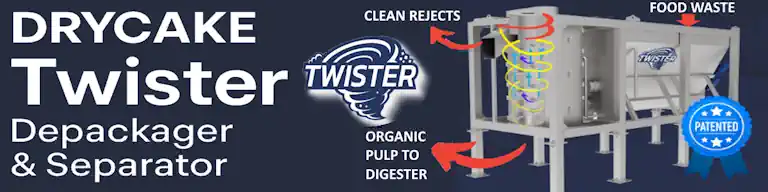
This article is all about sustainable food waste recycling solutions which can be achieved by eliminating grit and plastics from the organic soup output of the Twister™ and Seditank™ depackaging machinery manufactured, supplied and serviced by the Drycake™ company. The sustainable solutions considered to be the aim of the recycling/ waste processing plant operators are: […]

Food Waste UK – Applying the Waste Hierarchy in 2023
It is important to understand important details in the way UK waste managers should apply the general rules of the waste hierarchy to the special case of food waste. The waste hierarchy is a tool that is used to guide sustainable waste management practices. It prioritizes waste reduction and prevention at the top, followed by […]

First Use of Biomethane for Transport Fuel – 1st UK Biobus – 2008 Camden Council, London
The historic first use of biomethane (now known as rCNG) in a council vehicle in the UK was in the London Borough of Camden. The fuel is now increasingly used for powering buses. The main reason for using it is its comparatively clean burning characteristics, which means fewer exhaust fumes and lower air pollution, making […]